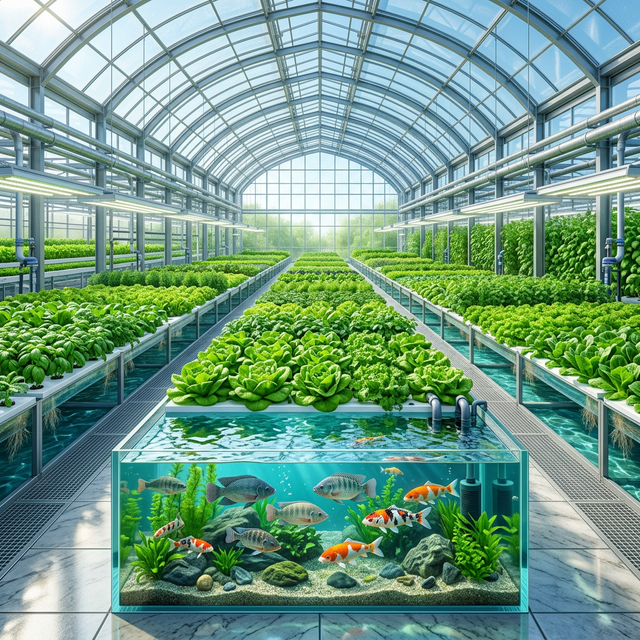
Discover the world of aquaponics, where fish waste feeds plants in a sustainable loop. Explore the integration with smart technology, global market trends, and how it's shaping the future of agriculture.
Fish poop feeds lettuce. Sounds absurd, but it works. Fish excrete ammonia, bacteria convert it into nitrates, and plants absorb those nitrates to grow. The water — now stripped of nutrients — returns clean to the fish tank. This loop is the entire basis of aquaponics, a portmanteau of aquaculture (raising fish) and hydroponics (growing plants without soil).
The idea isn’t new. The ancient Aztecs built “chinampas” — floating gardens that grew crops on lake surfaces. China and Thailand have traditions of raising fish in rice paddies. What’s new is wrapping that ancient principle in modern science, IoT sensors, and AI-driven automation. That’s what smart farm aquaponics looks like in 2026.
Fish → Bacteria → Plants: The Three-Way Symbiosis
The magic runs on three players. Fish, bacteria, and plants. Each one keeps the others alive.
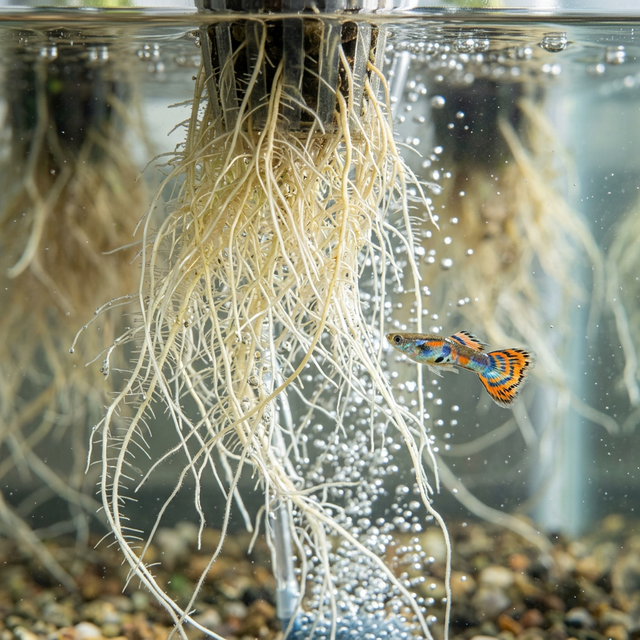
Fish eat feed and excrete ammonia (NH₃). Ammonia is toxic to fish in high concentrations. Enter Nitrosomonas bacteria, which oxidize ammonia into nitrite (NO₂⁻). Then Nitrobacter bacteria convert nitrite into nitrate (NO₃⁻). Nitrate is essentially plant food — a nitrogen fertilizer. Plants absorb it through their roots, cleaning the water in the process. The purified water cycles back to the fish tank.
Put simply: fish are the fertilizer factory, bacteria are the converter, and plants are the water purifier. If any part of this triangle breaks down, the whole system suffers. That’s why water quality monitoring — pH, ammonia levels, dissolved oxygen (DO), and temperature — is the lifeline of any aquaponics operation.
”Saves 90% Water” — Let’s Check the Real Numbers
The most-cited stat in aquaponics is “90% less water than traditional farming.” KBS News reported this figure in a 2025 segment on aquaponics. AQUON, a startup founded by Seoul National University professor Kim Jong-sung, goes even further — claiming 99% water savings compared to conventional aquaculture. The reason: water circulates in a closed loop. The only loss is evaporation, which just needs topping up.
These numbers aren’t hype. In conventional farming, water seeps into the ground, evaporates, or runs off. In aquaponics, the water has nowhere to go but around the circuit. That’s why arid regions and water-scarce countries are paying close attention.
Beyond water savings, the concrete advantages stack up:
- Zero chemical fertilizers and pesticides: Fish waste is the fertilizer. The enclosed environment keeps pests out.
- Vertical farming compatible: Indoor stacking allows several times more crops per square meter.
- Year-round production: No weather dependency means harvests in every season.
- Dual harvest: One system produces both animal protein (fish) and vegetables.
- Extended freshness: KBS reported that aquaponics-grown vegetables maintain freshness for 2–3 weeks.
It’s Not All Roses — The Real Drawbacks
Every system has its shadow side. Aquaponics is no exception.
High upfront investment. Tanks, grow beds, pumps, filtration, aeration, and environmental controls add up fast. A small home setup runs into thousands of dollars; commercial scale can reach hundreds of thousands.
Heavy electricity dependence. Water pumps, aerators, lighting, and climate control all run on power. A blackout can halt water circulation, cut oxygen supply, and kill fish within hours. Backup generators or battery systems are practically mandatory.
You need to master two fields at once. Aquaculture and hydroponics are different disciplines. Keeping pH between 6.5 and 7.0 — the sweet spot where both fish and plants are happy — is easier said than done. Small drift in either direction can cascade into system-wide problems.
Limited crop selection. Leafy greens like lettuce, spinach, and basil thrive. Fruiting crops like tomatoes and peppers are possible but demand higher fish stocking densities for adequate nutrients. Root vegetables like potatoes and carrots are structurally difficult in most setups.
Common Fish and Crop Pairings
| Category | Species | Notes |
|---|---|---|
| Fish | Tilapia | Most popular globally. Tolerates wide temperature ranges, grows fast |
| Fish | Catfish | Widely used in South Korea. Hardy and easy to raise |
| Fish | Koi / Amur carp | Ornamental and edible. Used in Gyeonggi-do farms |
| Fish | Goldfish | Suitable for small-scale and home systems |
| Crop | Lettuce / Spinach | Low nutrient demand, beginner-friendly |
| Crop | Basil / Herbs | High-value crops with good profit margins |
| Crop | Tomatoes / Peppers | Higher nutrient needs; require denser fish stocking |
| Crop | Baby ginseng | Patented by AQUON. 2× saponin content, 2-week grow cycle |
A report from the Gyeonggi-do Agricultural Research and Extension Services confirmed that most Korean aquaponics farms use catfish, koi, amur carp, and tilapia in greenhouse facilities, primarily producing leafy vegetables.
Aquaponics in South Korea — Where Things Stand
According to KBS (July 2025), South Korea’s aquaponics market is worth roughly 30 billion KRW (~1 billion, it’s still in its infancy. But the growth trajectory is steep.
AQUON, the Seoul National University spinoff founded in January 2024, is a standout case. Using aquaponics to grow baby ginseng, they cut the growing period to about 2 weeks (half of conventional methods) while doubling saponin content. Within 3 months of launch, the product generated 50 million KRW in revenue. Research showed their aquaponics ginseng contains 8 times more rare ginsenosides than even 6-year-old ginseng grown in soil. They hold Patent No. 10-2395377 for the method.
Seoyuchae Farm in Taean, South Chungcheong Province, is considered a first-generation Korean aquaponics pioneer. Founded by Hong Min-jeong, who moved to farming in 2014, the 300-pyeong (~10a) smart farm produces salad greens and specialty vegetables using a floating raft model. Annual revenue reaches about 300 million KRW ($220K), supplemented by education, consulting, and experience programs.
Professor Choi Sang-deok of Chonnam National University told KBS: “The private sector has been very active. We need to standardize these approaches and integrate aquaponics techniques with smart aquaculture systems.”
Smart Aquaponics — When IoT and AI Enter the Picture
Traditional aquaponics required manual water testing, hand-feeding fish, and constant environmental adjustment. Modern smart aquaponics automates all of that.
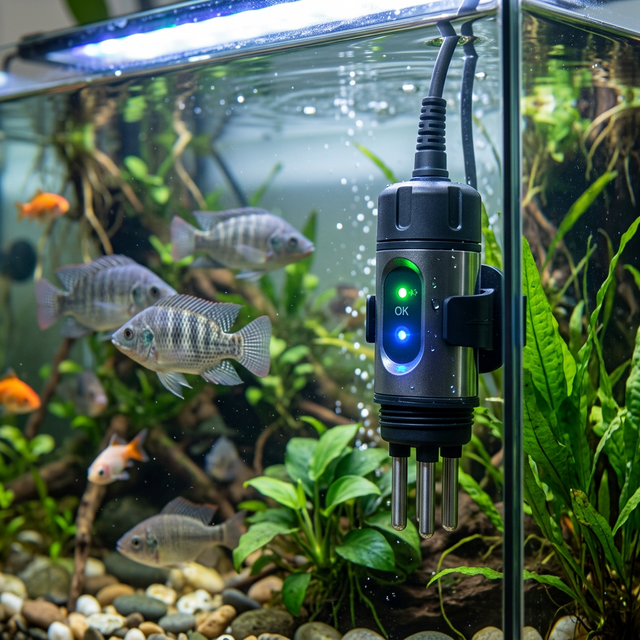
IoT sensor networks: Real-time monitoring of pH, temperature, dissolved oxygen, electrical conductivity (EC), and ammonia. Alerts fire when thresholds are breached. Automated dosing systems add pH buffers; aeration systems ramp up automatically.
Smart feeding systems: Fish behavior and feed consumption are analyzed to deliver the optimal amount at the optimal time. This prevents overfeeding — a common cause of ammonia spikes — while reducing feed costs.
LED optimization: Light spectrum and photoperiod are auto-adjusted for crop type and growth stage. For leafy greens, this can shorten grow cycles by 30–40%.
Remote monitoring: Farmers can check system status, receive alerts, and control equipment from anywhere via smartphone. Physical presence at the farm becomes optional.
Machine learning: Accumulated data trains AI to continuously optimize lighting schedules, feeding rates, and environmental parameters. The system gets smarter over time.
In South Korea, companies like Samsung and LG are extending their IoT and AI capabilities into agriculture. Startups like T&One have already commercialized IoT-based aquaponics smart farm equipment.
Three Main Aquaponics System Designs
System architecture falls into three primary categories.
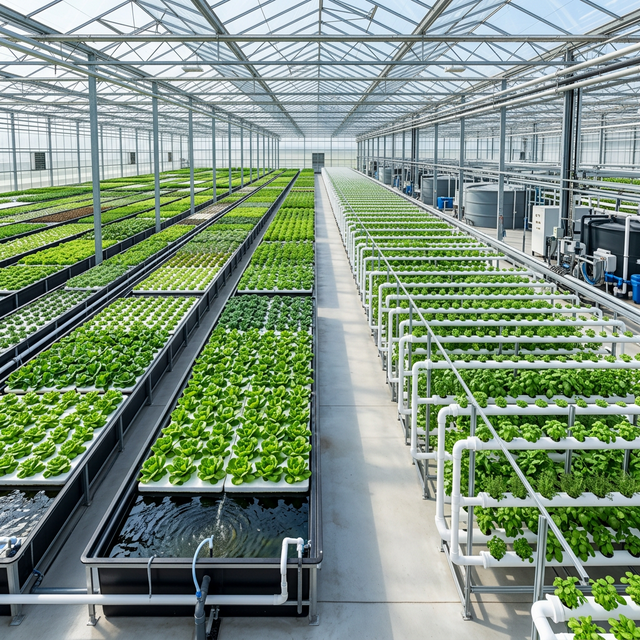
Media Bed: Plants grow in an inert medium like hydroton (expanded clay) or gravel. The media provides a large surface area for beneficial bacteria, making nitrogen cycling most efficient. Best for small-scale and home systems.
DWC (Deep Water Culture): Also called “floating raft.” Styrofoam boards float on deep water, and plants sit in holes on the boards. Optimized for leafy greens and widely used in commercial operations. Seoyuchae Farm uses this method.
NFT (Nutrient Film Technique): A thin film of nutrient-rich water flows through pipes or channels, and plant roots dangle into the stream. Highly space-efficient and great for vertical setups, but vulnerable if the pump fails — roots dry out fast.
A newer approach gaining traction in Europe is the Decoupled system, which fully separates the fish and plant sections. This allows independent optimization of conditions for each component, improving yields at the cost of added complexity.
The Global Market Outlook
Market projections from leading research firms:
| Research Firm | 2025 Size | 2030 Projection | CAGR |
|---|---|---|---|
| Grand View Research | $1.22B | $2.29B | 13.5% |
| Mordor Intelligence | $1.42B | $3.05B | 16.8% |
| Precedence Research | $1.20B | — ($2.73B by 2034) | 9.5% |
| Business Research Insights | $0.71B (2026) | — ($1.32B by 2035) | 7.15% |
Estimates vary depending on how each firm defines the market’s boundaries, but the consensus is clear: strong growth driven by urbanization, water scarcity, rising demand for organic produce, and climate change adaptation. North America leads in market share; Asia-Pacific is the fastest-growing region.
Who Should Consider Aquaponics?
Aspiring rural farmers: If you want year-round income from a small footprint, aquaponics can deliver. Seoyuchae Farm’s $220K annual revenue from just 300 pyeong is proof.
Urban smart farm entrepreneurs: Rooftops, basements, vacant warehouses — all viable. Vertical integration maximizes space efficiency.
Education and experience businesses: Aquaponics is a living textbook of ecological cycles. It pairs naturally with children’s education and urban agriculture experience programs.
Researchers and tech startups: Like AQUON, there’s opportunity in combining specialty crops with aquaponics technology, patenting methods, and selling systems as a B2B solution.
That said, jumping in with “I’ll sell fish AND vegetables, double the income!” without proper preparation is a recipe for trouble. Water quality management, fish disease response, and electrical backup systems require careful planning. Notably, according to the Korea Overseas Fisheries Cooperation Center, not a single domestic aquaponics operation had obtained aquaculture permits — all were operating under agricultural licenses only. Regulatory frameworks still have catching up to do.
Where It’s Headed
As Professor Choi of Chonnam National University put it, the path forward is integrating aquaponics with smart aquaculture and standardizing best practices. South Korea’s world-class ICT capabilities, combined with aquaponics, could produce globally competitive “smart aquaponics” solutions. The K-food wave opens doors for technology exports. Hot-climate countries like Vietnam, water-scarce regions in the Middle East and Africa — all potential markets.
Fish feed plants, plants clean water for fish. Add technology, and that cycle becomes more precise, more efficient, and more scalable. Growing food without soil, without pesticides, while saving water — calling this a pillar of future agriculture isn’t optimistic speculation anymore. It’s increasingly a statement of fact.
References
- Future Farming Method ‘Aquaponics’ — KBS News (2025.07.04)
- Growing 50,000 Ginseng Roots Without Pesticides: AQUON — Chosun Ilbo (2025.07.31)
- 2,400-Pyeong Aquaponics Smart Farm Using Microbes — Naver Blog
- Aquaponics Eco-Friendly Vegetable Production Technology — Gyeonggi-do Agricultural R&E
- The Long Road for Aquaponics in Korea — OFIS
- Aquaponics Market Size To Reach $2,294.5M By 2030 — Grand View Research
- Aquaponics Market Size to Surpass $3.05B by 2030 — Mordor Intelligence / OpenPR
- Aquaponics Automation: Smart Farming Technology — Atlas Aquaponics
- Smart Technology Revolution in Aquaponics — FarmHub
- Startup Profile: AQUON Aquaponics Smart Farm — ChosunBiz (2024.11.06)
- International Aquaponics Tech Exchange Strategy — info-research.co.kr
- Disadvantages of Aquaponics Systems — Environmental Literacy Council
#SmartFarm #Aquaponics #FutureAgriculture #EcoFriendly #SustainableFarming #AgriTech #SmartFarmer #CircularEconomy