Building a container smart farm or installing solar panels in highly protected farmland? Explore the latest regulations, exceptions, and upcoming legal changes in South Korea.
Picture this: a shipping container sitting in the middle of rice paddies, growing lettuce inside, solar panels glinting on the roof. Sounds like the future. But Korean land use law has a different opinion. Agricultural Promotion Zones (농업진흥구역) are the country’s most protected farmland — essentially “do not touch” territory designated for food production. Trying to build anything here triggers serious regulatory scrutiny.
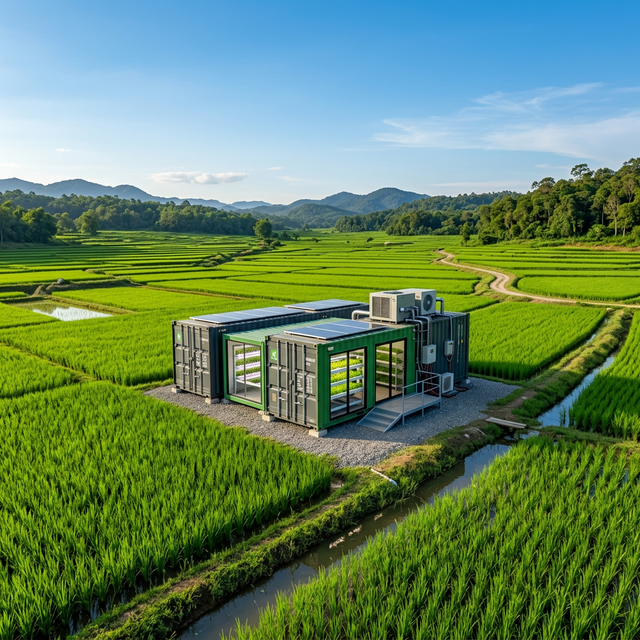
The short answer: Greenhouse-type smart farms are fine. Container-type smart farms are “conditionally possible.” Adding solar panels on top of a container is “nearly impossible under current rules but evolving.” As of March 2026, the law is actively being rewritten, so timing matters.
Why Agricultural Promotion Zones Are So Strict
Agricultural Promotion Zones are designated by provincial governors under Articles 28–32 of the Farmland Act (농지법). They protect Korea’s best cropland — flatland areas of 10 hectares or more, mid-elevation areas of 7 hectares, and mountain areas of 3 hectares of contiguous farmland. These zones function as the nation’s food security backbone.
Article 32 of the Farmland Act defines what you can do here. The rule is simple: only activities “directly related to agricultural production or farmland improvement” are permitted. Everything else is prohibited unless it falls into a specific exception.
Permitted activities include:
- Crop cultivation and perennial plant growing
- Fixed greenhouses, mushroom cultivation houses, and vinyl (plastic) tunnel houses plus their ancillary facilities
- Livestock barns, insect farming houses
- Farmer residences (up to 1,000㎡ site area, expanded from 660㎡ in the 2024 amendment)
- Agricultural product processing and distribution facilities (under 15,000㎡)
- Communal agricultural warehouses, workshops, equipment repair facilities
- Farm huts (농막: 20㎡ or less, non-residential only)
The critical distinction: fixed greenhouses and vinyl houses are treated as agricultural land use activities — no conversion permits needed. But buildings and containers require farmland conversion or temporary-use permits, and that’s where the trouble begins.
Greenhouse Smart Farms — No Problem
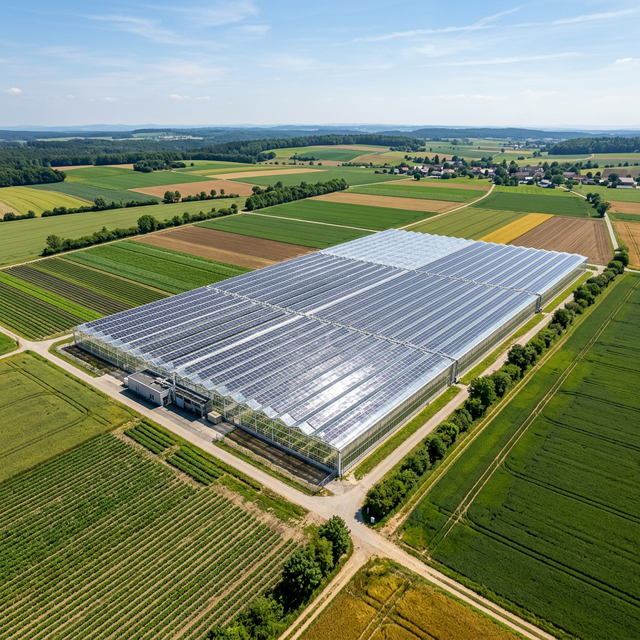
Installing ICT equipment (sensors, automated irrigation, climate control systems) inside a vinyl house or glass greenhouse is fully permitted in Agricultural Promotion Zones. Under the Farmland Act, these qualify as “fixed greenhouses.”
The vast majority of South Korean smart farms are this type. A vinyl tunnel house with temperature and humidity sensors, smartphone-controlled ventilation, and automated nutrient dosing already qualifies as a smart farm. No farmland conversion is needed regardless of whether the land sits inside a Promotion Zone.
Container Smart Farms — Possible, But the Path Is Rough
This is where it gets complicated. Container-based vertical farms are classified as “temporary structures” (가설건축물), not agricultural land use.

2024 Farmland Act Amendment: A Crack in the Wall
On January 2, 2024, the Farmland Act was amended. Container-type vertical farms were officially added to the “temporary alternative use permit” category. The implementing decree, effective July 3, 2024, extended the maximum permit period from 8 years to 16 years (initial 7 years + 9-year extension).
This means on regular farmland outside Promotion Zones, you can now install a container smart farm and operate it for up to 16 years. However, inside Agricultural Promotion Zones, container installations remain restricted.
The Current Status Inside Promotion Zones
| Smart Farm Type | Allowed in Promotion Zone | Notes |
|---|---|---|
| Vinyl/glass greenhouse | ✅ Yes (no special permit) | Treated as agricultural land use |
| Container (temporary structure) | ⚠️ Restricted by default, exceptions expanding | 16-year temp permit available, but Promotion Zone limits apply |
| Building-type vertical farm | ⚠️ Restricted | Requires farmland conversion, extremely limited in Promotion Zones |
In October 2024, MAFRA announced that within “planned locations” — specifically Smart Agriculture Promotion Districts (스마트농업 육성지구) and Rural Specialization Districts (농촌특화지구) — all forms of vertical farms would be recognized as agricultural land use regardless of Promotion Zone status, eliminating the need for conversion permits.
Solar Panels on a Container Roof — Can You Do It?
This is the trickiest part. Bottom line: under current law, putting solar panels on a container roof in a Promotion Zone is extremely difficult but not categorically impossible.
Current Rules (March 2026)
The Farmland Act Enforcement Decree (Article 29) governs solar installations in Promotion Zones.
Rooftop solar on buildings: Solar energy generation equipment can be installed on the roofs of buildings in Promotion Zones that have received a building permit or building notification. A 2018 amendment removed the previous restriction that limited this to buildings completed before December 31, 2015. This means both new and existing buildings can have rooftop solar.
Renewable Energy Districts — The Only Breakthrough
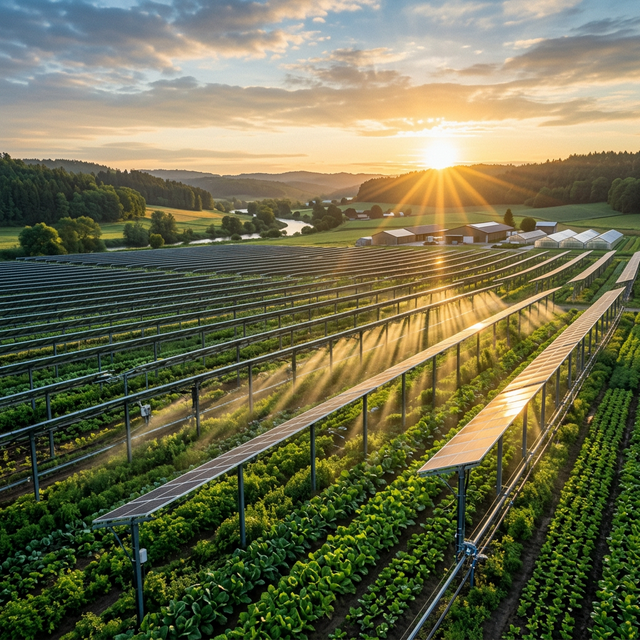
In October 2025, the government announced a major policy shift: Agricultural Promotion Zones will be eligible for “Renewable Energy District” designation, which would allow agrivoltaic (영농형 태양광) installations. The business period would be extended from 8 years to 23 years (some bills propose up to 30 years).
Quick-Reference Checklist
| Item | What to Check | Responsible Agency |
|---|---|---|
| Land zoning | Promotion Zone / Protection Zone / Outside | luris.molit.go.kr |
| Smart farm type | Greenhouse vs. Container vs. Building | — |
| Farmland conversion / temp use | Required for container and building types | Municipal agricultural office |
| Temporary structure notification | Required for container installation | Municipal building dept. |
| Concrete foundation | Constitutes land form change → permit needed | Municipal urban planning dept. |
| Electrical connection | Agricultural electricity, solar grid connection | KEPCO |
| Rooftop solar | Must be on registered building (건축물대장) | Building dept. + energy dept. |
| Agrivoltaic solar | Renewable Energy District — pending law | MAFRA / National Assembly |
References
- Farmland Act Article 32 (Restrictions on Activities in Designated Zones) — CaseNote
- MAFRA: Smart Farm Installation Fully Permitted in Planned Locations — NewsTomato
- MAFRA: Smart Farm Installation Period Expanded 8→16 Years
- Agrivoltaic Law Summary as of January 2026 — imun.farm
#FarmlandZone #SmartFarm #Agrivoltaics #AgriTech #SustainableFarming #AgriculturePolicy #GreenEnergy #RuralDevelopment