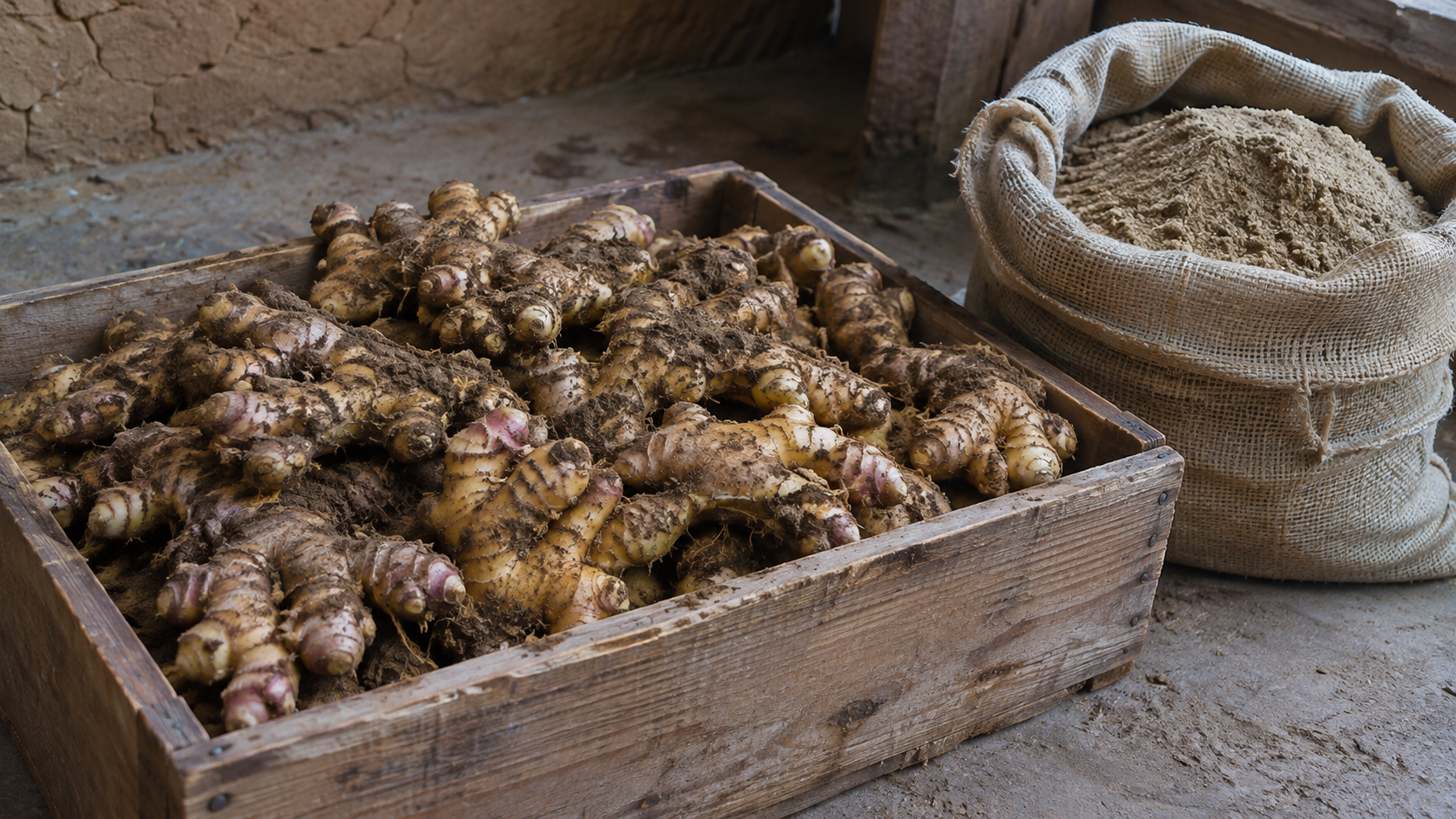
How to store fresh Korean soil-covered ginger through winter: the RDA storage range of 12–14°C and 85–95% humidity, chilling injury below 10°C, freezing minced or sliced ginger, what to do with moldy ginger, November 6, 2026 KAMIS prices, and the farmer math on storing until spring.
November is when Korean households buy fresh ginger by the 10kg box. A month later, the box on the balcony grows white mold and the ginger in the fridge turns soft. Both are storage-temperature problems.
Bottom line: whole ginger belongs in a cool spot at 12–14°C, not in the refrigerator. Below 10°C it suffers chilling injury and rots; above 18°C it sprouts (RDA Nongsaro). If you cannot find a spot near that range, peel and freeze it the week it arrives. On November 6, 2026, domestic ginger (top grade, 10kg) sold for KRW 58,300 wholesale in Seoul, about KRW 5,830 per kg (KAMIS).
Earlier records: New-Crop Ginger Price 2026, Ginger Price and Storage Strategy, Homemade Ginger Syrup 2026. Daily prices are on the ginger price page.
1. Prices now
KAMIS wholesale, November 6, 2026, domestic ginger top grade 10kg: Seoul KRW 58,300, Busan 50,000, Daegu 54,000, Gwangju 55,000, Daejeon 53,400. All five cities are lower than a month earlier (Seoul was 61,600 on October 6) as the new harvest arrives. Nongsaro puts the ginger harvest in late October to early November.
2. The storage numbers
The RDA’s Nongsaro post-harvest guide gives 12–14°C and 85–90% humidity or more. Below 10°C ginger rots from chilling injury; above 18°C it sprouts. A 2022 RDA press release recommended 13°C and 96% humidity to minimize both rot and mycotoxins, and found rot increases below 90% humidity. A typical refrigerator runs colder than 10°C, so it is fine for a few days but wrong for weeks.
3. Keeping soil-covered ginger at home
Traditional farm storage puts ginger in a cellar and covers it with soil two or three times as temperatures fall; Nongsaro suggests earthen jars when no cellar is available. At home: sort out bruised or soft pieces on arrival and use them first; leave the rest unwashed, wrap loosely in paper, and keep the box in an unheated entryway or utility room; cover it to keep humidity in but avoid sealing it in plastic; check weekly and remove anything soft or moldy.
4. Freezing ginger
Peel with the edge of a spoon. Mince or grate and freeze it flat in a zip bag (a method shown in a Nongsaro video), scoring it so you can snap off portions, or freeze thin slices spread apart before bagging. Keep the freezer at -18°C or below. Peeled ginger in the fridge lasts about 5–7 days according to the same video.
5. Moldy or sprouted ginger
Discard moldy ginger entirely. Korea’s food safety portal advises throwing away moldy food whole, since spores and toxins can spread beyond the visible patch, and the RDA notes mycotoxins barely break down with boiling or frying. We found no official guidance on sprouted ginger; firm pieces without mold are commonly trimmed and used right away.
6. For farmers: storing until spring
KAMIS Seoul wholesale for domestic top-grade ginger averaged KRW 54,815 per 10kg in November 2025 and held at 60,000 from January to April 2026, about 9% higher; Gwangju rose from 54,545 to a January average of 64,181. These gaps are before weight loss, grading losses and storage electricity. Nongsaro recommends curing at about 25°C and 95% humidity for three days, then storing at 12–14°C and 90–95% humidity. Including a short storage note with direct-sale boxes (“do not refrigerate; keep at 12–14°C”) helps prevent complaints.
References
- KAMIS, domestic ginger top grade 10kg wholesale prices (daily, November 2025 to November 6, 2026)
- RDA Nongsaro, “Ginger post-harvest management and use”
- RDA press release on ginger storage at 13°C and 96% humidity (October 19, 2022)
- RDA Nongsaro video, “Ingredient of the month: ginger” (2021)
- MFDS Food Safety Korea, “Managing food safely against mold” (November 27, 2024)