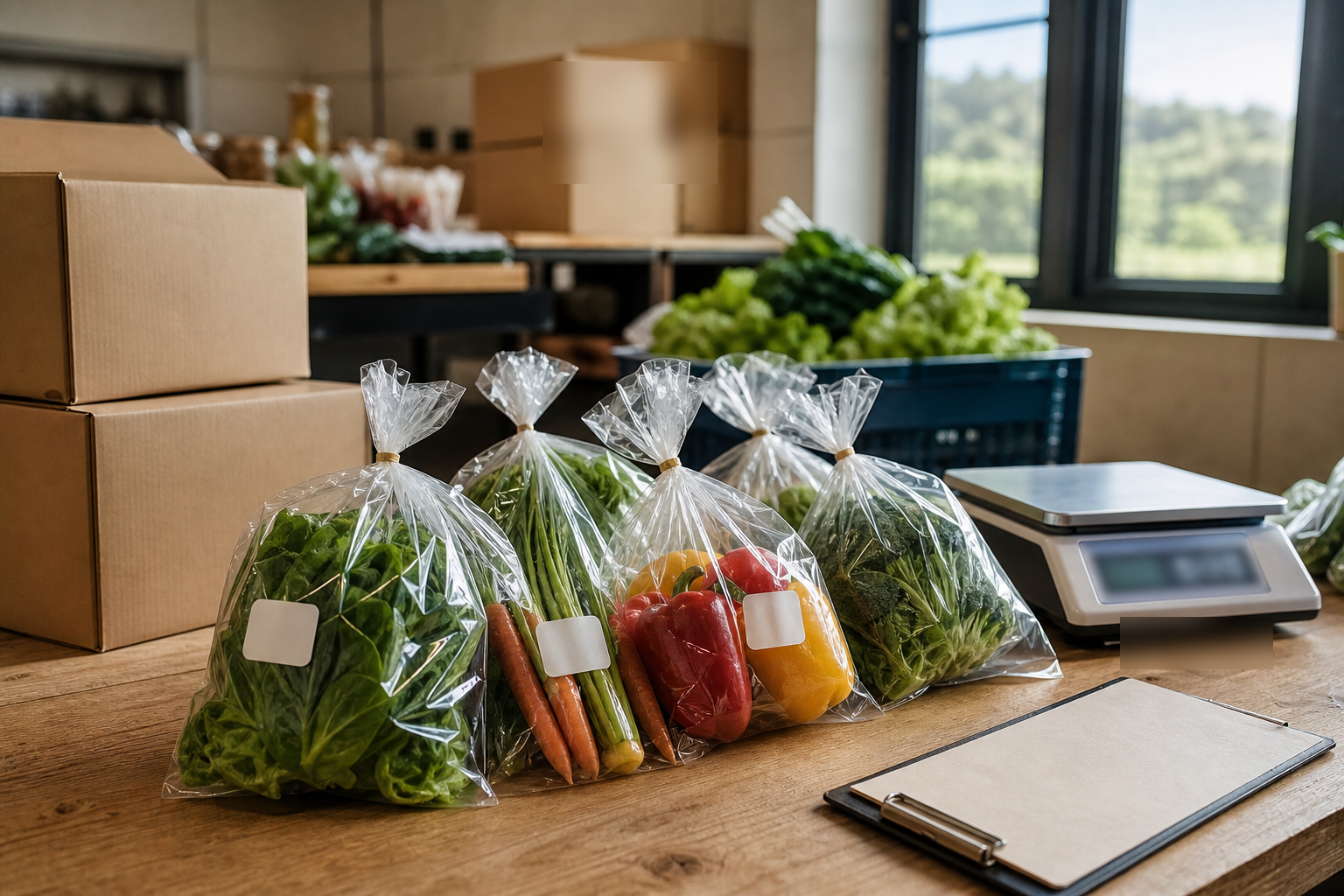
A practical checklist for local-food farmers to reduce mistakes in packaging size, weight, origin labeling, price labels, dates, and delivery inspection.
Packaging and Label Checklist for Local Food Suppliers
A farmer harvests lettuce early in the morning, packs it neatly, and brings it to a local food store. Then the product is stopped at the receiving counter. The weight is off. The label is in the wrong place. The origin is missing. The barcode is stuck across a wrinkle and cannot be scanned.
It is not a huge disaster, but it hurts. Fresh produce loses value quickly. For leafy greens, strawberries, tomatoes, cucumbers, and herbs, a one-day delay can turn into real loss.
Local food delivery is not finished when the crop is harvested. The last ten minutes of packaging and labeling decide whether the product can sit on the shelf, whether the cashier can scan it, and whether the consumer trusts it. This guide gives farmers a practical checklist for reducing packaging and label mistakes before delivery.
1. Consistency comes before beauty
On a local food shelf, similar products sit side by side. Consumers compare 200g lettuce packs, 500g cherry tomatoes, 1kg potatoes, or three cucumbers in a bag. If size and appearance vary too much, even good produce can look unreliable.
The first rule is consistency. Use the same bag, same bundle style, same label position, and same orientation for the same item. This makes receiving inspection easier and helps consumers compare products quickly.
Korea’s agricultural product standard specifications define packaging standards in terms of transaction unit, package size, packaging material, packaging method, design, and labeling items. Not every local food item is shipped as a formal standard-grade product. Still, using this structure helps farmers avoid common mistakes.
2. Start with weight or count
Weight is one of the most common problems. The bag looks the same, but the contents differ. The first few packs are accurate, then the work gets faster and each pack drifts by 10 or 20 grams. Consumers notice more than many farmers expect.
Set the standard first. For example, lettuce may be 200g, perilla leaves 30 sheets, cherry tomatoes 500g, potatoes 1kg, or cucumbers three pieces. Place one reference pack on the table and compare against it while packing. Do not rely only on the scale. The visible amount should also feel consistent.
The standard specification defines a transaction unit as the weight or count of the contents excluding the packaging container. That means the package weight should not be casually included. Use the tare function when possible and randomly reweigh a few packs before loading the vehicle.
3. Choose packaging by crop type
Packaging is not just a cheap container. Leafy vegetables, fragile fruit, wet herbs, root crops, and strongly scented items need different packaging choices.
Leafy greens need airflow and moisture control. If the bag is tied too tight, the leaves lose shape. If it is too loose, the product looks messy on the shelf. Tomatoes and strawberries need protection from pressure. Potatoes, onions, and sweet potatoes need attention to soil, moisture, ventilation, and bag strength.
Packaging materials should be suitable for food contact. The agricultural standard specification also refers to packaging materials that comply with relevant laws such as the Food Sanitation Act. Using unknown recycled bags or non-food containers may look cheap and can create hygiene concerns.
4. A label is the product’s ID card
A local food label is not decoration. It is the product’s ID card. Consumers, store staff, the cashier, and anyone handling complaints will look at the label.
Basic items to check include product name, weight or count, price, origin, producer or farm name, identifying information, and packing or receiving date. Each store may have its own required items. The store’s label format and delivery training rules should come first.
Origin labeling needs special care. For domestic produce, check whether the store wants only “domestic” or a more specific local origin. If the item becomes processed food, side dish, fresh-cut produce, or a mixed product, labeling requirements can change. Always separate raw produce, simple washed or cut produce, and processed food before deciding the label.
5. Label position should follow the checkout process
Even when the information is correct, the label can still fail. A barcode on a wrinkled bag may not scan. A label on a wet surface may fall off during transport. A label on a curved container may be hard for the cashier to read.
Place labels on a flat, dry surface. The front side is usually best because consumers can see it easily. If the label includes a barcode, the checkout scanning angle also matters. A beautiful position is not useful if it slows down the register.
Create a fixed label-position rule at the packing table. For example, lower right side of the bag, upper right side of the lid, or center of the long side of a box. The position should stay the same even when a different person does the labeling.
6. Price label mistakes are expensive
A product that should be 2,500 won may be printed as 25,000 won. A pack that should be sold by the piece may be printed by kilogram. Similar product codes make these mistakes easy during a busy morning.
Print one test label first. Check product name, size, weight, price, barcode, and date before printing the full batch. One test label can save a lot of trouble.
After printing, label one crop at a time. Do not mix lettuce, perilla leaves, cucumbers, and tomatoes on the same table. Finish one item, clear the table, then start the next item. This simple routine prevents labels from moving to the wrong product.
7. Dates are a freshness promise
The strength of local food is freshness. If the packing date or receiving date is unclear, that strength becomes weaker. Consumers want to know whether the product was harvested today or packed yesterday. Stores also need dates to manage shelf rotation.
For raw produce, the store may use harvest date, packing date, or receiving date depending on its own rules. Use one rule consistently. For processed food or fresh-cut items, the labeling rules are stricter and should be checked separately.
Date mistakes hurt trust. Using yesterday’s label today makes the product look older than it is. A future date looks careless or dishonest. Check the label printer date before the first print every morning.
8. Use consumer language for product names
Farmers often use internal names that consumers do not know. A label should use the name the buyer understands.
Short and clear is best. “Green lettuce” is better than a vague “lettuce” when several types are on the shelf. “Jujube cherry tomato” is clearer than “tomato” when the variety matters. Do not make the label too long. Put only the useful distinction on the front.
Be careful with certification words. Terms such as organic, pesticide-free, eco-friendly, and GAP are connected to formal certification. Do not use similar promotional phrases unless the farm actually has the certification. Factual labeling is safer than attractive wording.
9. Make a three-minute pre-delivery inspection
Finding a mistake at the store is too late. Inspect before loading the vehicle. If possible, the person who packed the product should not be the only person checking it. If the farm is run by one person, take a short break and look again with fresh eyes.
The inspection sheet does not need to be complicated. Check weight, product name, origin, price, date, label position, bag damage, moisture, foreign matter, and product quality. These items catch most delivery problems.
Moisture and soil should be checked last. Water left after washing causes fogging inside the bag and weakens label adhesion. Too much soil may not look fresh. It can look unmanaged.
10. Each crop has a different mistake pattern
Leafy greens need checks for weight, fogging, wilting, and insects. Root crops need checks for soil, size variation, bag strength, and weight. Fruit vegetables need checks for pressure damage, stem condition, color, and count. Fruit needs checks for size grading, impact protection, and separation between gift-grade and home-use products.
Washed greens and cut produce need stricter control of moisture and storage temperature. If washing, cutting, mixing, or portioning changes the product category, it may no longer be treated like simple raw produce. That can change the labeling requirements.
A local food farmer cannot rely only on “how we usually do it at home.” Store rules, legal labeling standards, and consumer expectations all matter. Farmers who keep crop-specific checklists usually make fewer mistakes.
Pre-delivery checklist
- Use the same packaging and size for the same item.
- Set the target weight or count before packing.
- Weigh contents excluding the package weight.
- Print one test label before batch printing.
- Check product name, weight, price, origin, and producer information.
- Check packing date or receiving date settings.
- Place labels on a flat, dry surface.
- Keep barcodes away from wrinkles and curved surfaces.
- Use certification terms only when certification exists.
- Check soil, moisture, insects, foreign matter, and package damage last.
- Follow each store’s label format and delivery training rules first.
- Check separate labeling rules for fresh-cut or processed products.
One-line conclusion
For local food delivery, packaging and labeling are not just the final touch. They decide whether the product can enter the shelf, whether the consumer trusts it, and whether the store can trace it if a complaint occurs. A crop is not fully finished in the field. It is finished once it is packed consistently and labeled correctly.
References
- National Law Information Center, Agricultural Product Standard Specifications, National Agricultural Products Quality Management Service Notification No. 2025-6, effective August 4, 2025.
- National Agricultural Products Quality Management Service, guidance materials on mandatory information labeling when shipping agricultural products.
- National Agricultural Products Quality Management Service, origin labeling guidance for agricultural products and processed products.
- Ministry of Agriculture, Food and Rural Affairs, public materials on food plans, local food systems, and local food store operation.