Agricultural Drone Spraying: Startup Costs, Licenses, and Real Profit
Agricultural Drone Spraying: Startup Costs, Licenses, and Real Profit
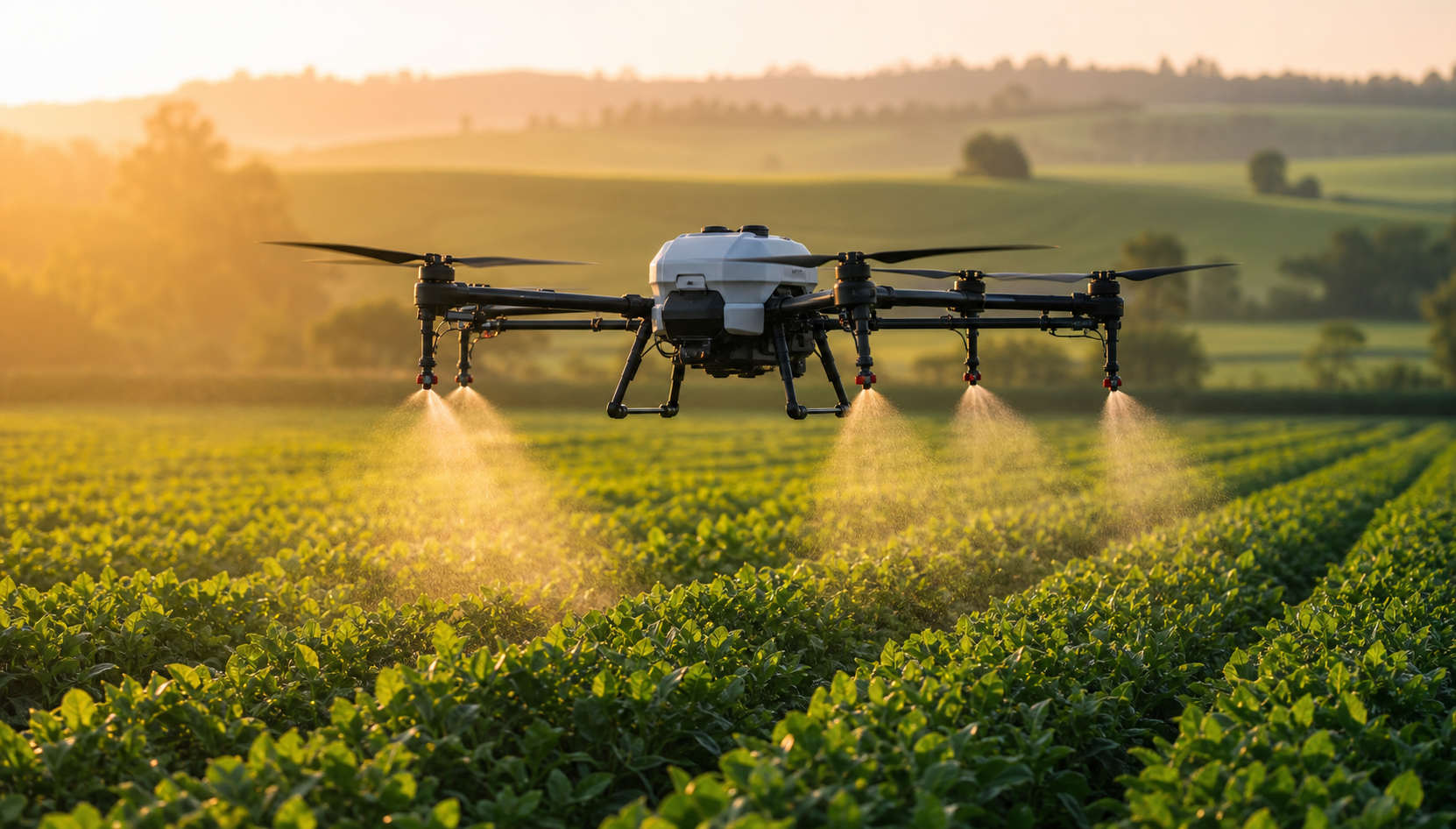
Drone spraying looks impressive from the edge of a rice field. No hose dragging through the mud. No chemical tank on someone’s back under the summer sun. A drone flies low, follows the rows, and lays a thin mist over the crop.
It naturally makes people ask a business question. Can this become a real rural startup. The answer is yes, but not just because the drone flies.
An agricultural drone spraying business sits between aviation rules, pesticide rules, field logistics, weather risk, insurance, customer trust, and equipment maintenance. The aircraft is only one part of the business. The real question is whether the operator can secure repeat acreage, work safely, and avoid costly disputes.
1. This is a field service business, not just a machine business
Agricultural drone spraying means applying pesticides or fertilizers for farmers using unmanned multicopters. Demand often appears in rice fields, soybeans, corn, forage crops, some orchards, and other broad field crops. Rice is especially suitable because fields are large and spraying schedules tend to cluster in a short season.
But the core of the business is not flying. It is scheduling, checking weather, confirming chemicals, measuring field area, avoiding spray drift, managing complaints, and keeping work records. The drone helps do that work faster.
That distinction matters. If you start by looking only at drone specifications, you become a customer of the equipment seller. If you start by checking repeat acreage and customer routes, you become a spraying service operator.
2. The required license depends on aircraft weight and operation type
In Korea, agricultural spraying drones are generally treated as unmanned multicopters under the ultralight vehicle framework. Article 125 of the Aviation Safety Act requires people who fly certain ultralight vehicles prescribed by Ministry of Land, Infrastructure and Transport rules to hold an ultralight vehicle pilot certificate.
Maximum takeoff weight is the practical checkpoint. A spraying drone is not the same as a small camera drone. It carries a chemical tank, batteries, pumps, nozzles, and a spraying frame. Many commercial spraying drones enter the heavier category, and drones over 25 kg are usually in the area where a Class 1 unmanned multicopter certificate is needed. For lighter models, the operator still needs to confirm the exact certificate and training requirements by aircraft class.
A common mistake is thinking that farmers can simply fly agricultural drones without further checks. Flying your own small drone and accepting money to spray other people’s fields are different situations. A paid service should be reviewed together with pilot certification, aircraft reporting, flight approval zones, insurance, and business registration.
3. Paid spraying usually brings registration and insurance into the picture
If you spray other farmers’ land for payment, it is no longer a casual flight. Article 48 of the Aviation Business Act states that anyone who intends to operate an ultralight vehicle use business must register with the Minister of Land, Infrastructure and Transport. The same article also refers to business requirements such as having at least one ultralight vehicle and meeting prescribed standards.
Article 70 of the Aviation Business Act is another key anchor. A person who uses an ultralight vehicle for an ultralight vehicle use business must subscribe to insurance or a mutual aid program prescribed by ministerial rules. For drone spraying, the risk is not theoretical. A crash, injury, property damage, chemical drift, or crop damage claim can all happen. Insurance is not a decoration. It is a seatbelt for the business.
Pesticide regulation also matters. Article 3-2 of the Pesticide Control Act requires a person who intends to conduct certain pest-control businesses, including aerial pest control business, to report the business to the Minister of Agriculture, Food and Rural Affairs. The law also refers to staffing, facilities, and equipment standards. Actual applicability can vary by business structure, target crop, and how the chemicals are handled, so operators should confirm the details with the competent authority before launching.
Drone spraying sits across aviation and pesticide regulation. Checking only one side leaves a hole.
4. Equipment cost is bigger than the drone price
The aircraft price is the first number people notice. It is not the full startup cost. A working operation also needs multiple batteries, fast chargers, a generator or vehicle charging setup, tanks, mixing tools, cleaning equipment, spare nozzles, pumps, a transport vehicle, protective gear, insurance, training, registration, and accounting.
Starting small can reduce the entry cost. Used drones or smaller models can lower the first cash outflow. They may also bring more downtime, battery risk, slower work speed, and harder parts support. A new large spraying drone can work faster, but the cash burden is much higher.
It helps to divide the budget into three groups.
- Aircraft package: spraying drone, controller, spray system, RTK or positioning support if needed.
- Field operation package: batteries, chargers, generator, water tank, chemical mixing tools, cleaning equipment.
- Business package: vehicle, insurance, training, registration, basic marketing, safety gear, accounting.
Buying the drone feels like starting the company. In the field, water, power, transport, and service support decide whether the company can work.
5. Revenue should be calculated by acreage and season, not by monthly fantasy
Spraying revenue does not arrive evenly every month. It follows crop stages, pest pressure, rain, typhoons, and local spraying schedules. During rice spraying season, calls may come all at once. If rain continues, the entire schedule can slide.
So the basic calculation should use seasonal acreage. Assume a service fee of KRW 120,000 per hectare and assume pesticides are supplied by the farmer or billed separately. At 200 hectares, revenue is KRW 24 million. At 400 hectares, revenue is KRW 48 million. At 600 hectares, revenue is KRW 72 million.
Revenue is not profit. Fuel, batteries, vehicle travel, assistant labor, repairs, insurance, depreciation, and marketing must be deducted. Using a simple estimate of KRW 35,000 variable cost per hectare plus KRW 3.5 million in annual fixed costs, the picture looks like this.
- 200 ha: KRW 24 million revenue, about KRW 10.5 million cost, about KRW 13.5 million before tax and depreciation details.
- 400 ha: KRW 48 million revenue, about KRW 17.5 million cost, about KRW 30.5 million before tax and depreciation details.
- 600 ha: KRW 72 million revenue, about KRW 24.5 million cost, about KRW 47.5 million before tax and depreciation details.
These are examples, not guaranteed results. Local prices, travel distance, labor, chemical inclusion, equipment cost, and repair history can change the numbers sharply. The lesson is still useful. A drone spraying business depends less on the purchase price and more on how many hectares can be served repeatedly.
6. Weather and complaints are the largest risks
Drone spraying is a weather business. Rain stops work. Strong wind stops work. Wet crops, high temperatures, and chemical injury concerns can delay work. If the operator misses the spraying window, farmers complain. If the operator works recklessly, the damage can be worse.
Complaints can be more painful than equipment trouble. A nearby organic field, beehives, homes, livestock facilities, or sensitive crops can create spray-drift problems. Drones fly low and are visible. Good work spreads by word of mouth, but bad work spreads faster.
New operators should build procedures before chasing more acreage. Check wind before work. Confirm the field boundary. Check the pesticide label. Review neighboring fields and houses. Take photos. Keep spray records and cleaning records. Records feel boring until a dispute appears. Then they become armor.
7. Farmers want reliability more than a flashy drone
Farmers hire spraying services because the work is hard, risky, and time-sensitive. In peak season, one day matters. The person who answers the phone, confirms the date, checks the chemical, arrives on time, and finishes cleanly is the person who gets called again.
Trust beats specifications. In rural communities, one farmer introduces the next farmer. If that network forms, marketing cost drops and travel routes become efficient. If one serious complaint occurs, an entire village can close its door.
A practical way to start is to narrow the scope. Choose one crop, one region, and one season. Rice community spraying, soybean spraying, or a limited orchard support service can be better than trying to serve every crop immediately. Too much variety early on increases chemical risk, scheduling errors, and field mistakes.
8. Startup checklist
Before starting an agricultural drone spraying service, check these items.
- Confirm the drone’s maximum takeoff weight and required pilot certificate class.
- Confirm whether the aircraft must be reported under the Aviation Safety Act and prepare the aircraft identification marking.
- Check whether the operation requires ultralight vehicle use business registration.
- Confirm aviation insurance or mutual aid requirements and coverage scope.
- Check whether the business falls under aerial pest-control reporting under the Pesticide Control Act.
- Check flight approval zones, no-fly zones, control zones, and altitude limits through Drone One-Stop.
- Confirm pesticide labels, registered crops, dilution rates, and safe-use standards.
- Decide whether pricing is by hectare, local field unit, parcel, or project.
- Prepare rules for rain, wind, equipment failure, and schedule changes.
- Create forms for photos, GPS routes, pesticide use, and equipment cleaning records.
The checklist looks long. That is the point. Once you accept payment, responsibility arrives with the money.
9. Who is this business best suited for
This business fits people who already have rural networks. Knowing local cooperatives, crop groups, village leaders, community spraying schedules, and agricultural technology centers lowers the sales barrier. People who already farm or operate other farm machinery services also have an advantage. They understand field language.
It is riskier for someone to get a drone certificate in the city and immediately enter a rural market with no local trust. Technical skill can be learned faster than trust. Farmers believe the sentence, “That person does clean work,” more than a brochure about a new drone.
The safest entry is often small and seasonal. In the first year, target one region, one crop, and one season. Collect data, avoid complaints, and expand next year. This is not a business that has to become large in one jump. It can grow along the field paths.
10. Conclusion: acreage first, trust before acreage
Agricultural drone spraying has real demand drivers. Rural labor shortages, aging farmers, heat stress, community pest control, and smart agriculture trends all support the market. But demand alone does not make a business.
Three questions decide the opportunity. Can the operator meet legal requirements for certification, reporting, registration, and insurance. Can the operator secure enough repeat acreage to recover equipment cost. Can the operator work carefully enough to be invited back without complaints.
If the answer is yes, drone spraying can become a practical rural service business. If not, the drone may become an expensive toy. The machine flies in the sky, but the money is earned on the ground.
References
- Korea Law Information Center, Aviation Safety Act Article 122, reporting of ultralight vehicles.
- Korea Law Information Center, Aviation Safety Act Article 125, ultralight vehicle pilot certificate.
- Korea Law Information Center, Aviation Safety Act Article 127, ultralight vehicle flight approval.
- Korea Law Information Center, Aviation Business Act Article 48, registration of ultralight vehicle use business.
- Korea Law Information Center, Aviation Business Act Article 70, aircraft insurance obligations.
- Korea Law Information Center, Pesticide Control Act Article 3-2, business reporting.
- Drone One-Stop Civil Service, flight approval, aerial photography, and business registration guidance.
- Seoul Regional Office of Aviation, Ministry of Land, Infrastructure and Transport, drone illegal-flight enforcement guidance.