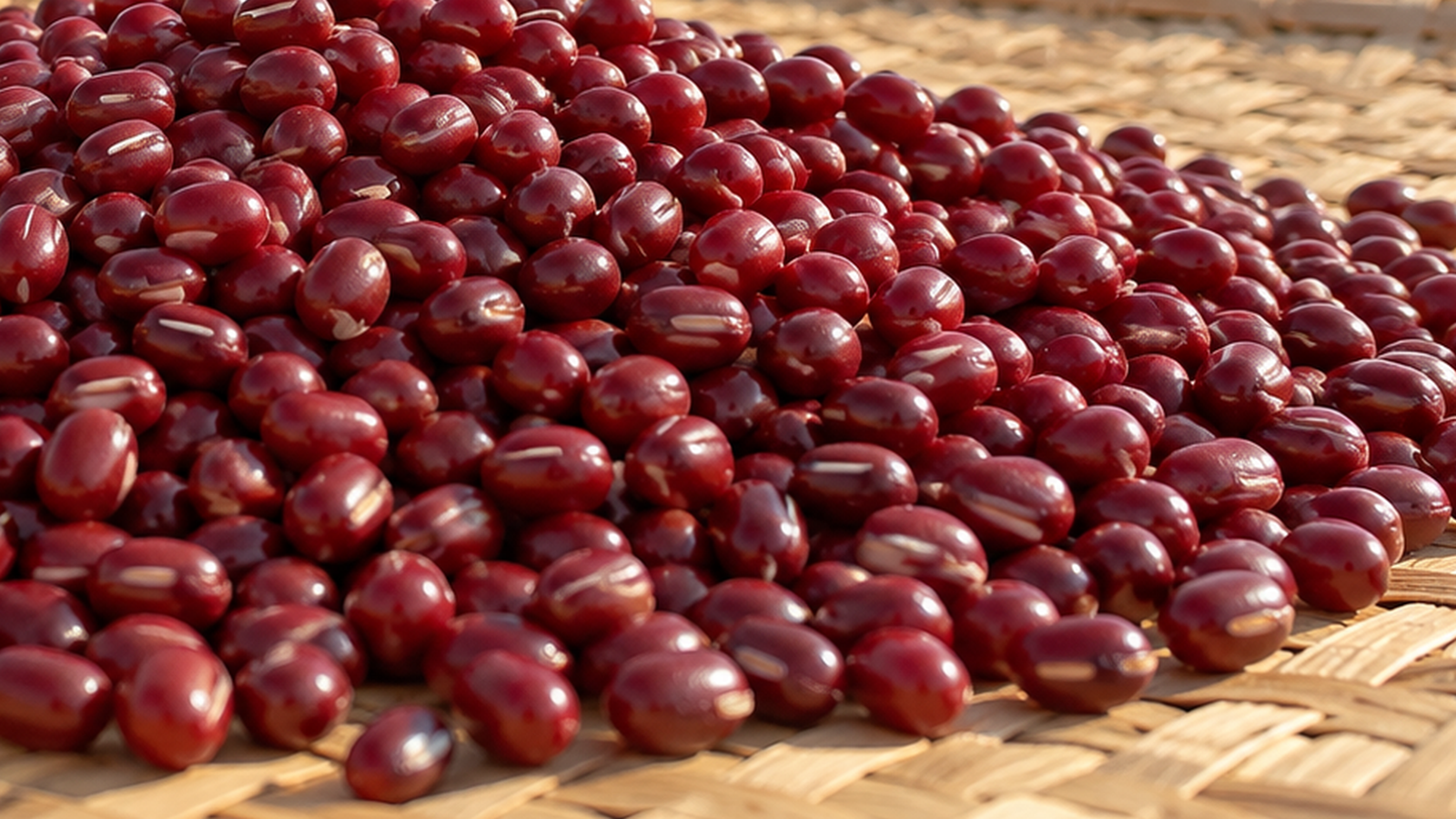
How to make chapssaltteok, Korean glutinous rice cakes filled with sweet red bean paste, using official RDA Nongsaro recipes: 840 g glutinous rice to 420 g red beans, bean paste from 500 g beans and 200 g sugar, injeolmi ratios, what is and is not confirmed about microwave methods, freezing, and ingredient costs from KAMIS wholesale prices on November 13, 2026.
Once the college entrance exam is over and winter sets in, Koreans start looking for chapssaltteok. It is also the season when new red beans and new glutinous rice reach the market together. The questions are always the same: how much bean paste per batch of rice, how much sugar in the paste, and whether a microwave will do.
Bottom line: the closest official recipe, Nongsaro’s “patso heugimja-tteok”, uses 840 g glutinous rice, 420 g red beans and half a cup of sugar. That is a 2:1 ratio of rice to beans. The rice is soaked, steamed and pounded; skinned red beans are boiled, sieved and sweetened into the filling. For a separate bean paste, Nongsaro’s yanggaeng page uses 500 g beans, 200 g sugar and 1 teaspoon salt. On November 13, 2026 domestic red beans sold wholesale in Seoul at KRW 724,000 per 40 kg, or KRW 18,100 per kg.
Earlier records: How to Cook Red Beans 2026, Red Bean Yanggaeng 2026, Red Bean Sirutteok 2026.
1. Ingredients
Nongsaro’s regional food database has no recipe titled “chapssaltteok”. The nearest is patso heugimja-tteok, a pounded glutinous rice cake wrapped around red bean filling and rolled in black sesame.
| Ingredient | Nongsaro amount | Scaled to 500 g rice (our math) |
|---|---|---|
| Glutinous rice | 840 g (5 cups) | 500 g |
| Red beans | 420 g (2 cups) | 250 g |
| Sugar | 1/2 cup | about 1/3 cup |
| Salt | 1⅓ tbsp | about 3/4 tbsp |
| Black sesame | 1 cup (coating) | or dust with starch |
The recipe weighs rice grains, not flour. We found no official amount for store-bought glutinous rice flour, so use the 2:1 ratio as a starting point.
2. Steaming and pounding
Soak the rice, steam it while sprinkling salted water, let it rest, then pound it in a mortar. Nongsaro gives no steaming time in minutes. Other Nongsaro recipes help: Suncheon chalsirutteok steams about 15 minutes after steam rises, and the injeolmi recipes soak the rice 6 or 12 hours. When using flour, spread it thinly, because glutinous flour sticks together and blocks the steam.
3. Red bean paste: 500 g beans, 200 g sugar
Soak the beans, discard the first boiling water, simmer until soft, add sugar and salt, boil again, and sieve if you want a smooth paste. A 2011 National Institute of Crop Science study found raw paste yields of 188–205% of dry bean weight, so 500 g beans make roughly 1 kg of paste.
4. Microwave chapssaltteok
We found no public-institution guidance on wattage or minutes, so we do not give numbers. Mix the water evenly, cover the bowl, heat in short bursts and stir, and check that the center has turned translucent.
5. Injeolmi
Nongsaro injeolmi: 1.7 kg glutinous rice, 50 g salt, 300 mL water, 170 g roasted soybean flour and 24 g sugar, soaked 6+ hours. That is about 100 g bean flour per kg of rice (our math).
6. Ingredient cost
| Item (Seoul, top grade, Nov 13, 2026) | Wholesale | Per kg | A year earlier |
|---|---|---|---|
| Domestic red beans | KRW 724,000/40 kg | KRW 18,100 | KRW 788,000 |
| Imported red beans (medium) | KRW 267,000/40 kg | about KRW 6,680 | KRW 271,000 |
| Glutinous rice | KRW 123,000/40 kg | about KRW 3,080 | KRW 165,000 |
One Nongsaro batch costs about KRW 2,600 in rice and KRW 7,600 in domestic beans at wholesale (our math). The beans set the price.
7. Storage and farm notes
Rice cakes harden within a day or two as starch retrogrades. Wrap each piece and freeze at −18℃ or below. For growers, a bundle of 1 kg glutinous rice and 500 g red beans matches the recipe ratio. Milling flour or cooking paste for sale is food processing and may require a business report to the local sanitation office.
References
- KAMIS wholesale prices, domestic and imported red beans and glutinous rice, Nov 13, 2026 and Nov 13, 2025
- RDA Nongsaro: patso heugimja-tteok (tfcode 92015), injeolmi (92383, 90304), chalsirutteok, grain flower yanggaeng
- National Institute of Crop Science, J. Korean Soc. Food Sci. Nutr. 40(8), 2011
- RDA webzine, October 2022: wet milling
- MFDS Food Code: frozen means −18℃ or below