Complete Guide to Young Farmer Startup Support Policies (2026 Edition)
The YouTube algorithm surfaced the term “young farmer.” At first it was just a scroll-past video, but the more I watched, the more curious I got. Solar, smart farms, stable agricultural income… honestly, I was interested in retirement planning too. So this time I dug deep. What exactly is “young farmer startup support,” how do you apply, and does it actually pay?
Young Farmer Support — More Generous Than You’d Think
As of 2026, the government offers quite a lot to young agricultural entrepreneurs. 1.1 million KRW per month for 3 years (first year basis), and when buying farmland, up to 500 million KRW at 1.5% annual interest. Considering bank loan rates of 5–6%, these are unreal terms.
And it doesn’t stop there. Starting in 2026, farmland support expanded significantly. Public reserve lease farmland increased to 4,200 ha — a 70% jump from 2025. Rents are 80% below market rates, averaging about 560,000 KRW per hectare. The cap on farming scale for early-stage startups was also eliminated.
How much do you actually receive?
| Support Item | Year 1 | Year 2 | Year 3 | Notes |
|---|---|---|---|---|
| Monthly settlement grant | 1.1M KRW | 1.0M KRW | 0.9M KRW | Via Young Farmer Hope Card |
| 3-year total | 13.2M KRW | 12.0M KRW | 10.8M KRW | Grand total: 36M KRW |
The separate startup loan of up to 500 million KRW requires evaluation and depends on your credit score.
Who Can Apply? Requirements Are Pretty Strict
You must be between 18 and under 40, with 3 years or less of independent farming experience. “Independent farming” means securing farmland in your own name (including leases) and registering an agricultural management entity. Prospective entrepreneurs can also apply, but must register within 30 days if selected.
Exclusions are clear:
- Anyone operating a registered business
- Full-time salaried employees at public institutions or companies
- Those exceeding 140% of median income by health insurance premiums
- High school or university students (including on leave — graduating seniors eligible)
- Those raising dogs other than Jindo dogs
The health insurance threshold is somewhat complex — calculated by combining spousal premiums in your household. For 2026, workplace subscribers must not exceed 313,131 KRW/month, and regional subscribers 269,976 KRW/month.
How to Apply? It’s All Online
The first 2026 round ran from November 5 to December 11, 2025 on the Agricultural Business Information System (uni.agrix.go.kr). Fill out the application and farming plan. PC-only — no mobile applications.
Documents needed:
- Application and farming plan (5-year plan included)
- Health insurance premium payment confirmation
- Family relationship certificate
- Military service certificate
- Resident registration address documentation
- Business registration (if already operating)
The farming plan is the make-or-break document. Why do you want to farm? Which crops, how much income, how will you secure sales channels? Be specific. Write “I’ll work hard” in the abstract and you’re rejected. You need numbers and evidence to persuade.
One young farmer’s plan reportedly stated: “Target 1,000 kg harvest over 2 growing seasons on 300 pyeong, at 2,000 KRW/kg wholesale for 2 million KRW annual revenue.” This level of concrete calculation shows the review committee you’re prepared.
How Is Evaluation Done? Changed for 2026
The evaluation system changed in 2026. Previously, local governments handled both documents and interviews. Now, quantitative indicators (objective scores) go to local government, while qualitative indicators (farming plan evaluation) go to a Ministry of Agriculture evaluation committee. Aimed at improving fairness.
Evaluation structure:
- Document review: 50% by evaluation score, remaining 50% by shortest farming career
- Interview: Attitude toward agriculture (40 pts), management capability (30 pts), business feasibility (30 pts)
- Final selection: Combined document + interview scores, confirmed by January 2026
Frequently asked interview questions:
- What motivated your decision to start farming?
- What crops will you grow, and why?
- What does your annual revenue structure look like?
- How specifically will you sell your products?
- What’s your plan if things fail?
The critical point: your interview answers must match your written documents. Write tomatoes on the application but say strawberries in the interview — instant point deduction. Rather than vague passion, mentioning something like “I have a plan to supply to the local food direct-sale outlet” earns higher scores.
But Reality? Failure Rate of 30–50%
Government support is indeed generous, but the field is far from rosy. Statistics show a 30–50% failure rate for rural migration. The number of young agricultural entrepreneurs dropped from 14,366 in 2015 to 6,859 in 2019 — cut in half.
Why do they fail?
First, some move to rural areas focused only on the money, then hit reality. Getting 1.1 million KRW/month sounds great, but farming turns out to be labor-intensive and repetitive. They belatedly realize farming is labor, not romance.
Second, insufficient skills and experience. Government training programs exist but tend to be theoretical and perfunctory. Handling pest control, soil management, and harvesting solo in the field is challenging. 39% of farmers under 30 cited “lack of farming techniques/experience” as their biggest struggle.
Third, securing sales channels is hard. No matter how well you grow crops, they’re useless without buyers. Competing against established large agricultural corporations and imported produce is tough, and building distribution networks takes time.
Fourth, budget shortfalls. In 2024, the young farmer development fund ran out early. Some who were selected couldn’t get loans because the budget was depleted. Cases emerged of farmers losing deposits on farmland contracts or missing equipment purchase windows.
Fifth, community adaptation failures. Territorial attitudes from village residents, isolation, and family conflicts are bigger than expected. 43% of rural migrants said relations with locals were poor due to “preconceptions and territoriality.” Urban-origin youth in particular struggle with rural communities’ insular culture and return to the city.
But Success Stories Exist
Not everyone fails. Those who prepare properly and strategize can succeed.
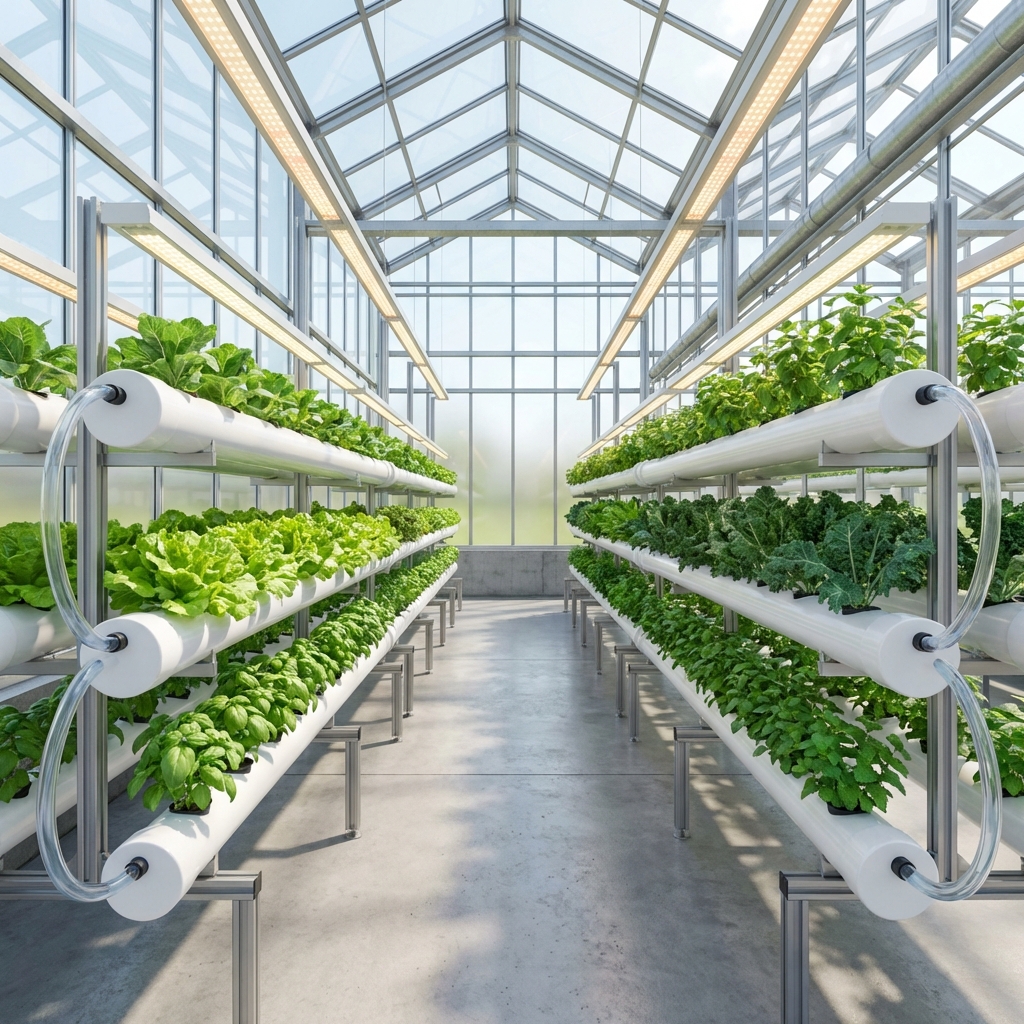
Min Byeong-gi, tomato farmer in Dangjin, achieved 650 million KRW revenue and 350 million KRW net profit on a 2,300-pyeong smart farm. The key was maximizing productivity through smart farm technology.
Kim Do-hyeon, cucumber smart farm in Gimje, migrated solo from Bucheon to achieve 100 million KRW+ in revenue. He remotely manages his cucumber farm unmanned via smart farm systems, dramatically cutting labor costs.
Hyeon Wang-cheol, citrus rain shelter in Jeju, built a smart farm using low-cost IoT devices. Instead of specialized equipment, he purchased and assembled individual IoT components to reduce initial investment. He now runs the “King’s Farm – Smart Farmer” YouTube channel and works as a smart farm instructor.
Song Ju-hee, agricultural corporation CEO in Hwacheon, started with perilla and sesame oil and became a local creator combining agriculture and culture. Through collaboration with village residents and networking, she grew her brand. She transformed agriculture into content, gained support from Naver and the Gangwon Creative Economy Innovation Center, and established herself as a regional innovator.
Success factors summarized:
- New technology adoption (38%): Smart farms, IoT, automation
- Distribution improvement (31%): Online sales, direct transactions, local food outlets
- Agricultural processing: Value-addition through secondary processing of primary products
- Community network building: Active use of agricultural extension centers, crop cooperatives, Nonghyup
- Clear sales channel establishment: Contract farming, corporate establishment, direct consumer connection
Other Support Options
Beyond the Young Farmer Settlement Program, there’s the Rural Migration Startup Fund. Up to 300 million KRW for agricultural startups (4 applications allowed) and up to 75 million KRW for housing (2 applications) at 1.5% interest with 5-year grace and 10-year installment repayment. Requirements: 100+ hours of farming/rural migration education through the Ministry of Agriculture or local government.
Young Farmer Scholarships are also available. Open to university juniors or above, or community college/agricultural university second-semester freshmen or above. Covers tuition plus 2.5 million KRW study incentive. Condition: employment or startup in agriculture or agri-food sector after graduation.
My Conclusion
Young farmer startup support — on paper, the conditions look perfect. 1.1 million KRW/month for 3 years, 500 million KRW low-interest loans, cheap farmland leases. But the field is different. The 30–50% failure rate exists for reasons.
To succeed:
- Build skills and experience first: Spend at minimum 6 months to 1 year working in the field before migrating. One month of field experience beats 100 hours of classroom training.
- Secure sales channels before you farm: Decide where you’ll sell before you start growing. Lock in at least one of: contract farming, local food direct outlet, or online sales.
- Consider smart farming: Most young farmer success stories involve smart farms. Higher initial investment, but productivity and efficiency are overwhelming.
- Build community relationships: Solo survival in rural areas is impossible. Actively engage with agricultural extension centers, crop cooperatives, and neighboring farms.
- Prepare for budget depletion risk: Selection doesn’t guarantee 100% loan approval. Have some self-funding prepared.
Young farmer support policy is undeniably a great opportunity. But don’t be dazzled by the numbers — 1.1 million KRW/month and 500 million KRW loans. Farming isn’t romance; it’s a business. And business is all about preparation and strategy. Behind the smiling faces in YouTube algorithm-fed young farmer videos lie countless untold nights of labor and lessons from failure.
Still, it’s worth the challenge. But only after thorough preparation and cold-eyed judgment.