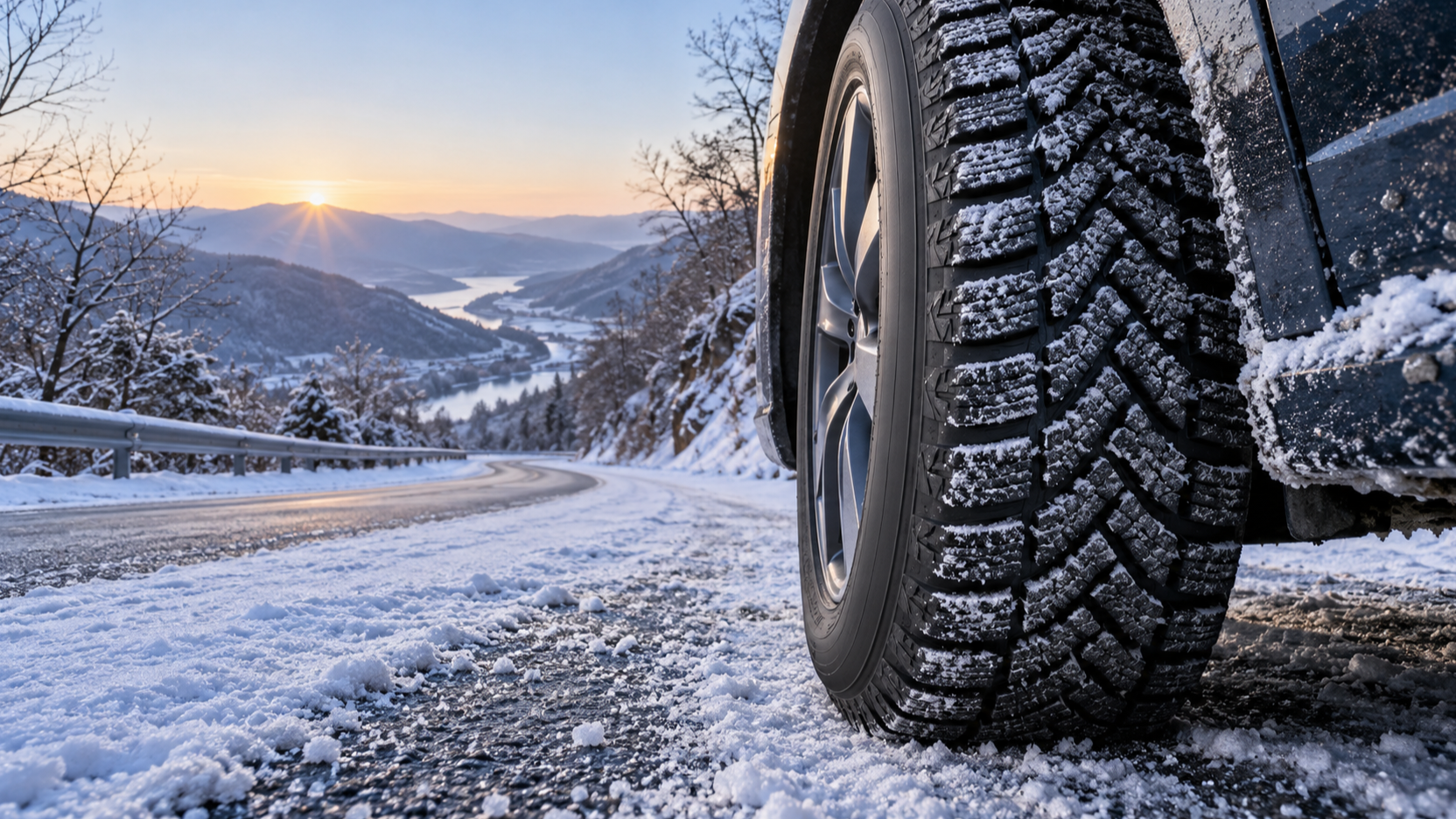
Why 7 °C is the switch point for winter tires, Hankook test results on snow (18.49 m vs 37.84 m braking from 40 km/h), how winter, all-weather and all-season tires differ, what 3PMSF and M+S markings mean, the 1.6 mm wear limit versus replacing at 3 mm, winter tire pressure, and what suits snowy rural roads.
In the countryside, the first hazard of a winter morning is the slope outside the yard. The pass into town sits in shade and the snow melts late. So by late October the question is whether to fit winter tires. On Naver, “winter tires” is searched 5,390 times a month and “all-weather tires” 5,200. This note covers when to switch, whether all-weather tires are enough, and how much tread is left, using manufacturer test figures.
Bottom line: Switch when morning temperatures regularly drop below 7 °C. Ordinary rubber hardens in the cold; winter tires use a compound that does not harden easily below 7 °C (Hankook). In Hankook tests, braking from 40 km/h on snow took 18.49 m on winter tires and 37.84 m on all-season tires. If you drive snowy roads often, choose winter tires; if you would rather not swap, choose all-weather tires with the 3PMSF (three-peak mountain snowflake) mark. An M+S mark alone does not mean winter performance.
Earlier notes: Calcium chloride de-icer 2026, preventing frozen pipes in farm sheds.
1. Why 7 °C?
Tire rubber stiffens as it gets cold and grips the road less. In its November 2025 winter safety guidance, Hankook said winter tires use a special compound that does not harden easily even below 7 °C. So temperature, not snow, is the trigger. If nights and early mornings stay below 7 °C for days, your commute already runs on cold rubber. Inland and mountain areas cool earlier than cities.
2. Braking distances
| Test | Winter tire | All-season tire |
|---|---|---|
| Snow, braking from 40 km/h | 18.49 m | 37.84 m |
| Ice, braking from 20 km/h | About 14% shorter than all-season | Baseline |
On snow the gap is twofold; on ice it narrows to 14%, so ice remains dangerous even on winter tires. These are the manufacturer’s own tests and vary by vehicle, tire model and surface.
3. Winter, all-weather and all-season
| Type | Designed for | Suits |
|---|---|---|
| All-season | Balance on dry and wet roads and mild winters | Cities with rare snow and quick plowing |
| All-weather | All-season plus stronger grip and traction on snow | Year-round use with occasional snow |
| Winter | Cold-weather compound, grip on snow and ice | Snowy mountains, shaded passes every day |
Check the sidewall. 3PMSF is the European winter-tire mark, given to tires that pass the UNECE snow test; it does not guarantee ice performance. M+S (mud and snow) describes a design intent, not a passed standard snow test. Certification can differ by size within one model, so confirm the mark for your size.
4. What suits rural roads
If you climb shaded slopes every morning on roads that are cleared late, winter tires fit. If swapping and storage are a burden, a 3PMSF all-weather tire is a reasonable compromise; drive slower in deep snow and on ice. Fit the same type on all four wheels so front and rear grip match. Spray or fabric snow chains do not replace winter tires but are worth keeping in the car for a sudden snowfall.
5. Tread: 1.6 mm versus 3 mm
The wear-limit indicator sits at 1.6 mm. Hankook’s 2020 guidance recommended replacing at about 3 mm instead: in wet-road emergency braking from over 100 km/h, a tire worn to 1.6 mm showed close to twice the braking difference compared with a new 7 mm tire. Winter tires last several seasons, so check depth each autumn before fitting.
6. Do not lower tire pressure
Hankook calls deliberately lowering pressure for snow grip “absolutely not to be done”. Pressure drops naturally over time and faster in winter as air contracts. Check it on cold mornings against the value on the driver’s door frame or in the manual.
7. FAQ
When should I fit winter tires? When mornings regularly fall below 7 °C; earlier inland and in the mountains.
Can all-weather tires get me through winter? With occasional snow and quick plowing, a 3PMSF all-weather tire can. For daily shaded mountain roads, winter tires are better.
When should tires be replaced? By tread depth: the limit is 1.6 mm, and Hankook recommends replacing at around 3 mm.
References
- Hankook Tire, winter vehicle safety tips (November 20, 2025; 7 °C, snow and ice braking tests, wear limit, pressure): hankooktire.com
- Hankook Tire, spring tire care tips (February 20, 2020; 3 mm replacement, 1.6 mm vs 7 mm braking): hankooktire.com
- Hankook Tire, Weatherflex GT launch (July 14, 2025; 3PMSF European winter mark): hankooktire.com
- iNews24, October 17, 2026, all-season vs all-weather and 3PMSF/M+S marks: inews24.com
- Naver Search Ad keyword tool monthly searches (checked October 23, 2026).