Tesla TSP-420: Why They Built Their Own Solar Panel After 10 Years
Elon Musk finally kept his promise. It took 10 years.
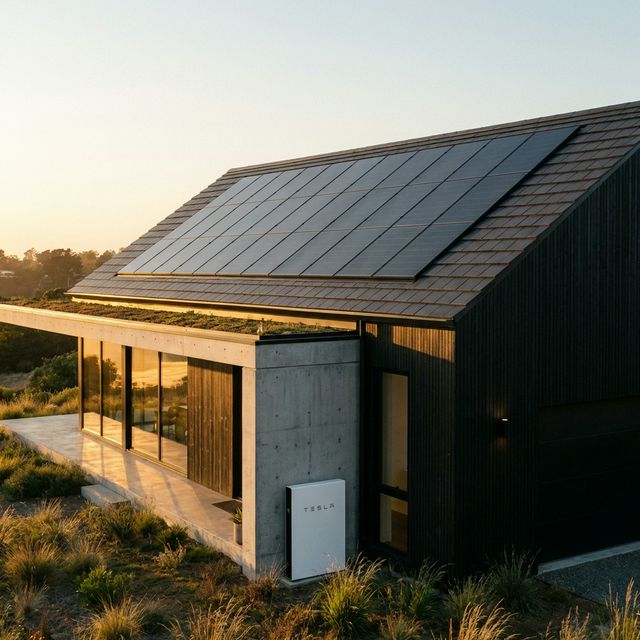
The day he acquired SolarCity for $2.6 billion in 2016, Musk said he’d “unify solar and electric vehicles.” Ten full years later, the TSP-415 and TSP-420 panels rolled off the line at the Buffalo Gigafactory in New York State on January 29, 2026. The era of slapping Tesla logos on other companies’ panels is over.
The Buffalo Factory — A Signal of Revival
The New York Gigafactory once carried the title “largest solar panel factory in the Western Hemisphere.” After Panasonic pulled out, it became a place that churned out Supercharger components and ran Autopilot data labeling. Essentially neglected.
But with the restart of in-house solar module production, the atmosphere has shifted entirely. One line on the datasheet stands out: “Proudly crafted by the humans of planet Earth and assembled in Buffalo, New York, USA.” Though the word “assembled” suggests the solar cells themselves are still imported.
TSP-420 — What’s Different?
Let’s start with specs. The TSP-420 maxes out at 420W. That number alone isn’t exceptional — Hanwha Q CELLS’ Q.PEAK DUO ML-G11 series already hits the upper 400W range.
Tesla’s differentiators lie elsewhere.
- 18 Power Zones design: Even if some parts of the panel are shaded by tree branches or chimney shadows, the remaining sections maintain output independently. Standard panels suffer when a single cell is shaded — the entire string is affected. Tesla isolates down to single-cell units. A significant advantage for residential roofs with frequent partial shading.
- Rail-free mounting system (Zep technology): Acquired through the SolarCity deal. Panels mount flush to the roof without rails. Clean. True to Musk’s minimalist aesthetic.
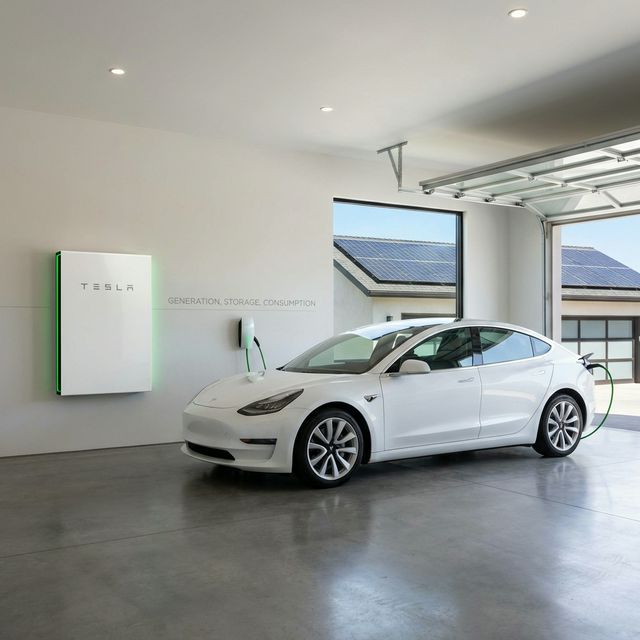
- Powerwall integration: This is the core. Tesla panels → Powerwall ESS → EV charging. Energy circulates within one ecosystem. Just as Apple bundled iPhone–Mac–AirPods, Tesla bundles solar–battery–car.
Should Hanwha Q CELLS Be Worried?
Honestly, not yet. But the trajectory is unsettling.
Currently, Hanwha Q CELLS holds top market share in US residential solar. They mass-produce Made-in-USA panels at their Dalton, Georgia factory and receive IRA (Inflation Reduction Act) domestic manufacturing subsidies. In other words, they’ve already captured the “Made in USA” premium.
Tesla isn’t going for a head-on price war. They’re supplying premium exclusive hardware to installers. “Use our panels and they’re perfectly compatible with Powerwall” — that single line is the weapon. Ecosystem lock-in strategy. Sound familiar? It’s exactly the iPhone playbook.
The real threat for Hanwha Q CELLS isn’t panel performance — it’s that Tesla has declared a goal of annual 100GW solar cell production capacity. Musk stated at the World Economic Forum that he would “build a vertically integrated solar manufacturing base.” If that becomes reality, the game changes.
Impact on Korea’s Agrivoltaics Market
Tesla panels aren’t likely to enter the Korean market immediately. There are KS (Korean Standards) certification issues and no distribution network. But the indirect ripple effects could be larger than expected.
First, price pressure. If Tesla disrupts pricing in the US market, the global profitability of Korean manufacturers like Hanwha Q CELLS and LG takes a hit, which could influence domestic panel prices. Second, technology trends. The 18 Power Zones partial-shading technology is quite useful for agrivoltaics. In environments where farm equipment moves beneath panels and crops grow below, partial shadows are unavoidable.
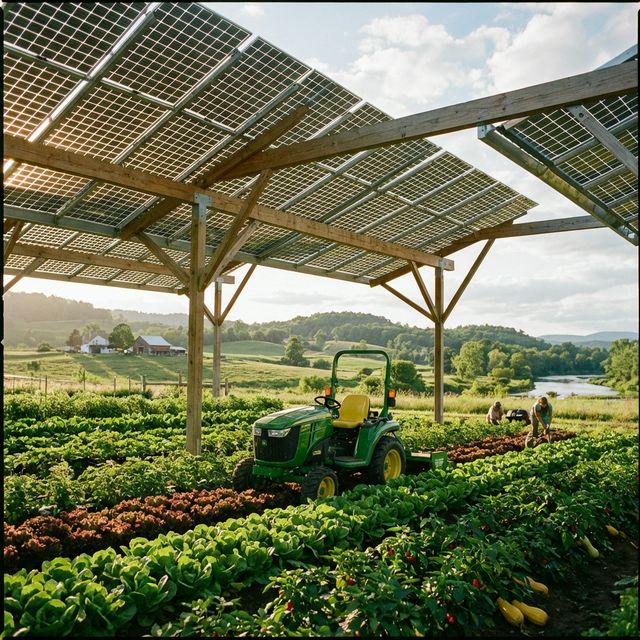
If the Farmland Act amendment is finalized in the first half of 2026, agrivoltaics will become possible even within Agricultural Promotion Areas. Setback distance standards will be unified nationally. As panel technology improves, designs become possible that extract more power from the same area while minimally affecting crop growth. Tesla’s technical innovation sets a benchmark: “this is the standard Korean agrivoltaics panel makers need to match.”
Musk’s Real Vision
It might seem like overreaction to one panel launch. But re-read Master Plan Part 3 and the picture changes.
Musk’s envisioned world: Solar Roof or solar panels on every roof, stored in Powerwalls, stabilized through Megapacks for the local grid, and driven on in Tesla vehicles. Excess power sold back to the grid for revenue. Energy production–storage–consumption–sales, all within Tesla’s fence.
The TSP-420 was the missing puzzle piece. As long as they used someone else’s panels, the first button of the ecosystem belonged to someone else. Now they’ve replaced that button with their own. The chicken-or-egg dilemma, settled after 10 years.
Whether the 100GW annual production target actually materializes is uncertain. High-purity polysilicon supply issues remain, and Buffalo’s current production capacity is limited. But the scariest thing about Musk hearing “it can’t be done” is that he often goes and does it anyway.
References
- Hankook Kyungjae, “Tesla makes panels too… Hanwha Q CELLS on alert” (2026.02.04)
- Global Economic, “Tesla launches US-made solar panel ‘TSP-420’” (2026.01.14)
- Nate News, “Tesla’s solar revival signal… US-produced panel launch” (2026.01.13)
- Naver Blog, “Tesla Solar (feat. OCI Holdings)” (2025)
- HIZON TV, “3 changes coming to agrivoltaics in 2026” (2025.10.27)
- Namuwiki, “Tesla Energy”