Budget Smart Farms — What's All the Fuss About?
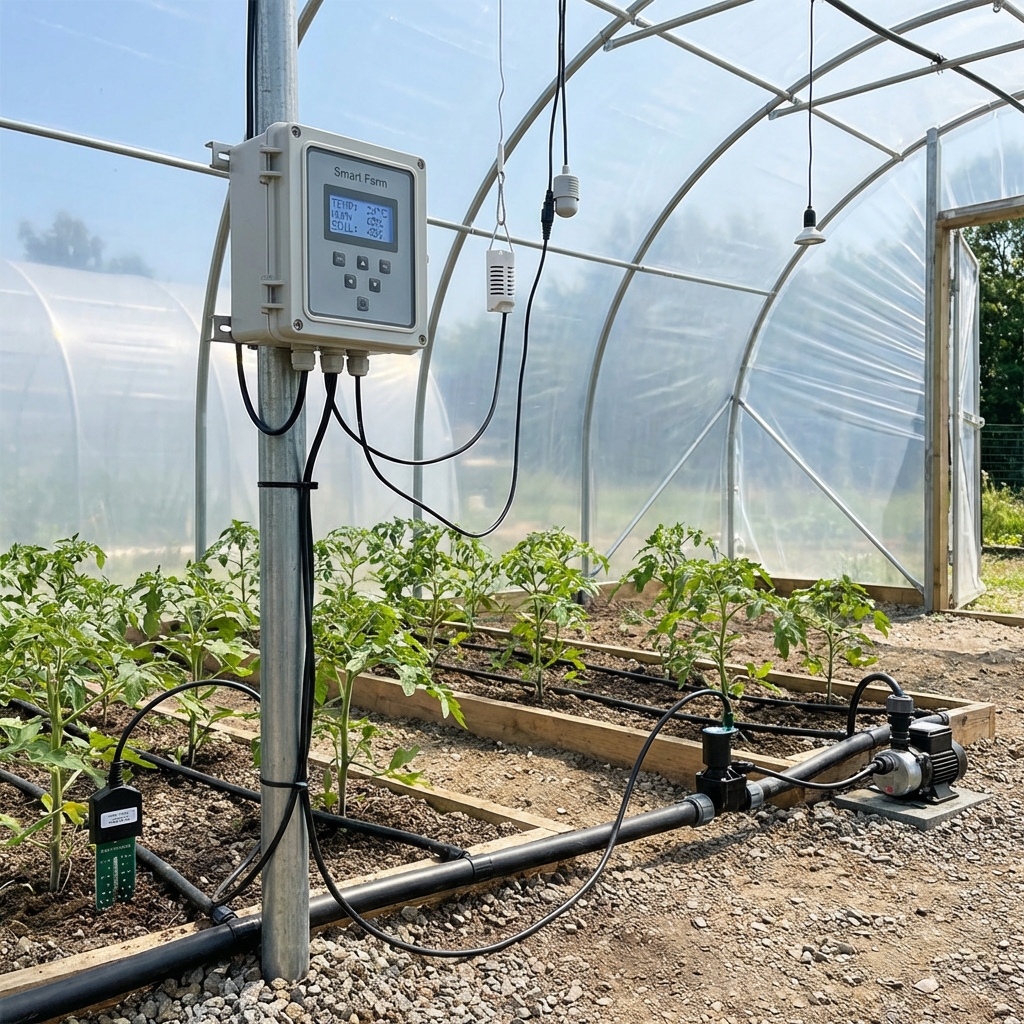
Earlier this year, I kept thinking about an Instagram post I saw — someone who attached a few sensors to a 300-pyeong greenhouse. The comments were filled with dozens of “Is this really a smart farm?” questions. But barely any insightful answers. When people hear “smart farm,” they picture massive technology and enormous investments. But the truth is, you can start at a much closer, much smaller level — and most people still don’t know that.
Smart Farm? Sounds Expensive, Right?
A smart farm is actually simple. It automatically measures environmental data like temperature, humidity, soil moisture, and light, then uses that data to automate or semi-automate tasks like watering, ventilation, and temperature control. What you used to measure by hand every day — machines do it instead, and smart machines at that, making decisions based on conditions.
The key point here is that it’s not one monolithic system. A budget smart farm is literally the small, affordable version. A few sensors, one controller, and an internet connection. That’s enough. We’re not talking about the complex systems that big industrial farming companies use — it’s now at a level that any local farmer can adopt.
How Is It Different from Conventional Smart Farms? Let’s Be Honest
Conventional large-scale smart farms are impressive. Tens of billions of KRW in investment, with PhD-level technicians hovering over the system. They predict yields precisely, adjust growing environments down to the millimeter, and analyze the resulting data with AI to plan next year’s farming in advance. It’s less farming and more precision manufacturing.
Budget smart farms are different. Sensors collect only key information — temperature, humidity, and soil moisture. This information gets pushed to your phone. Then the farmer looks and decides: “Oh, the soil’s too dry. Need to water.” They can act on it themselves, or program the system to water automatically. Same with ventilation — if the temperature exceeds 30°C, windows open automatically, or sprinklers activate. That’s about it.
The bottom line: conventional smart farms are “fully automated precision agriculture,” while budget smart farms mean “reducing manual work while accepting imperfection.”
Actual Investment Costs — How Much Do You Really Need?
This is the part everyone’s most curious about. Honestly, it depends on farm size. But here’s a rough framework.
Ultra-small set (greenhouse under 100 pyeong): 3–4 sensors, a basic controller, and an automated irrigation system — 3 to 5 million KRW. This covers the basic setup. Monitoring just temperature, humidity, and soil moisture is enough.
Small set (100–300 pyeong): 6–8 sensors, an advanced controller, and an automated ventilation system — 8 to 15 million KRW. This is where things get more serious. The level where a small farm says “we’re doing this for real.”
Medium and above: Once you’re in the tens of millions range, you’re better off consulting with established large-scale smart farm companies.
The thing not to miss here: sensors can be added incrementally. Start with just temperature and humidity, then add soil sensors later, then nutrient measurement sensors. You can expand gradually. No need to invest everything at once.
Installation and Operation — Isn’t It Difficult?
This is one reason budget smart farms are gaining traction. It’s not complicated. Mount sensors on greenhouse walls, place the controller in a corner indoors, connect via WiFi or LTE, and you’re done. Installation itself takes about half a day.
The initial setup is a bit tedious. You need to configure conditions: at what temperature should watering start? Should ventilation kick in when humidity exceeds 80%? But this is a one-time thing. After that, you barely touch it. Of course, maintenance like sensor cleaning or battery replacement is needed, but that’s about 1–2 hours per month.
The problem lies elsewhere. What if a sensor breaks or malfunctions? It happens more often than you’d think. Sensors are vulnerable in humid environments. In a high-humidity greenhouse, sensors can develop mold or corrode. Data connections can drop, or sensor readings can spike erratically. When that happens, you need to personally check and adjust the sensor. This is where a basic understanding of the technology becomes necessary.
Actual Results — Are They Really Good?
This varies a lot by individual situation. One thing is certain: “water waste decreases.” Soil sensors tell you to water only at the moment it’s actually needed, so you can cut back on the mindless over-watering that comes from inexperience. Reports consistently show 30–40% reduction in water usage.
Temperature and humidity management is similar. No need for overnight monitoring. Check on your smartphone, and if needed, the pre-set automated conditions handle adjustments. No more going out to the greenhouse at 3 AM to open windows.
But how much do yields increase? Here’s my answer: “No guarantees.” The yield difference between a seasoned farmer’s manual methods and a smart farm may not be as large as expected. But for beginners or farmers too busy with other things? That’s a different story. Consistent environmental management improves quality. Produce with fewer blemishes. Time saved, too.
Ultimately, the real value of smart farming is “reduced labor time” and “consistency” — not “miraculous yield increases.”
Which Crops Benefit Most?
Everything works, but some crops are particularly well-suited. Leafy greens (lettuce, kale, salad greens), strawberries, tomatoes, paprika, and cucumbers. These are sensitive to environmental changes, so precise temperature and humidity management directly impacts yield and quality.
On the other hand, open-field crops like sweet potatoes, radishes, and napa cabbage might not need a smart farm. You could do it, but the return on investment may be relatively lower.
How Does the Technology Work?
Sensors collect information. That information goes up to the cloud (internet server). From there, the farmer checks via an app. Simultaneously, preset conditions trigger automatic commands: “Start ventilation when temperature exceeds 32°C,” “Supply water when soil moisture drops below 20%.”
The important thing here: all of this works offline too. Even if WiFi cuts out, sensors keep collecting data and the controller operates according to pre-programmed rules. So even remote farms without internet connectivity can use it.
So, Is It Worth Starting with a Budget System?
The answer to this question is simple: “You won’t know until you try.” Technology keeps improving, and prices keep dropping. A sensor set that cost 2 million KRW three years ago now costs around 1 million. More companies are entering the space, competition is increasing, and beginner-friendly products keep multiplying.
If you want to manage your current farm more efficiently? Start with 1–2 sensors. A single temperature sensor can teach you more than you’d expect. Then slowly add what you need. Starting in a 100-pyeong greenhouse is fine. The experience you gain there becomes a huge asset when you expand to larger facilities later.
In the end, a smart farm isn’t anything special. It’s just traditional farming with a bit of technology layered on top. And “budget” means that “a bit” has now become genuinely “a bit” — enough to make a real difference.
If someone asks what the future of agriculture is, I could give a grand answer. But the reality is this: figure out what your farm needs right now, and gradually add the right technology. That’s the answer.