Making seoritae (green-kernel black soybean) powder at home with official numbers: moisture from the RDA food composition table (11.7% raw, 4.6% roasted soybean flour) giving about 926 g per kg, roasting conditions from a Korean Journal of Food Science and Technology study (170℃ 15 min, 150℃ 20 min), storage, and Coupang prices for domestic seoritae and seoritae powder on November 14, 2026.
A bag of new-crop seoritae goes into rice and kongjaban, and there is still some left. Roasting and grinding the rest gives a powder for milk or soy milk, or a coating for rice cakes.
Bottom line: 1 kg of domestic seoritae, roasted and ground, comes to about 926 g in theory. The RDA food composition table lists 11.7% moisture for dry seoritae and 4.6% for roasted soybean flour, so about 7% of the weight leaves as water (our math). A Korean Journal of Food Science and Technology study named 170℃ for 15 minutes or 150℃ for 20 minutes as the best roasting conditions. On November 14, 2026 Coupang listed domestic seoritae at KRW 12,900–13,980 per kg and domestic seoritae powder at KRW 9,980–11,900 per 500 g.
Earlier records: Seoritae Harvest Time and Price 2026, Kongjaban with Seoritae 2026.
1. What seoritae is
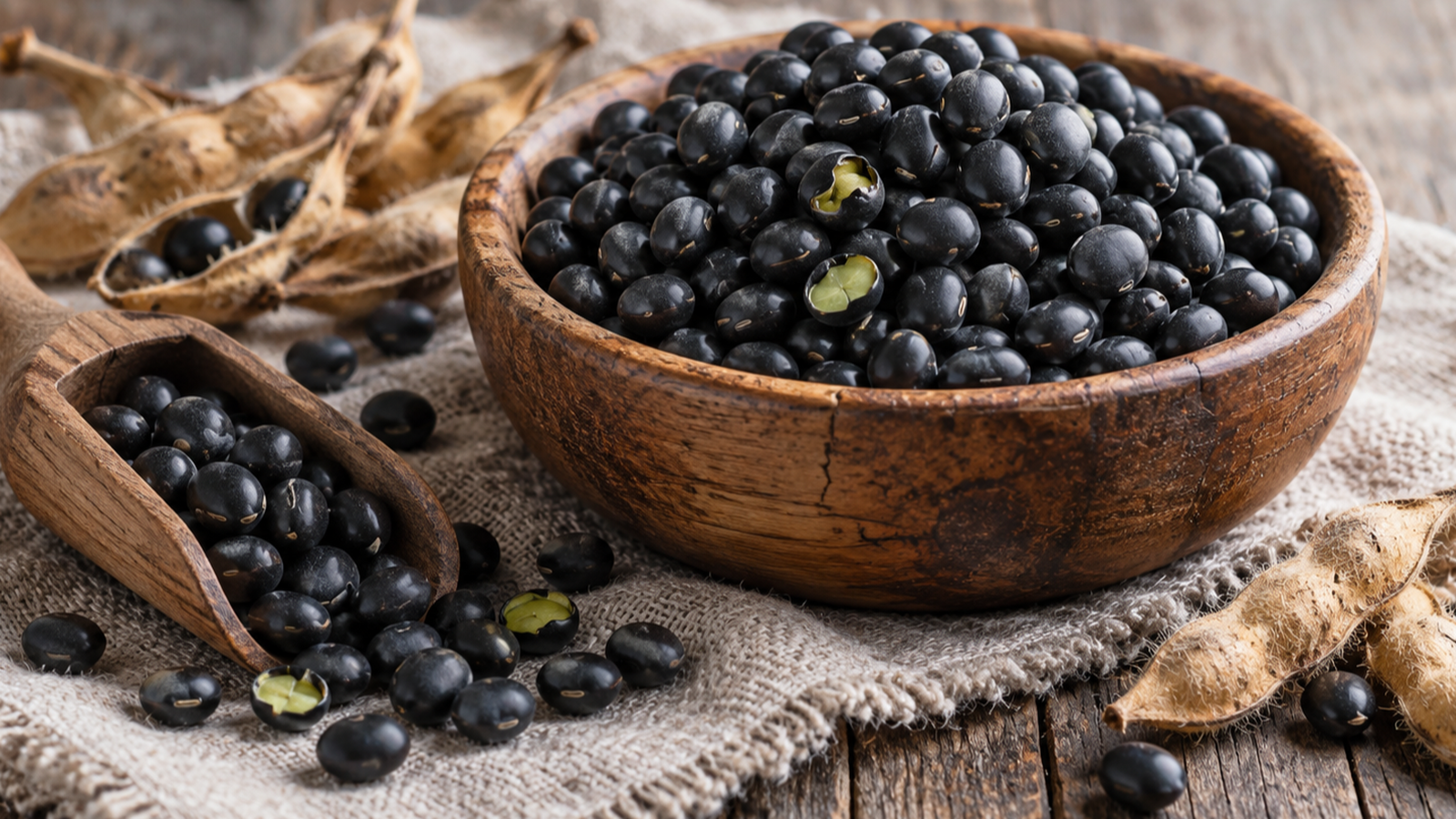
The Gyeonggi Agricultural Research and Extension Services describes seoritae as a late-maturing native black soybean harvested after the first frost in early November, with very large seeds and deep green cotyledons. Check that the label says domestic seoritae, not just “black bean powder”.
2. Roasting
The study roasted seoritae at 110, 130, 150 and 170℃ for 10, 15 and 20 minutes; 170℃/15 min and 150℃/20 min came out best. Moisture fell as temperature and time rose. These are oven-style settings; we found no official frying-pan time. In a pan: dry the beans fully, roast without oil over medium-low heat while stirring, stop when the skins crack and a bitten bean is crisp through, then cool completely before grinding.
3. Weight after roasting
| Item (per 100 g) | Moisture | Solids |
|---|---|---|
| Seoritae, dry | 11.7 g | 88.3 g |
| Soybean flour, roasted | 4.6 g | 95.4 g |
883 g of solids ÷ 0.954 ≈ 926 g. This is a calculation, not an official yield.
4. Storage
The RDA webzine (2022) recommends 18–22℃ for whole soybeans, about three months, and warns that a kimchi refrigerator adds moisture. We found no official shelf life for soybean powder; keep a month’s supply sealed and freeze the rest in small portions.
5. Buy or make?
| Product (Coupang, Nov 14, 2026) | Size | Price | Per 500 g |
|---|---|---|---|
| Daegu Nongsan domestic seoritae | 1 kg | KRW 12,900 | KRW 6,450 |
| Sillim Nonghyup domestic seoritae | 1 kg | KRW 13,980 | KRW 6,990 |
| Kkokgok Gimje seoritae | 2 kg | KRW 15,900 | KRW 3,975 |
| Garubaksa twice-roasted seoritae powder | 500 g | KRW 9,980 | KRW 9,980 |
| Neueurim twice-roasted seoritae powder | 500 g | KRW 11,900 | KRW 11,900 |
Beans for 500 g of homemade powder cost about KRW 7,000–7,550 from 1 kg packs (our math), before grinder, energy and time. Seoritae is not in the KAMIS survey; domestic white soybeans were KRW 227,000 per 40 kg in Seoul on November 13.
6. Farm notes
Broken and small beans that do not sell as whole beans work fine as powder stock. Roasting or grinding for sale is food processing and needs a report to the local government; ask the sanitation office first.
References
- Gyeonggi ARES, Paju Jangdan seoritae breeding report
- Moon et al., Korean J. Food Sci. Technol. 57(1):101–109
- Woo et al., Food Engineering Progress 22(1), 2018
- RDA Food Composition Table, 7th revision (2006)
- RDA webzine, June 2022: soybean storage
- KAMIS wholesale price, domestic white soybeans, Nov 13, 2026
- Coupang retail prices, Nov 14, 2026