Will Samsung Modular Homes Change Rural Second Houses?
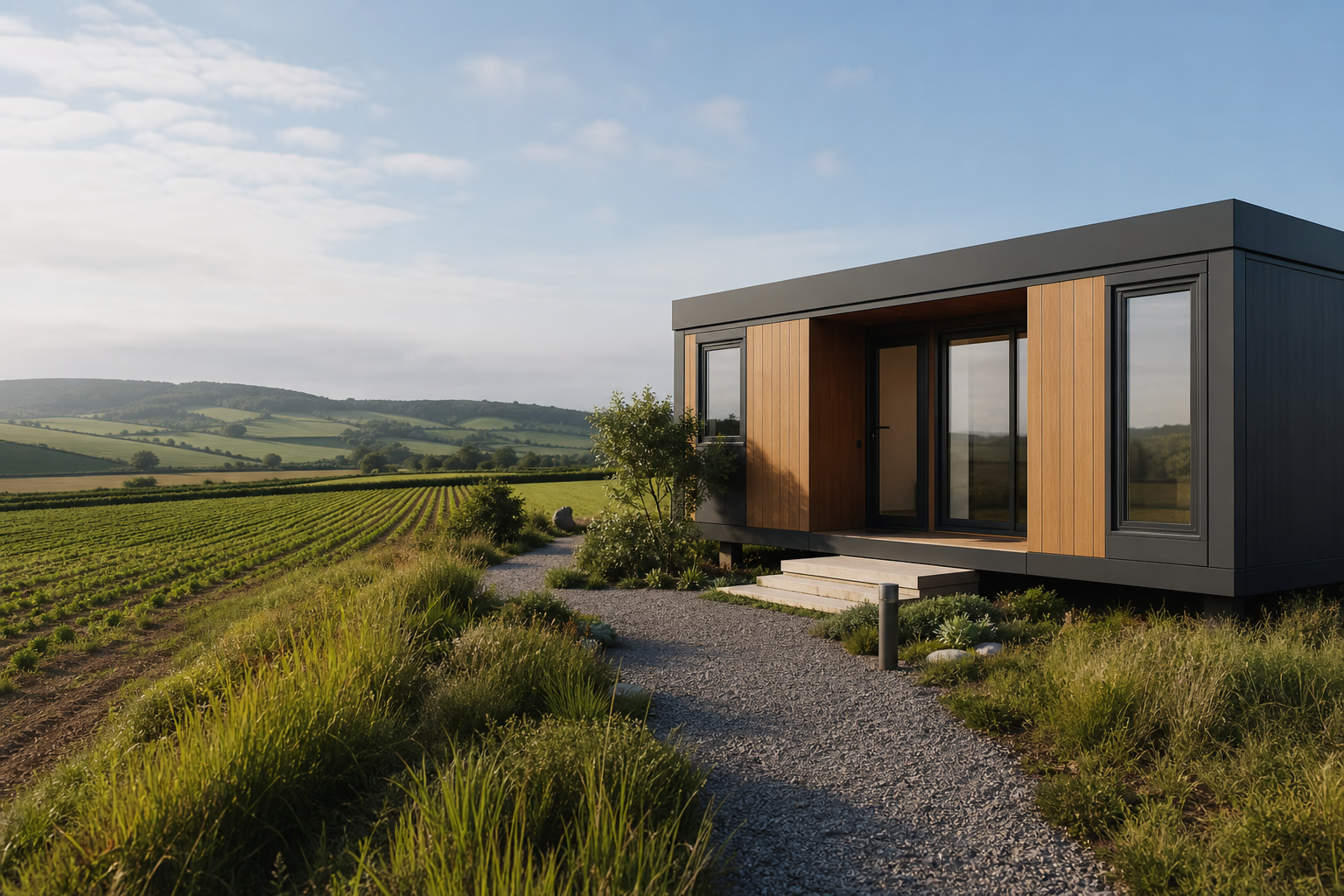
Will Samsung Modular Homes Change Rural Second Houses?
Wanting a small house in the countryside is easy. You imagine weekends, a small garden, quiet rain, and a porch facing the fields. Then the estimate arrives. The house itself is only one part. Site preparation, access roads, septic systems, electricity, water, drainage, and foundations suddenly become the heavier story.
That is why modular housing keeps coming up. The idea is simple. Build most of the house in a factory and assemble it on site. As Samsung C&T shows future housing technologies such as Raemian Next Home and OSC-based components, and as Korea’s Ministry of Land, Infrastructure and Transport discusses modular construction as a policy tool, people are starting to look at modular homes differently. Could this change the rural second-house market?
It can. But the wrong conclusion is dangerous. A modular home does not mean a house can be placed on farmland freely. Modular construction changes how a house is made. It does not erase land-use rules. For rural second houses, the real business case is decided by land, permits, infrastructure, and after-service, not by the module price alone.
1. Samsung’s signal is about housing systems, not just small homes
Samsung C&T’s future housing concepts, including Raemian Next Home, point toward flexible living spaces, infill systems, modular bathrooms, and off-site construction. This is not the same as simply selling a container house. It is about reducing on-site uncertainty, improving factory-level quality control, and making homes adaptable to changing lifestyles.
The Korean government is also paying attention to OSC and modular construction. OSC means building parts, assemblies, or modules away from the site and then installing them on site. The goal is to reduce construction time, improve safety, and respond to labor shortages.
This matters in rural areas. Small rural houses often suffer from inconsistent on-site quality, limited skilled labor, delayed schedules, and unclear defect responsibility. A modular system can reduce some of that uncertainty. In the rural second-house market, predictable quality is not a small advantage.
2. The rural second-house demand already exists
Many urban residents want a small rural base. Full migration to the countryside feels too heavy. But a weekend garden, a family hometown, retirement preparation, nature time for children, or a small farm project can all create demand for rural stays. That is the second-house market.
Traditional country-house construction can be burdensome. The owner needs a designer, a builder, site visits, schedule checks, and constant decisions. Rain delays the work. Material prices change. Defects create arguments. For an urban worker, the process can become a second job.
Modular housing aims directly at this pain point. Standardized models, shorter on-site work, more predictable quality, and faster occupancy can matter more than luxury finishes. Rural second-house buyers often want a small house they can actually manage. If a large company pairs modular construction with service, the trust barrier can fall.
3. Farmland installation is a separate issue
This is the most important point. A modular home cannot be placed anywhere simply because it is modular. Under the Farmland Act, using farmland for non-agricultural purposes can be treated as farmland conversion. Building a house may require farmland conversion permission or reporting, building permission or reporting, land category changes, and infrastructure review.
A farm shed and a house are also different. A farm shed is generally limited to agricultural material storage, simple crop handling, and temporary rest during farm work. If the structure is used for residence, it may not qualify as a farm shed. Local government guidance also explains that facilities beyond the farm-shed scope may require farmland conversion procedures.
So the first question is not the model name. The first question is whether the land can legally host a house. Road access, zoning, agricultural promotion area status, drainage, wastewater treatment, electricity, water, building coverage, and floor-area ratio all come first. In rural construction, land comes before the house. If that order is reversed, money starts leaking.
4. Modular homes reduce some costs, not all costs
Modular construction can reduce on-site construction time. Factory production can continue even when the site has weather problems. Quality control can become more standardized. Bathroom modules and mechanical parts can be inspected before arrival, reducing some defect risk.
But many costs remain. Earthwork, foundations, access roads, crane work, transport, septic systems, electricity, water, drainage, and site preparation do not disappear. If the site is in a mountain village or narrow farm road, transport and crane costs can rise. A beautiful module is useless if it cannot reach the land.
That is why rural second-house estimates should never stop at the unit price. A house module may cost 100 million KRW, but site and infrastructure costs can add 30 million, 50 million, or more. The buyer is not just buying a small house. The buyer is running a small construction project. That difference matters.
5. What large companies can change
If major brands enter modular housing seriously, consumer perception can change. For years, modular homes have been mixed with images of containers, temporary buildings, or low-cost housing. A large company can reframe the category through design, quality control, smart-home systems, and after-service.
This is meaningful for rural second houses. Urban buyers often distrust remote construction sites and worry about rural after-service. If a brand can provide clearer warranty and quality standards, the purchase barrier becomes lower. Smart-home systems, remote control, energy management, security, and climate control also match weekend-style rural homes.
This does not mean the homes become cheap. Large-company modular homes may begin in the premium segment. Rural buyers may have to choose between a cheaper small house and a more expensive but more reliable one. Beginners often want reliability. Budgets often want the opposite.
6. Ten checks before buying a rural modular second house
Before choosing a modular model, the owner should check the site first. The order matters more than the brand.
- Check whether the land can legally host a house.
- If it is farmland, check farmland conversion permission or reporting.
- Check whether building permission or building reporting is required.
- Confirm access-road width and crane access.
- Estimate electricity connection distance and cost.
- Check water supply, groundwater, septic, and wastewater options.
- Plan foundations and drainage.
- Get separate estimates for transport and lifting equipment.
- Separate module warranty from on-site construction defect responsibility.
- Check insulation, condensation, ventilation, freezing, and winter performance.
If one of these is missing, costs can jump later. In rural housing, small holes produce large bills. Water, roads, and electricity should never be treated lightly.
7. The connection with smart farms is more interesting
From the IMUN.FARM perspective, the bigger point is that a rural second house can become more than a weekend retreat. It can become an operating base for a small farm, smart greenhouse, packing space, farm shop, or experience farm. The house becomes both a resting space and a working space.
Modular construction can fit this staged growth. A farm can begin with a small stay unit and later add a packing room, office, cold-storage support space, or visitor area. The legal use and permits must match, but the idea of expandable planning fits rural businesses.
Samsung’s future housing technology may not move directly into rural villages tomorrow. Still, the direction is clear. Homes are becoming less like fixed blocks and more like adaptable platforms. Rural second houses will not avoid that trend.
8. Will it change the whole market?
Samsung-related modular housing trends will probably not change the entire rural second-house market at once. Rural construction is strongly shaped by land rules and local infrastructure. Even the best module needs legal land, road access, electricity, water, and wastewater systems.
But it can change the standard. Buyers will expect shorter construction time, more predictable cost, better insulation, better ventilation, and clearer after-service. Local small-house builders may also face pressure to become more standardized and transparent.
A rural second house fails when it is built only from emotion. The sunset is free. The septic system is not. Modular housing can become a strong option, but the answer still begins with the land.
One-line summary
Samsung C&T’s modular and OSC housing direction can raise the quality and trust standards of rural second houses, but farmland installation depends on land-use permission, building approval, and infrastructure, not on whether the house is modular.
References
- Samsung C&T Newsroom,
Samsung C&T Reveals Raemian Next Home Test Bed for Future Housing. - Samsung C&T Newsroom, OSC and modular elevator development materials.
- Ministry of Land, Infrastructure and Transport,
Promoting Modular Construction to Accelerate Housing Supply. - MOLIT and LH public materials on OSC and modular housing activation.
- Korea Law Information Center,
Farmland Act. - Ministry of Agriculture, Food and Rural Affairs,
Farmland Affairs Handbook. - Local government guidance on farmland conversion and farm-shed installation.