Who can run a rural homestay (nongeochon minbak) in Korea as of November 2026, the 230 square meter and six-month residence rules, required fire safety equipment, annual training, VAT and the farm side-income tax exemption, and the switch to registration on October 28, 2027.
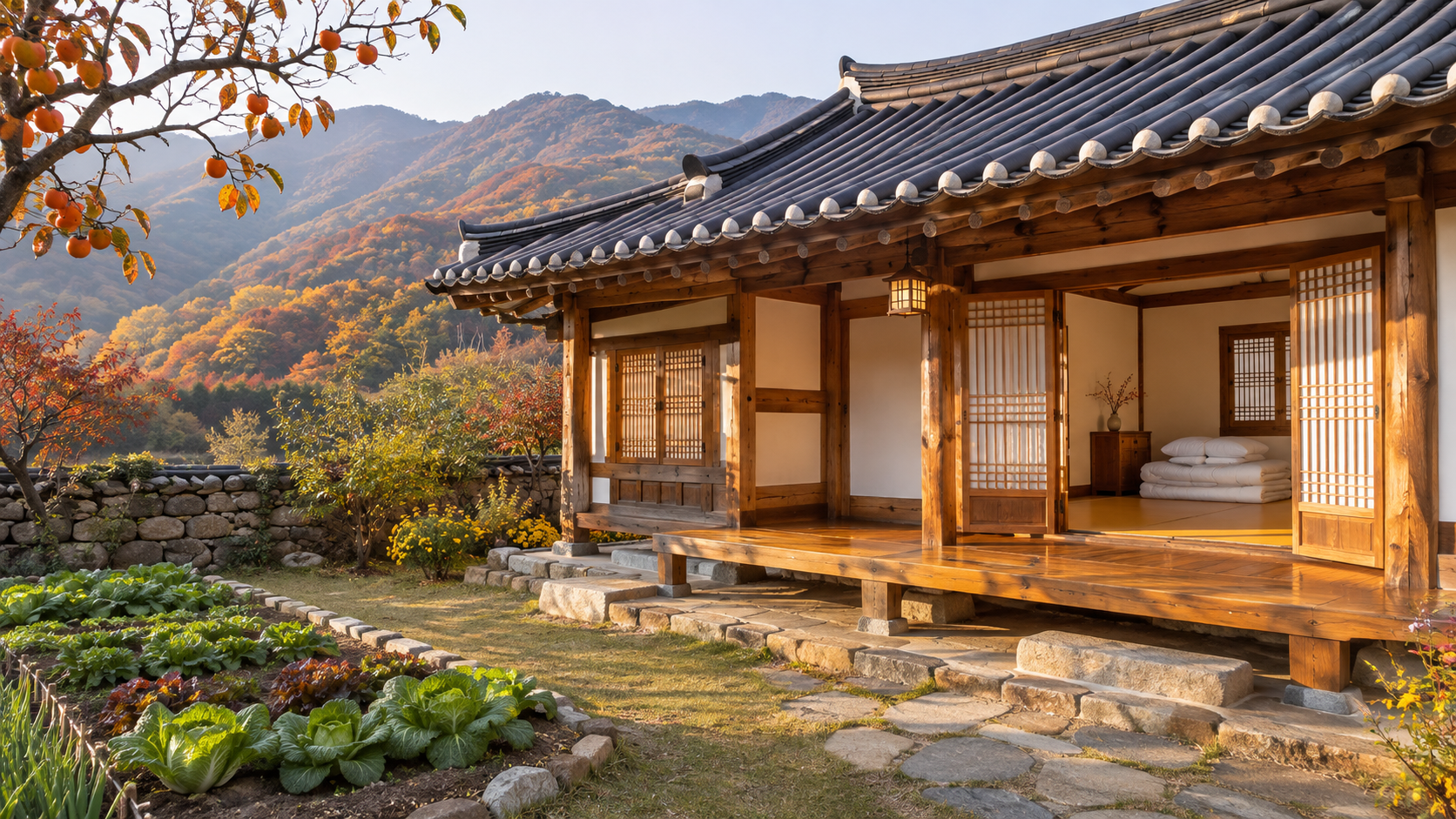
Renting spare rooms in a lived-in country house to weekend guests is a separate legal category in Korea: the rural homestay, or nongeochon minbak. It is not a hotel license, and the rules change in 2027.
Bottom line: As of November 2026, a rural homestay is opened by filing with the city, county or district office under the Rural Community Development Act. You must be a local resident who has lived in that area for six months or more, live in and own the detached house, and keep the floor area under 230 m². From October 28, 2027, the rules move to the Urban-Rural Exchange Act, filing becomes registration, and the residence and ownership requirements are dropped.
Requirements today
- Resident of a rural or semi-rural area, living in that district for 6+ months continuously
- A detached or multi-household house you live in and own (renters who have lived there 3+ years may qualify)
- Floor area under 230 m² (designated heritage houses excepted)
Submit Form 75 to the local office. Officials check resident, family and building records themselves. If groundwater is used for breakfast, attach a drinking water test from the last two years. The office must respond within 10 days.
Safety equipment
Every homestay needs a fire extinguisher, standalone smoke alarms and portable emergency lights. Homes heated with gas, oil, wood or coal also need carbon monoxide alarms near the heater and in each guest room, plus an automatic extinguisher, and a gas leak alarm if there is a gas boiler. An electrical and LPG safety check is required yearly.
Running the business
Post the filing certificate and room rates, include breakfast in the room price, display the official sign, disinfect monthly, wash bedding after each guest, and complete 3 hours of training every year. Fines for breaking these rules are 200,000, 400,000 and 800,000 won for first, second and third violations.
Tax
Homestay income is subject to VAT, so register as a business within 20 days of starting. For farmers and fishers, homestay income counts as farm side income, which is income-tax exempt up to 30 million won of net income per year combined with other side income.
2027 changes
The amended Urban-Rural Exchange Act takes effect on October 28, 2027. It moves homestays to registration, removes the prior residence and ownership rules, lets local governments set size limits, allows lunch and dinner, and creates a new “vacant-house regeneration homestay” with an on-site manager.
References
- Rural Community Development Act, Enforcement Decree and Enforcement Rules (law.go.kr, versions effective September 2026).
- Income Tax Act Enforcement Decree Article 9; Value-Added Tax Act Article 8.
- Ministry of Agriculture, Food and Rural Affairs press release, October 26, 2026.