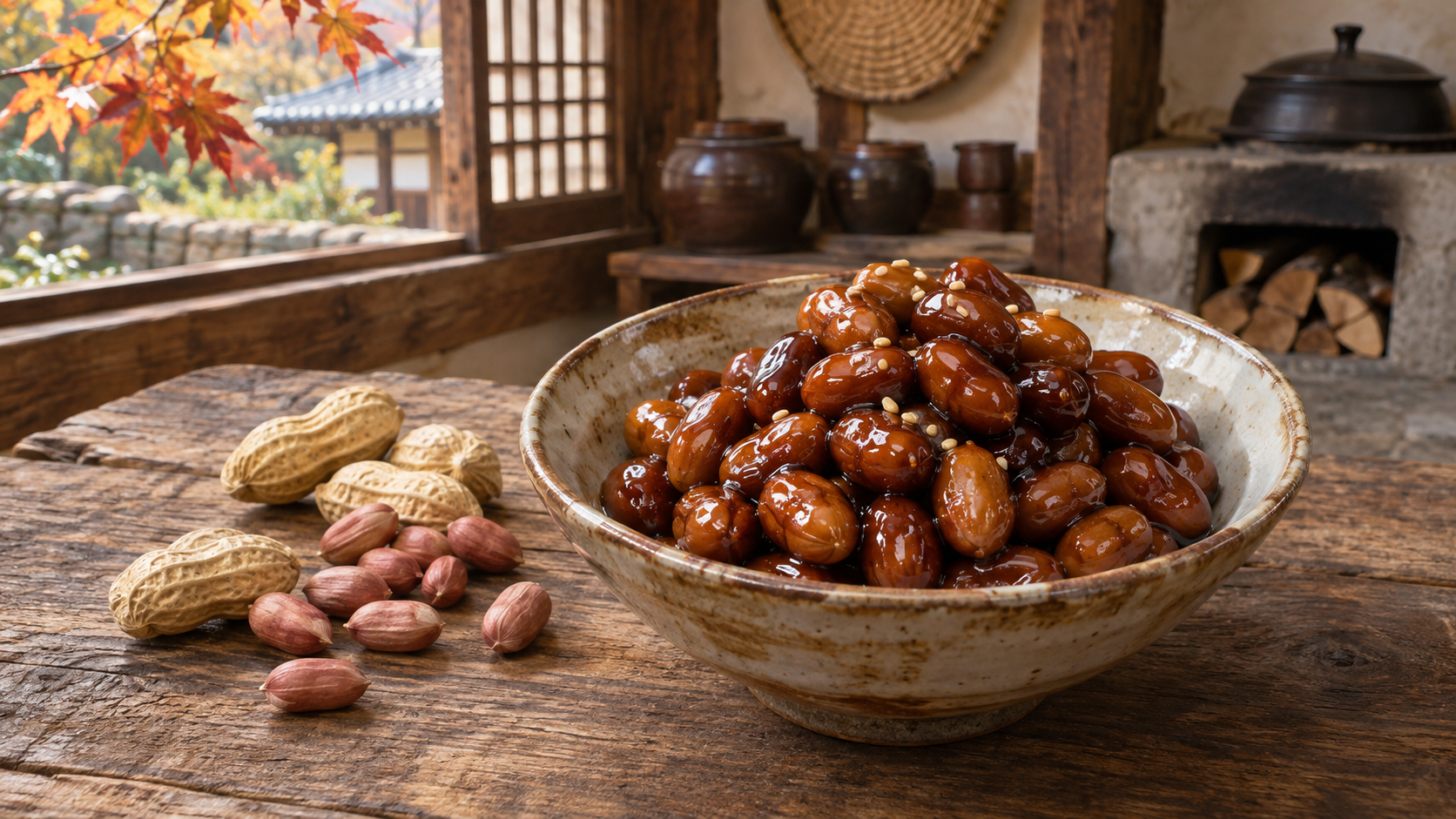
How to make Korean soy-braised peanuts with 500g of raw peanuts: whether to buy in-shell or shelled, why you boil in plain water before braising, how to keep them from turning hard, storage tips, and Korean wholesale peanut prices on November 5, 2026 (KAMIS).
Glossy soy-braised peanuts are a staple on Korean side-dish counters in late autumn. This is also the best season to make them at home, because fresh-harvest peanuts are everywhere.
Bottom line: braised peanuts (ttangkong-jorim) are made from raw, unroasted peanuts, boiled in plain water first and then simmered in a soy mixture. On November 5, 2026, domestic peanuts (top grade, 30kg) sold for KRW 486,000 wholesale in Seoul — about KRW 16,200 per kg (KAMIS). A typical batch uses 300–500g of shelled raw peanuts.
Earlier records: boiling in-shell peanuts and retail prices in Raw Peanut Prices and Boiling 2026, wholesale price trends in Peanut Prices 2026, harvest timing in Peanut Harvest Timing 2026.
1. Which peanuts to buy
Use raw peanuts, not roasted ones. Roasted peanuts are already cooked and turn harder when simmered. In-shell raw peanuts work if you are also boiling some for snacking, but shelling enough for a batch takes time. For braising only, shelled raw peanuts in 500g or 1kg bags are the practical choice. The red inner skin can stay on; the soy color covers it.
2. What peanuts cost right now
KAMIS surveys domestic peanuts at 30kg (top grade), wholesale. On November 5, 2026: Seoul KRW 486,000, Busan 510,000, Daegu 540,000, Daejeon 450,000 — roughly KRW 15,000–18,000 per kg. Online retail packs of domestic raw peanuts ranged below and above that per-kg level on November 6. Daily updates are on the peanut price page.
3. The order matters: boil first, braise second
Hard, chewy braised peanuts almost always come from skipping the plain-water boil. In salted or soy liquid, the surface tightens before the inside softens.
- Wash shelled raw peanuts and discard any that float or show mold. Korea’s food safety agency warns against eating moldy peanuts because of aflatoxin.
- Boil in plain water. There is no official standard; recipes commonly use 15–20 minutes, until a test peanut is tender inside. Discard the boiling water.
- Add soy sauce, water and a little sugar (a common starting ratio is 1 part soy sauce to 2–3 parts water) and simmer over medium heat until the liquid is nearly gone.
- Add rice syrup or oligosaccharide only at the end, over low heat. Adding sweet syrup early makes the peanuts harden as they cool — the most repeated tip across recipes.
- Finish with sesame seeds or a drop of sesame oil.
4. Storage
Home-braised peanuts are not shelf-stable. Refrigerate them, use a clean dry spoon each time, and portion a large batch into small containers. Raw (uncooked) peanuts are high in moisture: refrigerate short-term, freeze for longer storage.
5. For growers
People searching for braised peanuts buy 300g–1kg retail packs, not 30kg sacks. With wholesale at about KRW 16,200 per kg and online retail packs selling across a wide range, small-pack direct sales can beat consignment for some farms — run the numbers in our market sales calculator. Demand for raw peanuts peaks in October–November, right after harvest.
References
- KAMIS (Korea Agro-Fisheries & Food Trade Corp.), domestic peanut wholesale prices, surveyed November 5, 2026
- Ministry of Food and Drug Safety, guidance on aflatoxin in nuts
- Rural Development Administration (Nongsaro), peanut cultivation guide
- Site records: Raw Peanut Prices and Boiling 2026, Peanut Harvest Timing 2026