A practical home aquaponics profitability guide with startup cost, electricity, fish and crop choices, sales channels, and monthly income scenarios.
Connect a fish tank to a small grow bed and the idea looks almost too good. Fish waste becomes plant nutrition. Plants clean the water. You save water, grow greens, and raise fish at the same time. That is why people ask a very direct question: if I start aquaponics at home, how much money can I make each month?
The honest answer is modest. Home aquaponics is not a jackpot. It is closer to a small side business that can produce 100,000 to 300,000 KRW per month if the system, products, and sales channel are kept simple. To go beyond that, you need a dedicated room, clearer sales channels, food-safety planning, and more serious operations.
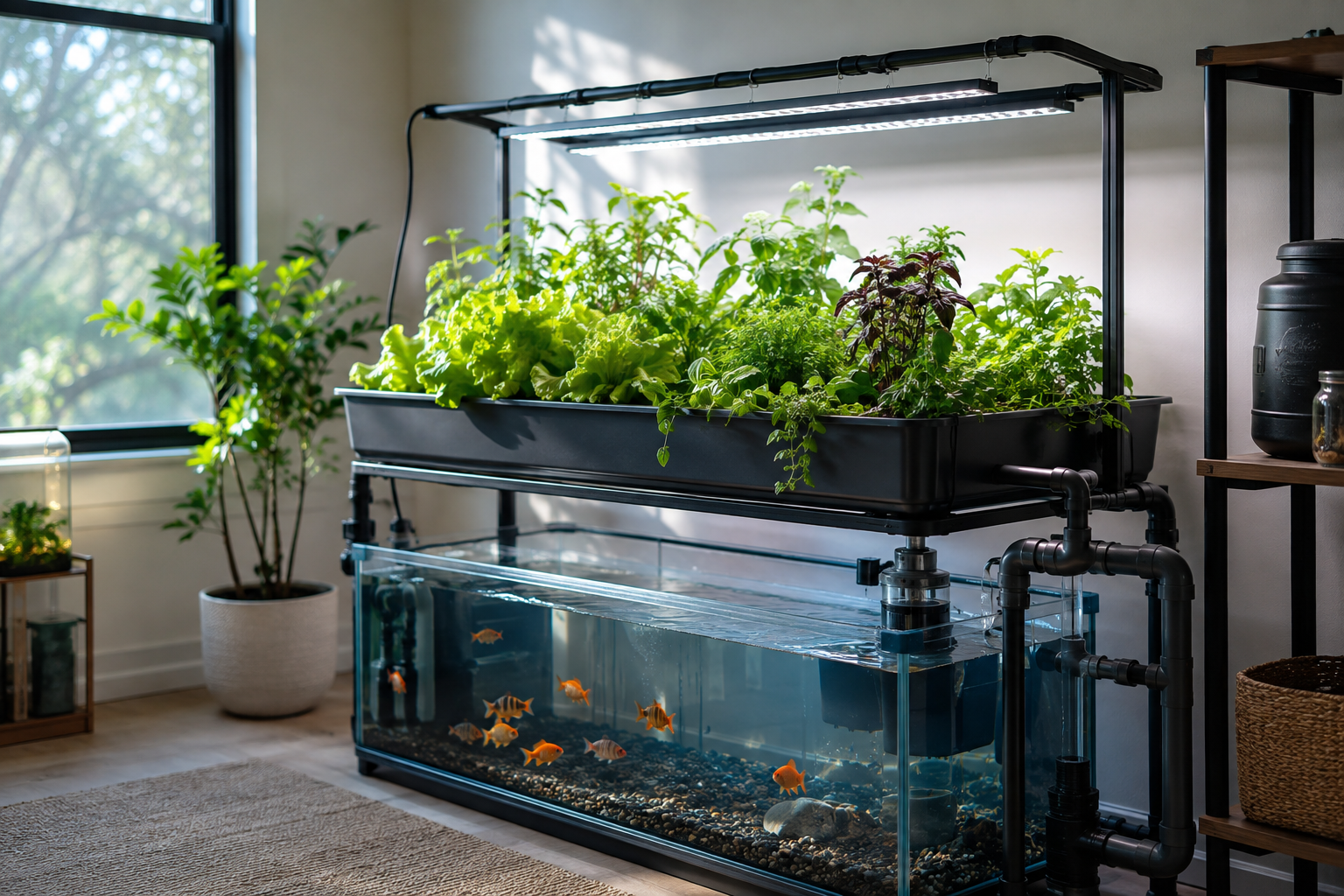
The short answer: 100,000 to 300,000 KRW is realistic at home
Home aquaponics makes sense when you combine self-consumption, small sales, and content or education value. Selling fish and vegetables at the same time sounds powerful, but both sides have limits. Fish grow slowly. Leafy greens have low unit prices. Selling home-grown food regularly can also trigger hygiene, packaging, and local sales requirements.
A realistic income map looks like this.
| Model | Startup cost | Monthly revenue | Estimated net profit | Best use |
|---|---|---|---|---|
| Mini test setup | 1 million to 2 million KRW | 100,000 to 200,000 KRW | 30,000 to 70,000 KRW | Learning, content, self-consumption |
| Home side-business setup | 3 million to 5 million KRW | 350,000 to 600,000 KRW | 150,000 to 300,000 KRW | Herbs, plants, small ornamental sales |
| Education and experience setup | 7 million KRW or more | 700,000 to 1.2 million KRW | 300,000 to 500,000 KRW | Kits, classes, small demonstrations |
If the target is more than 300,000 KRW net profit, vegetables alone are usually not enough. Add aquatic plants, ornamental fish, kits, and education products.
How aquaponics creates value
Aquaponics combines aquaculture and hydroponics. Fish produce ammonia. Bacteria convert it into nitrite and nitrate. Plants absorb the nitrate. Cleaner water returns to the fish tank.
The value is real. It saves water, reduces fertilizer inputs, and creates a story that is easy to understand. But the system is not effortless. Fish, plants, and bacteria all need different conditions. Temperature, pH, dissolved oxygen, feed amount, and lighting must stay within a workable range.
If one side is pushed too hard, the other side suffers.
Recommended home starting size
At home, small is safer. Raising food fish such as tilapia or catfish to saleable size requires space, heat, feed, odor control, and sales standards. For a home side business, ornamental fish, herbs, leafy greens, and aquatic plants are more practical.
A good starting setup is below.
| Item | Recommendation |
|---|---|
| Fish tank | One 100L to 200L tank or two 60L tanks |
| Grow bed | One or two tiers, under one pyeong total |
| Crops | Basil, mint, arugula, lettuce, bok choy, aquatic plants |
| Fish | Goldfish, young koi, guppies, shrimp, or other hardy ornamental species |
| Lighting | 60W to 150W plant LED, 10 to 14 hours per day |
| Required equipment | Circulation pump, biofilter, air pump, timer, thermometer, pH test kit |
The first month should be about stability, not sales. If there are too few fish, plants lack nutrients. If there are too many fish, water quality collapses. Let the bacteria establish first.
Startup cost
A practical home side-business setup usually needs about 3 million to 5 million KRW. It can be done cheaper, but a very cheap build often brings leaks, noise, weak lighting, unstable filtration, and difficult maintenance.
| Item | Rough cost |
|---|---|
| Tank, stand, rack | 500,000 to 1.2 million KRW |
| Grow bed, pipes, pump | 500,000 to 1.2 million KRW |
| Filter media, biofilter, air system | 300,000 to 800,000 KRW |
| Plant LED and timers | 400,000 to 1 million KRW |
| Water tests and spare equipment | 200,000 to 500,000 KRW |
| Seeds, seedlings, fish, aquatic plants | 200,000 to 500,000 KRW |
| Leak prevention and consumables | 300,000 to 800,000 KRW |
Backup equipment matters. In a circulating system, one pump failure can affect both fish and plants.
Electricity cost
Home aquaponics electricity cost comes from lighting, pumps, air, and seasonal heating or cooling. Plants need long lighting hours, and water has to circulate continuously.
| Equipment | Assumption | Monthly use |
|---|---|---|
| 100W plant LED | 12 hours per day | About 36kWh |
| 30W circulation pump | 24 hours | About 22kWh |
| 10W air pump | 24 hours | About 7kWh |
| Heater, cooling, dehumidifier | Seasonal variation | 50kWh to 200kWh |
The basic equipment load is about 65kWh per month. With winter heating and summer cooling or dehumidifying, total use can reach 150kWh to 250kWh. At 250 KRW per kWh, that is about 38,000 to 63,000 KRW. A safer planning range is around 50,000 to 100,000 KRW per month.
Do not simply reduce lighting. Weak light slows plant growth and lowers sales. Better reflectors, better rack layout, tank lids, insulation, and stable room temperature usually help more.
Where monthly revenue comes from
Selling only leafy greens is hard because the order value is low. A home aquaponics side business needs product bundles.
| Product | Monthly target | Expected revenue |
|---|---|---|
| Small herb and leafy green packs | 20 packs | 100,000 to 160,000 KRW |
| Aquatic plant and moss packages | 15 sets | 150,000 to 250,000 KRW |
| Guppy or shrimp sales | 10 sets | 100,000 to 200,000 KRW |
| Mini aquaponics kits or classes | 2 sales | 100,000 to 300,000 KRW |
A home side-business model should aim for 450,000 to 700,000 KRW in monthly revenue. After electricity, packing, feed, seedlings, and losses, that can leave 150,000 to 300,000 KRW.
The best home combination
Selling food fish is not the best first goal. Food fish take time to reach size and require more serious handling. A better home mix is below.
- Basil, mint, arugula, and lettuce.
- Moss, Anubias, and easy aquatic plant packages.
- Guppies, shrimp, or other hardy ornamental species.
- Small education kits or demonstration content.
This mix is easier to photograph and explain. Aquaponics often sells the story as much as the product.
Three profit scenarios
These are planning examples, not guaranteed results.
| Item | Conservative | Middle | Aggressive |
|---|---|---|---|
| Monthly revenue | 200,000 KRW | 450,000 KRW | 900,000 KRW |
| Electricity and water | 50,000 KRW | 80,000 KRW | 180,000 KRW |
| Feed, seedlings, supplements | 40,000 KRW | 60,000 KRW | 120,000 KRW |
| Packing, shipping, discounts | 40,000 KRW | 60,000 KRW | 160,000 KRW |
| Mortality and inventory loss | 30,000 KRW | 50,000 KRW | 140,000 KRW |
| Estimated net profit | 40,000 KRW | 200,000 KRW | 300,000 to 400,000 KRW |
Even in the aggressive case, net profit does not explode. Small orders take time. Live fish and plants carry shipping risk. Keep the catalog short.
Hidden risks
The first risk is system balance. Too many fish push ammonia up. Too many plants can run short of nutrients. The biofilter takes time to mature.
The second risk is humidity and noise. Pumps and air systems are not silent. Many tanks raise room humidity and can create condensation or mold.
The third risk is sales rules. Repeated food sales may require checking packaging, hygiene, labeling, and local rules. If ornamental fish sales become a business, reporting requirements should also be checked.
Starting checklist
- Start with one 100L to 200L tank.
- Choose only two crops at first, such as basil and lettuce.
- Use hardy fish such as goldfish, guppies, or shrimp.
- Do not sell during the first four weeks.
- Measure real electricity use with a power meter.
- Take test photos of herbs and plant packages.
- Test whether local buyers, communities, or online channels respond.
- Check food and ornamental fish sales rules before repeated sales.
- Expand only after three months of stable records.
This reduces the chance of an expensive failure.
Conclusion
Aquaponics can start at home, but monthly profit depends on sales channels more than equipment. A mini setup may leave 30,000 to 70,000 KRW. A well-run home side-business setup can target 150,000 to 300,000 KRW. Education or kit sales can push it higher.
Stability comes first. Once the water is stable, plants grow consistently, fish stay healthy, and a sellable product appears, then the system can expand.
Aquaponics is not fast money. Like the water in the system, the money circulates slowly.
References
- IMUN.FARM, “Smart Farm — What Is Aquaponics?”
- IMUN.FARM, “Home Tropical Fish and Aquatic Plant Side Business: A 300,000 KRW Plan.”
- Korean Law Information Center, Act on the Promotion and Support of the Ornamental Fish Industry.
- Same Act, Article 2 definitions of ornamental fish, industry, and ornamental fish aquaculture.
- Same Act, Article 12 on ornamental fish aquaculture reporting.
- The cost and profit tables are planning estimates based on a 100L to 200L home aquaponics setup, 100W LED lighting, continuous circulation, and small sales of herbs, aquatic plants, and ornamental fish.