Diagnosing Pests with a Smartphone Photo? AI Is Changing Farming
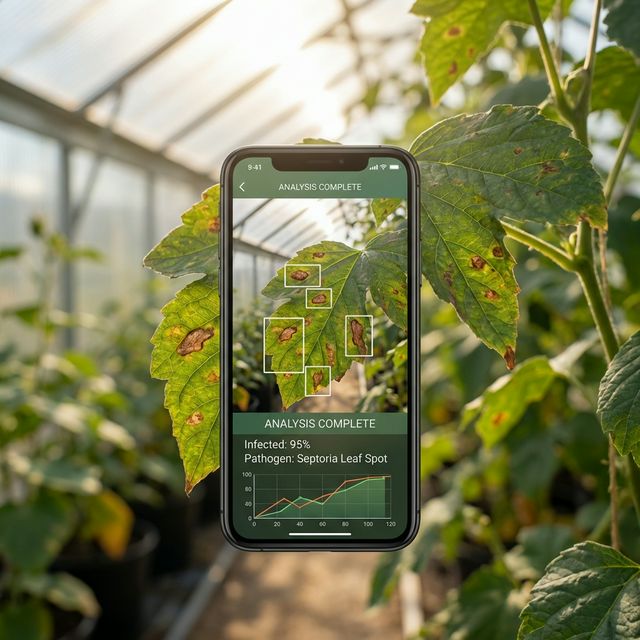
Last summer, temperatures soared close to 40°C. Sudden downpours. Farmers must have been burning up inside. But the truly scary thing is something else entirely: pests and diseases. Growing the same crop in the same field — some years everything’s fine, other years it’s practically wiped out. Bad luck? No. It’s the result of microscopic differences in environmental conditions.
The problem is that by the time you spot it with your eyes, it’s already too late. Once leaves turn yellow and bugs start appearing, the infection has already spread to the next plant. So farmers spray pesticides “just in case.” Whether there are pests or not. The result? Rising pesticide costs, soil contamination, declining crop quality. A vicious cycle.
But recently, a technology has emerged that could break this cycle. AI-powered pest prediction systems.
Diagnose in 3 Seconds with a Photo — The RDA AI App
In September 2024, the Rural Development Administration (RDA) released its ‘Smart Pest Diagnosis Service’ app to the public. Take a photo of an abnormal-looking crop with your phone and the AI instantly analyzes it to tell you what’s wrong. It even recommends treatment agents.
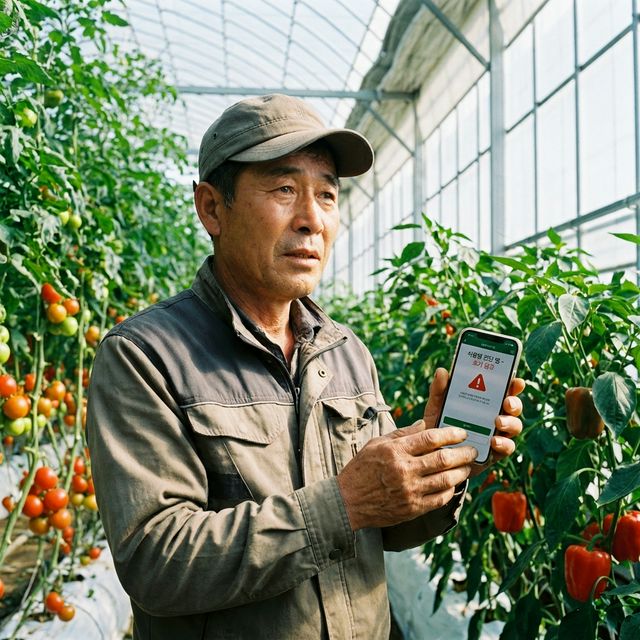
Let’s look at the key numbers.
- Diagnosable crops: 31 species
- Diagnosable pests/diseases: 182 types
- Recognition accuracy: 95% average (comparable to expert accuracy of 95.3%)
Expert-level diagnosis that farmers can get on-site, on the spot, for free. According to the RDA, “this is the world’s first government-level field pest diagnosis service using AI.”
It can even diagnose plant viruses. Viruses are extremely difficult to distinguish with the naked eye. Even experts get confused. But this app can detect virus infections from just a crop photo.
Prediction Systems That Alert You Before Disease Strikes
Diagnosis is good, but the real game changer is prediction. Responding after a disease appears versus preventing it before it occurs — night and day.
A Sunchon National University research team ran experiments on a strawberry farm. They created a system using a computer vision model called YOLOv5 to detect and predict pests and diseases in real time.
Results:
- Precision: 92.8%
- Recall: 90.0%
- Mean Average Precision (mAP 0.5): 78.7%
When the same system was applied on a tomato farm, prediction accuracy for late blight and yellowing disease exceeded 85%. That’s more than a 10% improvement over previous models.
The Gyeonggi Provincial Agricultural Research and Extension Services has gone even further. They’re developing a system that analyzes crop mRNA to detect stress from pests, high temperatures, or drought before it becomes visible. The idea is to catch danger signals at the genetic level — before you can see anything wrong.
Does It Actually Work? Real Farm Applications
The theory sounds good. But what about real farms?
Dutch Tomato Farm
Built an environment data-based pest prediction system. When humidity stays above 80%, an alert triggers: “Disease probability above 60%.” The results are remarkable.
- Pest/disease damage reduced by 40%
- Pesticide usage cut by 30%
Chungnam Paprika Farm
Analyzed CO₂ concentration and light intensity data to predict thrip emergence timing. By proactively adjusting supplemental lighting and ventilation, pest density was suppressed at the initial stage. Marketability rate improved by 15%.
Smart Orchard in Andong, Gyeongbuk
IT-based pheromone traps and AI cameras automatically lure and photograph pests. They analyze species and population counts, then target control to only the necessary areas. According to the RDA, this precision agriculture approach has demonstrated a 50% reduction in pest damage and 25% increase in productivity.
There’s an old saying: “What could be stopped with a hoe will require a plow to fix.” AI prediction systems catch problems precisely at the hoe stage.
Korean AI Agriculture Startups — What’s Out There
It’s not just the government taking action. Private sector technology is advancing rapidly.
iOCrops Directly operates tomato farms while developing AI-based smart farm solutions. Patrol robots roam greenhouses monitoring crop conditions. Currently used by approximately 400 farms nationwide, with deliveries to all Smart Farm Innovation Valleys (Sangju, Gimje, Goheung, Miryang).
SaeFarm Uses satellite data analyzed with AI to provide crop-specific cultivation guides. Operates 7 indicators including soil nitrogen levels and vegetation vitality. Field testing with rice crops showed 18% increase in yield and quality improvement. Over 2,000 farms nationwide are currently using it. At CES 2026, they showcased a platform that analyzes pest occurrence and moisture stress with 98% accuracy.
Greenlabs Operates ‘FarmMorning,’ a data-driven farm management platform. Weather, market prices, and pest information all viewable at a glance. Used by hundreds of thousands of farms.
Triplet Photograph crops with a smartphone camera, and AI diagnoses growth conditions and detects early signs of pest/disease outbreaks. Enables on-the-spot response.
Global Agricultural Machinery Companies Are Jumping In
At CES 2026, John Deere gave the keynote address. An agricultural machinery company delivering the keynote at the world’s largest IT exhibition. Times have truly changed.
What John Deere unveiled was an autonomous combine harvester. It uses cameras and sensors to recognize crop conditions and performs harvesting without driver intervention. Their “Machine Sync” technology makes combines and tractors move as one. When the grain tank is 60% full, it signals the tractor: “Come get this.” Machines talking to machines.
Japan’s Kubota also showcased small autonomous robots that operate on complex terrain like mud and wetlands.
Korean company ROWAIN unveiled a fully automated vertical farm called ‘Intellifarm’. It’s a system combining autonomous guided vehicles, harvesting robots, and stacker robots.
- Water usage reduced by up to 95%
- Production doubled compared to conventional vertical farms
- Workforce needs reduced by 75%
What’s Coming Next
Advanced AI Prediction Models Integrating environmental data with image data enables prediction 5 days before disease outbreak. We’re already approaching this capability.
Autonomous Control Systems When disease outbreak is predicted, drones or robots automatically apply treatments. No human intervention needed.
Digital Twin Agriculture Simulate pest/disease outbreak scenarios in a virtual farm. Test “what disease would occur under these conditions?” in advance.
Blockchain-Based Record Management Store pest management records on blockchain for use as GLOBAL GAP certification documentation. Advantageous for entering premium agricultural export markets.
If Getting Started Feels Overwhelming, Start Here
AI smart farming sounds great, but you might feel lost about what to do. Start with what’s free and available right now.
- Install the ‘Smart Pest Diagnosis Service’ app from the Google Play Store — Free, developed by the Rural Development Administration
- Access the National Crop Pest Management System (NCPMS) — Expert consultation, latest control information
- Use the Smart Farm Korea pest diagnosis service — Upload an image and AI diagnoses it
As data accumulates, the next steps become clear. When did pests appear on our farm, and under what conditions? When patterns emerge, prediction becomes possible. That’s the right time to add sensors and introduce automation systems.
Climate change is increasing sudden pest outbreaks. Foreign pests that never existed before are entering. Pesticide resistance keeps building. To break this vicious cycle, we need data. AI analyzes that data to alert us faster and more accurately than we could ourselves.
Taking one photo. That’s the starting point.