AI and Data-Driven Agriculture: Is It Really Possible for Korean Farms?
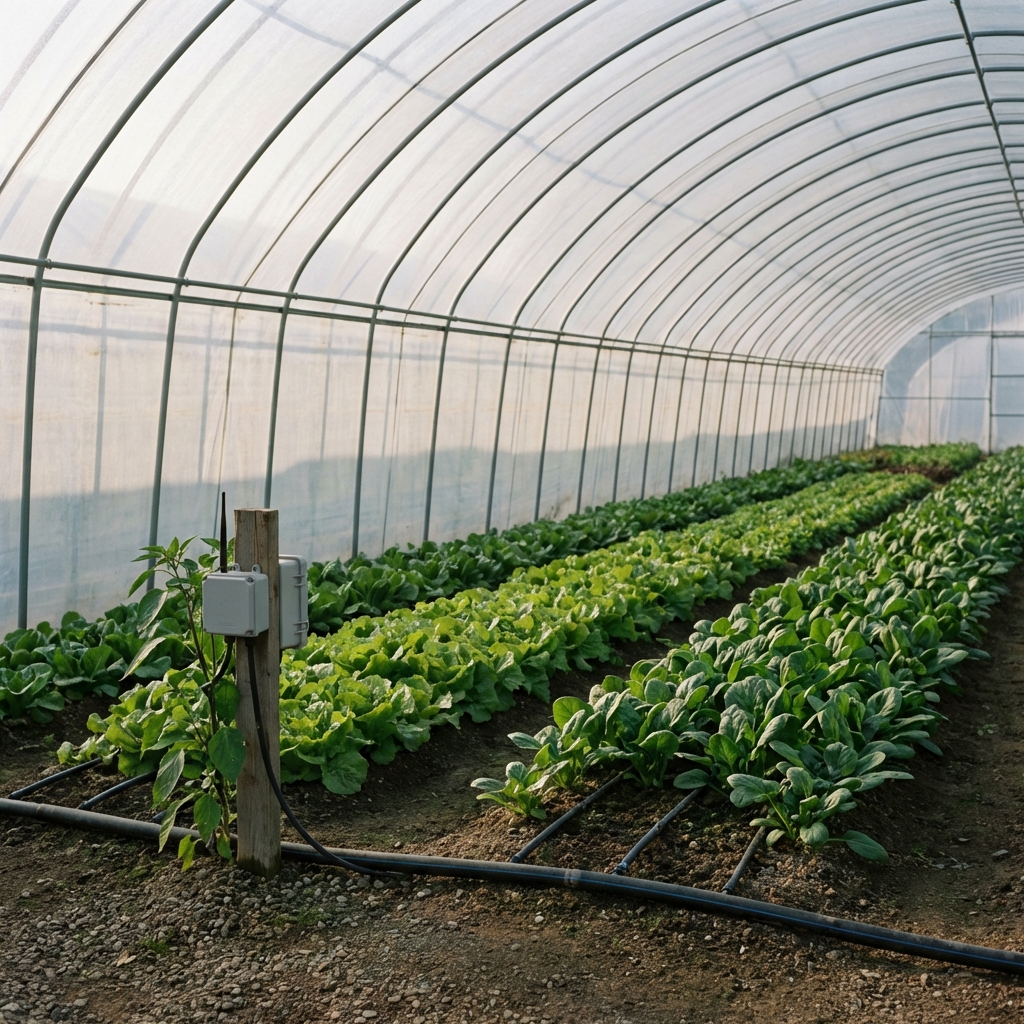
One hot summer, a farmer who’d installed temperature and humidity sensors in his greenhouse showed me an app on his smartphone — “auto ventilation activated.” I was genuinely impressed. On the other side, there was a farmer who’d spent hundreds of millions of won on a cutting-edge AI system, only to see his crops do worse — and he was sighing in frustration. AI and data. The media proclaims “the future of agriculture.” But is it really? Can it actually work for most Korean farms?
Looking at the Rural Development Administration’s 2025 AI-Integrated Agriculture Strategy, it’s quite ambitious: 20% improvement in farm income, 20% reduction in farming risks, 30% acceleration in technology development and deployment. The numbers sound revolutionary. But these figures came from optimal conditions. Reality? Far more complicated.
What’s Actually Possible
Let’s be clear first. Smart farming isn’t completely impossible. Last year, a farm in Nonsan, Chungnam adopted a budget-grade smart farm system costing around 10 million won, doubled their cultivation area, and increased farm income by nearly 30%. A 70-year-old farmer in Okcheon, Chungbuk installed temperature/humidity and soil sensors in his greenhouse, running automatic ventilation and irrigation while maintaining stable income.
But look closely at these numbers and a pattern emerges. Success stories are mostly places that adopted “only what was absolutely necessary.” For cherry tomato cultivation, just temperature/humidity sensors and automatic ventilation. For strawberry cultivation, just a few soil moisture sensors and irrigation automation. Not everything — just parts were conquered.
What about the failures? Farm A in Jincheon, Chungbuk installed a smart farm system in 2023 with support from the Agricultural Technology Center. But they couldn’t understand what the temperature/humidity, soil, and CO₂ sensor data meant, and didn’t know how to set control conditions. When farming season hit, there was no time to check the system. The equipment was abandoned. Farm B in Sangju, Gyeongbuk was the opposite — they trusted automation too much. During summer monsoon season, the auto-irrigation system kept watering. Even though the soil was already saturated. Result? Root rot plus disease, with yields dropping over 30%.
Farm C in Haenam, Jeonnam had it even worse. Rural and remote, Wi-Fi barely worked and LTE was unstable. The vendor didn’t even verify the communication environment before installation. Remote monitoring was out of the question, and the farmer was left struggling to manage incomplete equipment on their own.
”What About Open-field Farming?” The Most Serious Reality
Here’s the real problem. 95% of Korean agriculture is open-field based. Not greenhouses, not high-tech controlled environments — just fields and paddies. Smart farming-capable facility agriculture is only about 5% of the total.
To properly use AI and data in open-field farming? You need sensors. Temperature, humidity, soil acidity, nitrogen content… that kind of data. But the collection infrastructure barely exists. Facility agriculture is closed spaces where a few sensors do the job, but open fields? You’d need dozens, hundreds of sensors across hectares of land. By whom? Funded by whom? What about weather data? Who manages the soil data?
And there’s one more thing. The psychological resistance to data contribution from farmers’ perspectives. AI is great, but my farm’s environmental data, growth records, when I sprayed pesticides, how much fertilizer I used — all of that? Somehow that feels wrong. This isn’t a tech problem — it’s a trust and privacy problem. Consequently, environmental data, growth data, and control data end up managed in silos. That becomes a fundamental limitation for AI learning.
The Cost Reality — Can’t Be Ignored
The government keeps saying “we’ll subsidize 20-30%.” Then who covers the remaining 70-80%? The farmer. Let’s break it down from the smallest scale.
The apartment balcony ultra-budget type (under 100,000 won) is purely experiential — not real farming. Standard type (around 200,000 won)? LED grow lights, automatic waterer, temperature/humidity sensors. Still small-scale. You need the expanded type (500,000+ won) before it becomes somewhat useful.
But actual facility agriculture?
- 1,000㎡ (about 300 pyeong) smart farm setup: 100-300 million won
- Automation systems (sensors, controls, AI): 20-100 million won
- Electricity: 500,000-2 million won per month
- Hydroponic water and nutrients: 300,000-1 million won per month
- Annual maintenance: 5-10 million won
Even after the government covers 50-60%, farmers need at minimum 50 million to up to 200 million won. For Korea’s predominantly small-scale farms, this is “a stone thrown into the ocean.” There are smart farm companies worth hundreds of billions, but those are media-worthy news, not the norm.
The government knows this problem. Recently they’ve been expanding budget-grade smart farm programs. Systems focused on “just the essentials” — temperature/humidity sensors, automatic ventilation, automatic irrigation. Total cost around 10 million won with farmers covering only 30% (about 3 million won). That’s doable. And there are actual success stories.
The Age Problem, and the Learning Curve
The average age of Korean farmers is 68. Over 65% are 65 or older. These people reading sensor data on tablets, interpreting AI reports, setting control conditions? Realistically difficult.
Of course, some farmers in their 70s do use smart farms. But they were exceptional. They received tech support, received training, and above all, “learned slowly, tailored to their own farm.”
For most elderly farmers, this is a barrier. They struggle with smartphones, let alone sensor data analysis, IoT app settings, or network troubleshooting. Government support programs offer training, but it’s short and theory-heavy. When farming season comes? They’re too busy selling to stare at apps every day.
So the reality is this. AI and data-driven agriculture is only feasible centered on farmers in their 30s-50s with interest in technology. This isn’t dismissing the elderly — it means the roles are different.
What About Developers and Companies?
The smart farm market is hot. The Rural Development Administration is investing 159.5 billion won in AI/data-driven agriculture in 2026. Private startups are swarming. Cultilabs raised 32.5 billion won, iOCrops raised around 11 billion won.
From a developer’s perspective? Sure, there are opportunities. Agricultural field data is still scarce, AI models are still inadequate, and automation technology keeps evolving. Sensors are getting cheaper. Companies like iOCrops have developed autonomous greenhouse robots, and harvest robots are on the verge of commercialization this year. Once these technologies are deployed in the field, labor problems could genuinely be solved.
But one thing is clear. The comprehension gap between AI experts and agricultural experts remains wide. Algorithms that programmers write frequently don’t work in the field. Summer monsoon irrigation settings differ from winter — does the developer know that? Sensor values change with different soil types — has that been modeled? The more you develop this way, the longer commercialization takes.
The revenue model is also ambiguous. Selling sensors? App subscriptions? Consulting? So far, participating in government subsidy programs and generating around 1 billion won in annual cash flow has been the realistic approach.
The Revenue Perspective from Companies
Agriculture is a slow industry. Development cycles are long, validation takes time, and market adoption is gradual. Smart farm startups have started accepting this reality.
There’s the Cultilabs approach — focusing on greenhouse environment management solutions. Proven technology, easy for farms to adopt. Strawberry and tomato farms are actually using it. iOCrops is different — they pivoted to AI robot development, eyeing long-term profitability. Since sensors and apps have limitations, they’re going toward high-value products like robots.
The government? While they’ve set a target of “20% farm income improvement,” the real goal seems to be “spreading data-driven smart agriculture.” To address food self-sufficiency issues, aging populations, and climate change, agriculture needs to become scientific. That’s why concepts like an ‘Agricultural Data Voucher System’ are being proposed — paying farmers to provide data as a participation incentive.
So What’s the Conclusion?
It’s possible. But not for everyone.
For facility agriculture (greenhouses, controlled environments), it’s definitely feasible. Especially for high-income crops like strawberries, tomatoes, and paprika, smart farming is already competitive. But the realistic approach is “start small and bite off only what you need.” Instead of multi-hundred-million-won full packages — a few sensors, ventilation automation, irrigation automation. That’s enough.
Open-field farming? Still a long way off. 5 years? 10 years? We need to wait until data infrastructure is built and AI models mature. How much climate change will worsen in the meantime is uncertain, but at minimum, the technological possibility exists.
Elderly farmers? Don’t dismiss them. Smart farming isn’t a solution for all farmers, but it can help some. If the government, municipalities, and NongHyup create models like “village-level shared smart farms” — where one or two young farmers operate the system while elderly farmers contribute through traditional methods — it’s possible.
Young farmers? It’s an opportunity. The government is expanding support, offering training at Smart Farm Innovation Valleys, and providing rental farms. You could say an entirely new world has opened up.
Developers and startups? You need to match agriculture’s slow pace. But the room for technological innovation is infinite. Harvest robots, surveillance drones, pest/disease diagnosis AI… for these to enter the field, billions more in investment are needed. And that investment will likely come from the government. Steadily collecting small revenues while pursuing long-term tech development is the survival strategy.
The government? It seems to have set the direction. Subsidies → Training → Incubation centers → Rental farms → Policy finance. They’re building a structure that supports the entire journey. Looking at plans to expand healing agriculture users to 1.2 million by 2030, it’s not just technological innovation — it’s aiming for rural society restructuring.
Here’s the bottom line. AI and data can transform agriculture. But they can’t transform “all farming” at once. Start small, start with facilities, start with interested people. Progress gradually. Along the way, there will be plenty of failures, and there will be farms that can’t keep up due to costs. That’s reality, and accepting it is the most realistic starting point.
”The era of smart farming has arrived” is true. But “the era of smart farming for all farmers” is still a distant story.