Agrivoltaics Permit Process Flowchart (Real Steps to Approval)
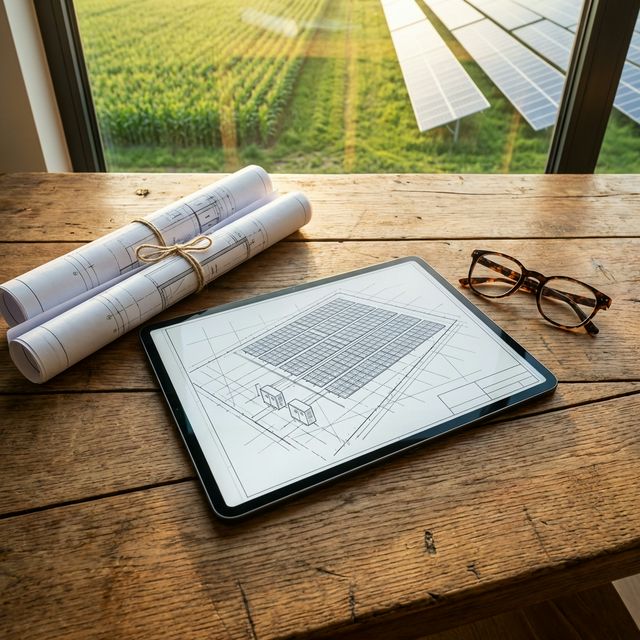
You thought you’d buy some solar panels, put them up on the land, and that’s it. Reality? It’s an ocean of paperwork. The permitting process alone takes at least 6 months — and if things go sideways, 2 years. Cases where a single missing document forces you to restart from scratch are all too common. That’s why the order matters. One step at a time, nothing skipped. “More haste, less speed” — in this field, it’s just plain fact.
Full Process at a Glance
       [Step 1] Preliminary Survey & Site Review
 ↓
[Step 2] KEPCO Grid Access Verification
 ↓
[Step 3] Farmland Temporary Use Permit Application (City/County)
 ↓
[Step 4] Power Generation Business License Application (Province or MOTIE)
 ↓
[Step 5] Development Activity Permit (City/County)
 ↓
[Step 6] Grid Interconnection Application (KEPCO)
 ↓
[Step 7] Construction Plan Notification + Installation
 ↓
[Step 8] Pre-Use Inspection (Electrical Safety Corporation)
 ↓
[Step 9] Facility Confirmation & REC Registration + Business Commencement
 ↓
[Step 10] Electricity Sales Begin 🎉
Let’s break down each step.
Step 1. Preliminary Survey & Site Review — Read the Land Before Spreading Paperwork
80% of the outcome is determined here. That’s not an exaggeration.
What to check:
- Issue a Land Use Plan Confirmation Certificate → Distinguish Agricultural Promotion Zone / Protection Zone / General Farmland
- Check municipal setback distance ordinances (one phone call to the city/county urban planning department)
- Environmental Spatial Information Service (egis.me.go.kr) → Verify ecological grade
- National Heritage Portal (heritage.go.kr) → Check cultural heritage within 500m
- Sunlight analysis (regional sunshine hours available on the Korea Meteorological Administration’s data portal)
Add one more: Site visit. A map might show flat terrain, but visiting in person might reveal no utility poles, a livestock barn next door, or a drainage channel blocking the pillar placement. Always check with your own two feet.
Timeline: 1-2 weeks (up to a month if thorough)
Step 2. KEPCO Grid Access Verification — Skip This First and Everything Falls Apart
If you build a plant but can’t sell the electricity, the business doesn’t work.
- Check distribution facility availability through your KEPCO regional office (or KEPCO website)
- Determine available capacity, waitlist volume, and estimated construction costs upfront
- Solar-dense areas like Jeonnam, Jeonbuk, Jeju, and Gyeongbuk often have grid saturation blocking access
If there’s no grid capacity, you either abandon the project or find another site. Learning “grid access isn’t available” after investing time and money into permits is truly painful.
Timeline: Immediately – 1 week
Step 3. Farmland Temporary Use Permit Application — The Core Gateway for Agrivoltaics
Agrivoltaics doesn’t ‘convert’ the farmland. Under Article 36 of the Farmland Act (Temporary Use for Other Purposes), you receive permission to temporarily use the farmland with the condition of restoring it afterward.
Application authority: Mayor / County head / District head
Required documents (key items):
- Farmland temporary use permit application
- Business plan (including concurrent farming plan)
- Land registration, land register
- Farmland restoration plan
- Land ownership verification (lease agreement if rented)
- Continued farming plan (crop type, cultivation area, projected yield, etc.)
Permit duration: Currently maximum 8 years (extension to 23 years
being pursued, not yet finalized)
Timeline: Approximately 1-2 months
One important note: agrivoltaics bypasses urban planning committee review for development activities — a key difference from standard solar. Also, no farmland conservation fee is charged. This is a significant cost savings.
Step 4. Power Generation Business License Application — Province or MOTIE?
Under the Electricity Business Act, you need a generation business license to produce and sell electricity.
Licensing authority:
- 3,000kW (3MW) or less: Provincial/Metropolitan Governor
- Over 3,000kW: Minister of Trade, Industry and Energy
- Some cities/counties can issue their own permits for 500kW-1,500kW
- Jeju: Governor handles even 3MW+
Required documents:
- Electricity business license application (Electricity Business Act Enforcement Rules Form No. 1)
- Business plan (plant overview, generation forecast, financing plan, etc.)
- Land use plan confirmation certificate
- KEPCO technical review confirmation
- Plant layout diagram and wiring diagram
Notes:
- Financing plan requires minimum 10% equity ratio
- Technical staffing plan must be specific
- Processing time: approximately 40-60 days
Step 5. Development Activity Permit — Agrivoltaics Gets a Break Here
Standard solar requires a development activity permit plus urban planning review. But since agrivoltaics is processed as a farmland temporary use permit, separate development activity permits are often exempted or simplified.
However, implementation varies by municipality. Some areas require a separate development activity permit. Always confirm with the relevant city/county urban planning department.
If a development activity permit is required:
- Submit application to city/county office → processed within 15 days
- Review against urban planning ordinance standards
- Conditional permit → license issued
Timeline: 2 weeks – 1 month (may be exempted/simplified for agrivoltaics)
Step 6. Grid Interconnection Application — Contracting with KEPCO
Once you have your generation business license, apply to KEPCO for a Power Purchase Agreement (PPA).
Required documents:
- PPA application
- Electricity usage application
- Copy of generation business license
- Plant wiring diagram
Once received, KEPCO begins engineering design. After design completion, grid interconnection costs are finalized. Costs vary widely depending on distance, transformer capacity, and line condition.
Timeline:
- Basic design and approval: 1-3 months
- If line reinforcement needed: 6+ months
- If new substation needed: 4-6 years(!) — this applies to large-scale plants, but it’s real
Step 7. Construction Plan Notification + Installation — Finally Breaking Ground
The final administrative step in the permit process.
- Under 10,000kW (10MW): Construction Plan Notification to local
government
- 10,000kW and above: Construction Plan Approval application to
MOTIE
Once the construction plan notification is accepted, construction begins.
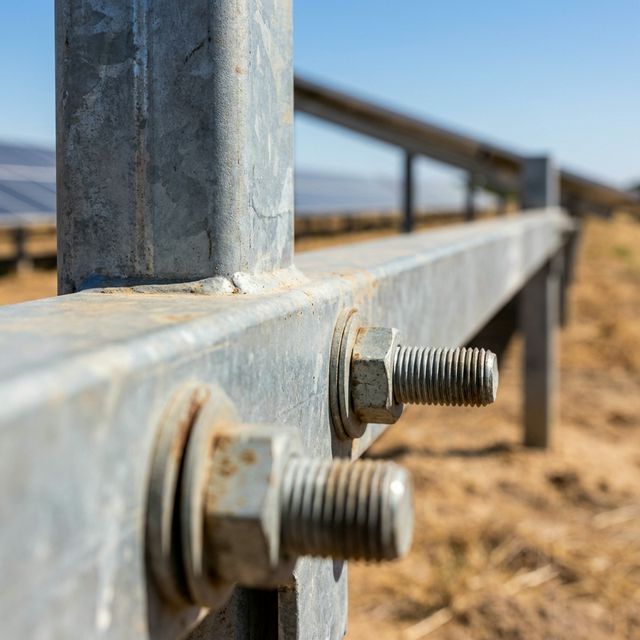
Construction checkpoints:
- Structure height 3m minimum (must allow farm machinery passage)
- Panel spacing and shading rate must match the business plan
- Grounding, waterproofing, and wiring must meet electrical equipment standards
Construction period: About 2-4 weeks for 100kW, 1-2 months for
larger systems
Step 8. Pre-Use Inspection — No Green Light from Electrical Safety = No Electricity
Construction completion doesn’t mean you can immediately sell power. You must pass the Korea Electrical Safety Corporation’s pre-use inspection.
- On-site inspection to verify electrical equipment meets safety standards
- Checks grounding resistance, insulation resistance, system protection devices, etc.
- Upon passing: Pre-Use Inspection Certificate issued
Timeline: Approximately 2-4 weeks after application
Step 9. Facility Confirmation & REC Registration + Business Commencement — The Key That Opens Revenue
After passing the pre-use inspection, you must apply for facility confirmation at the Korea Energy Agency’s New and Renewable Energy Center within 1 month.
Miss this deadline? RECs will not be issued for generation prior to that month. That’s money you could have earned but didn’t. Never miss this.
Documents required for facility confirmation:
- Business registration certificate
- Generation business license
- Pre-use inspection certificate
- KEPCO contract number and commercial operation start date confirmation
Simultaneously, file a business commencement notification with local government. Takes about 2 weeks.
Step 10. Electricity Sales Begin — You’re Finally Selling Power
At this point, money actually starts coming in.
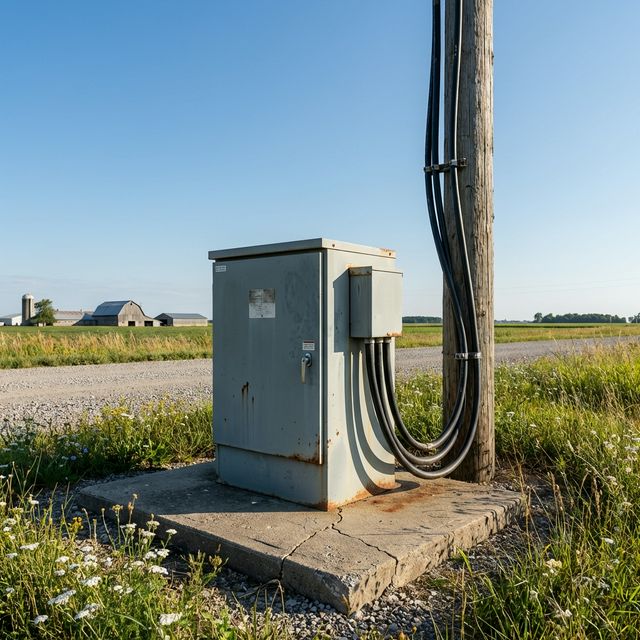
Revenue structure:
- SMP (System Marginal Price): Settled through the power exchange
- REC (Renewable Energy Certificate): Spot market trading or long-term fixed-price
contracts
- Crop sales: Harvest from farming under the panels
SMP + REC are settled monthly, with farming revenue added on top. For a 100kW system, annual generation revenue of approximately 20-26 million KRW is expected.
Complete Timeline Summary
| Step | Description | Authority | Timeline |
|---|---|---|---|
| Step 1 | Preliminary survey & site review | Self | 1-4 weeks |
| Step 2 | KEPCO grid access verification | KEPCO | Immediate – 1 week |
| Step 3 | Farmland temporary use permit | City/County | 1-2 months |
| Step 4 | Generation business license | Province / MOTIE | 40-60 days |
| Step 5 | Development activity permit | City/County | Exempt – 1 month |
| Step 6 | Grid interconnection application | KEPCO | 1-3 months |
| Step 7 | Construction plan + installation | Local gov / Contractor | 2 weeks – 2 months |
| Step 8 | Pre-use inspection | Electrical Safety Corp | 2-4 weeks |
| Step 9 | Facility confirmation & REC registration | Energy Agency / Local gov | 2-4 weeks |
| Step 10 | Electricity sales begin | Power Exchange / KEPCO | - |
Total timeline: If smooth, 6-8 months. If grid reinforcement is
needed, 1 year or more.
3 Common Pitfalls
There are specific points in the permitting process where people most often stumble. Knowing about them in advance means you can avoid them.
Pitfall 1. Getting the Order Wrong
Some people start construction and try to get permits afterward. This creates an
illegal structure — demolition order plus fines. Always follow the sequence: permit
first → construction second.
Pitfall 2. Missing the REC Application Deadline
You must apply for facility confirmation within 1 month of passing the pre-use
inspection. This happens during the chaotic construction wrap-up period — forget it, and you lose
the first month’s RECs. Prepare the documents before construction is complete.
Pitfall 3. Checking Grid Access Last
All permits obtained, construction complete — but KEPCO grid access is denied? It actually happens.
That’s why we emphasize checking at Step 2.
What Changes When the Special Act Passes?
The core of the agrivoltaics special act bills in the National Assembly is one-stop permitting.
- Business plan approval would automatically process the farmland temporary use permit
- Generation business license and development activity permit would be reviewed together
- Government would provide priority purchase and consulting support for generated electricity
Currently, Steps 3, 4, and 5 must be done separately, but if the special act passes, these could be bundled into a single process. This could cut the timeline nearly in half.
Permitting is tedious, slow, and sometimes frustrating. But going through the process properly means your plant is legally protected and runs stably for 20+ years. Approach each form with the mindset that “the paperwork protects me,” and fill them in one by one.
#Agrivoltaics #PermitProcess #FarmlandAct #SolarInstallation #GridConnection #SmartFarm
This article is based on the Electricity Business Act, Farmland Act, National Land Planning Act, Korea Energy Agency guidelines, and KEPCO grid interconnection procedures as of February 2026. Always verify with your local government and KEPCO regional office for the latest guidance when proceeding with actual permitting.