Complete Guide to Agrivoltaics Forbidden Zones (Restricted Land)
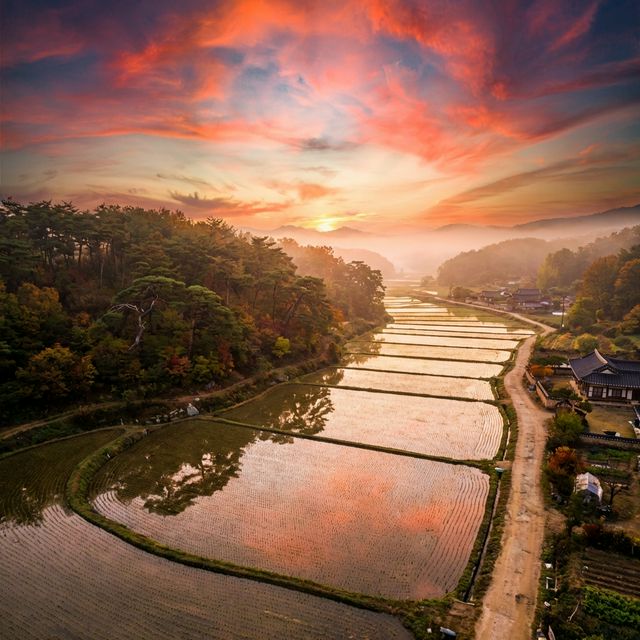
“I could put solar panels right here.” You look at the land and your heart races. It’s wide, flat, and gets plenty of sun. Then you pull the documents — red flag. Not all farmland qualifies, and not every rural area is eligible. With agrivoltaics, there’s far more “prohibited land” than “eligible land.” Filtering out forbidden zones upfront saves both time and money.
1. Agricultural Promotion Zones (Absolute Farmland) — The Biggest, Most Solid Wall
This is the first name that comes up when discussing agrivoltaics installation bans.
Agricultural Promotion Zones are nationally designated areas for preserving prime farmland. Current Farmland Act prohibits farmland conversion for solar generation entirely in these zones — agrivoltaics or conventional, doesn’t matter. Aside from a handful of exceptions like pilot sites, it’s fundamentally impossible as of February 2026.
“But didn’t the government say they’d allow it on absolute farmland?” Yes. In October 2025, the government announced it would permit agrivoltaics in Agricultural Promotion Areas when designated as ‘Renewable Energy Zones.’ However, the Ministry of Agriculture officially stated on January 29, 2026, that “requirements have not been finalized.” Until the law changes, absolute farmland = installation prohibited. That formula stands.
How to check if your land is in an Agricultural Promotion Zone:
- Government24 → Issue a Land Use Plan Confirmation Certificate
- If it says ‘Agricultural Promotion Area (Promotion Zone),’ that’s a red flag
- You can also search by lot number on Land-eum (eum.go.kr)
2. Forest Protection Areas (Conservation Mountain Land) — Can’t Touch a Single Tree
Orchard sites often extend into mountain edges. That’s when you need to check forestland classification.
The Forest Land Management Act divides mountain land into Conservation Mountain Land and Semi-Conservation Mountain Land. Forest Protection Areas within Conservation Mountain Land are completely off-limits for solar installation. Forestry-use mountain land also generally prohibits conversion for solar purposes.
Semi-Conservation Mountain Land is conditionally possible, but there are traps:
- Solar installation is prohibited when average slope exceeds 15 degrees
- Much stricter than the general conversion standard of 25 degrees
- Permits can hinge on a single degree of slope difference
Some municipalities set the threshold even lower at 10 degrees. If your orchard or field borders mountainous terrain, precision slope surveying is essential. Eyeballing it is never acceptable.
3. Grade 1 Ecological Areas — Land Blocked by the Ministry of Environment
The Ministry of Environment has assigned ecological grades to all land nationwide. Grade 1 is essentially a development prohibition zone.
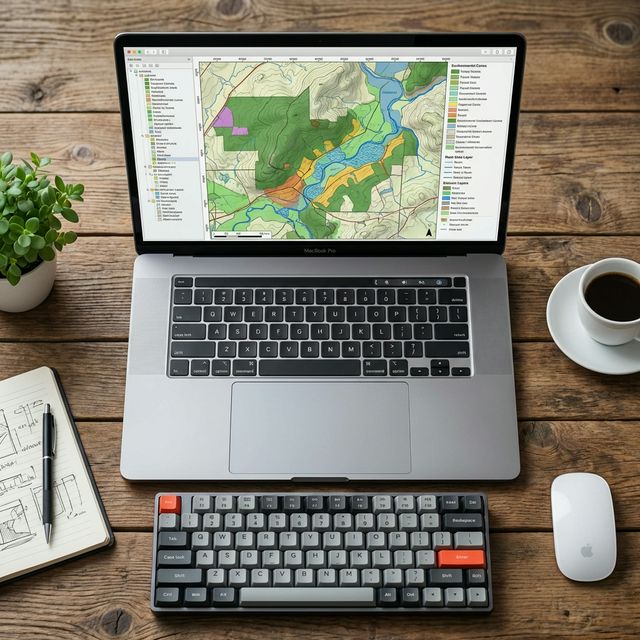
Specifically, areas to avoid for solar installations include:
- Baekdudaegan and Mountain Ridge Protection Areas (core and buffer zones)
- Ecological Grade 1 (including Vegetation Conservation Grade I-II)
- Main habitats of endangered wildlife
- Wetland Protection Areas, Wildlife Protection Areas
- Ecological Landscape Conservation Areas
Grade 2 areas with Vegetation Conservation Grade III or above are also subject to careful review — permits are effectively very difficult.
“How do I know my field’s ecological grade?”
- Search by lot number on the Ministry of Environment’s ‘Environmental Spatial Information Service (egis.me.go.kr)’
- Also verifiable through the National Land Environmental Assessment Map
- Grade 3 = no development issues, Grade 2 = municipal judgment, Grade 1 = effectively impossible
4. Military Facility Protection Zones — You Can Ask, But…
Solar installations are restricted in principle within military base and facility protection zones.
Flight Safety Zones (around military airports and airfields) have strict height limits, making agrivoltaics with 3m+ structures nearly impossible. Farmland near border areas like Daegwallyeong, Paju, and Cheorwon often falls into this category.
However, in general military protection zones, installation may be possible with military authority consent after obtaining local government permits. Industry experience suggests “consent usually comes through except in special cases,” but the process takes several months, and if denied, there’s no real avenue for appeal.
Whether your land is in a military facility protection zone shows directly on the Land Use Plan Confirmation Certificate. If flagged, ask the city/county office about feasibility first. Asking costs nothing.
5. Cultural Heritage Protection Zones and Historic-Cultural Environment Conservation Areas
Areas around historic homes, historical sites, treasures, and natural monuments either prohibit solar entirely or severely restrict it.
- Within Cultural Heritage Protection Zones: Individual Cultural Heritage Committee review required. Approval is extremely rare.
- Historic-Cultural Environment Conservation Areas (typically within 500m of heritage boundaries): Subject to Cultural Heritage Administration review; denied if scenic views are affected.
Solar rejections have actually occurred near Suwon Hwaseong, Gyeongju ancient tombs, and Hadong-eup fortress. Even rural farmland can fall within the 500m radius if there’s a Confucian school, historic house, or archaeological site nearby. Cultural heritage can pop up in completely unexpected locations, so cultural asset survey results must be checked in advance.
Check cultural heritage locations near your land on the map at the National Heritage Portal (heritage.go.kr).
6. Water Source Protection Zones — Land That Protects the Water Supply
Water source protection zones are designated under the Waterworks Act. New building construction and land alteration are prohibited in principle here, and solar installations are no exception.
Farmland overlapping water source protection zones is more common than you’d think — dam upstream areas, major river basins, and areas near water treatment intake points. Around Paldang Lake or upstream of Cheongdae Lake, extensive farmland exists but is locked up as water source protection zones.
If ‘Water Source Protection Zone’ appears on your Land Use Plan Confirmation Certificate, there’s nothing to deliberate. It’s not possible.
7. Greenbelt (Development Restriction Zones) — Regulation That Lives Up to Its Name
Solar installations are effectively impossible within greenbelts.
Under the Special Act on Designation and Management of Development Restriction Zones, building construction and structure installation are strictly limited. Solar structures count as structures. Farmland on the outskirts of major cities is quite often within greenbelts. Those with farmland near Seoul, Busan, Daegu, or Gwangju must check.
The government is pursuing greenbelt deregulation in non-capital areas, but that’s for industrial complex development — not for solar. Expecting agrivoltaics in greenbelt farmland isn’t realistic for the foreseeable future.
8. ‘Effectively Prohibited’ Areas Due to Municipal Setback Distances
There’s land that’s legally eligible but practically impossible — because of setback distance regulations.
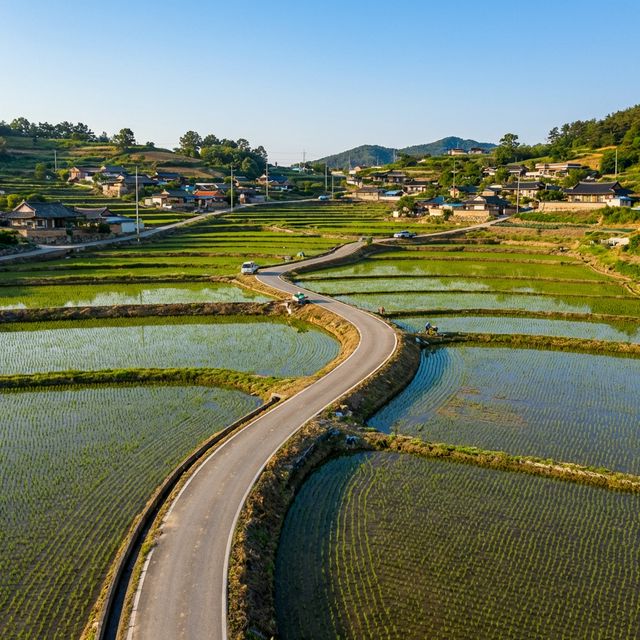
Of 226 basic municipalities nationwide, 129 (57%) have solar setback distance ordinances. Among those, 102 require 200m+ from roads, and 46 require over 400m. Places like Uljin and Cheongsong in Gyeongbuk, and Gurye, Wando, and Jangheung in Jeonnam, have setback distances reaching 1,000m (1km).
What this means: you need to find farmland that’s 1km from roads AND 1km from residences. Such land barely exists. And if it does, KEPCO grid connection is typically difficult in such remote locations. Technically not “prohibited” — but in reality, it’s the same thing.
There’s some good news. The government plans to amend the Renewable Energy Act to legislate nationally unified setback standards. The Ministry of Industry’s existing guidelines recommended “setback distances not exceeding 100m.” If the amendment follows this direction, a significant number of currently blocked sites could open up.
How to check your area’s setback distance:
- Search your city/county’s urban planning ordinance or solar installation ordinance
- Contact the city/county urban planning department or renewable energy department directly
- View your local ordinance text at the ‘Autonomous Legislation Information System (elis.go.kr)’
9. Prohibited and Restricted Zones at a Glance
| Category | Installation Possible? | Legal Basis | How to Check |
|---|---|---|---|
| Agricultural Promotion Zone (Absolute Farmland) | ❌ Prohibited in principle | Farmland Act | Land Use Plan Certificate |
| Forest Protection Area (Conservation Mountain Land) | ❌ Prohibited | Forest Land Management Act | Land Use Plan Certificate |
| Mountain land with slope >15° | ❌ Prohibited | Forest Land Management Enforcement Rules | Precision slope survey |
| Ecological Grade 1 | ❌ Avoidance required (effectively impossible) | Natural Environment Conservation Act | Environmental Spatial Information Service |
| Military Facility Protection Zone | ⚠️ Restricted in principle (possible with consent) | Military Base Act | Land Use Plan Certificate |
| Cultural Heritage Protection Zone | ❌ Effectively impossible | Cultural Heritage Protection Act | National Heritage Portal |
| Historic-Cultural Conservation Area | ⚠️ Review required (within 500m) | Cultural Heritage Protection Act | National Heritage Portal |
| Water Source Protection Zone | ❌ Prohibited | Waterworks Act | Land Use Plan Certificate |
| Greenbelt (Development Restriction Zone) | ❌ Prohibited | Development Restriction Special Act | Land Use Plan Certificate |
| Setback Distance Overrun Areas | ⚠️ Effectively impossible (varies by municipality) | Local ordinances | City/County office inquiry |
10. A 30-Minute Pre-Installation Check Anyone Can Do
A few documents can quickly determine your land’s eligibility.
- Access Government24 → Issue Land Use Plan Confirmation Certificate (free) → Check all in one shot: Agricultural Promotion Zone, Military Protection Zone, Water Source Protection Zone, Greenbelt
- Land-eum (eum.go.kr) → Enter lot number → Check official land value, zoning, and various restrictions
- Environmental Spatial Information Service (egis.me.go.kr) → Verify ecological grade
- National Heritage Portal (heritage.go.kr) → Check for cultural heritage within 500m of your land
- Call your city/county renewable energy department → Confirm setback distance ordinance + ask about recent permit cases
These five steps will give you a rough picture of whether your land is “absolutely prohibited,” “conditionally possible,” or “ready to proceed.” This costs zero money, and 30 minutes is all you need.
Spread out the documents before spreading out the blueprints. That’s the right order.
#Agrivoltaics #FarmlandAct #ForbiddenZones #AbsoluteFarmland #SetbackDistance #SmartFarm
This article is based on the Farmland Act, Forest Land Management Act, Natural Environment Conservation Act, Cultural Heritage Protection Act, Waterworks Act, Development Restriction Special Act, Ministry of Environment consultation guidelines, and government announcements as of February 2026. Policies are changing rapidly — always verify current laws and local ordinances before proceeding with any project.