7 Essential Checks Before Installing Agrivoltaics (2026 Standards)
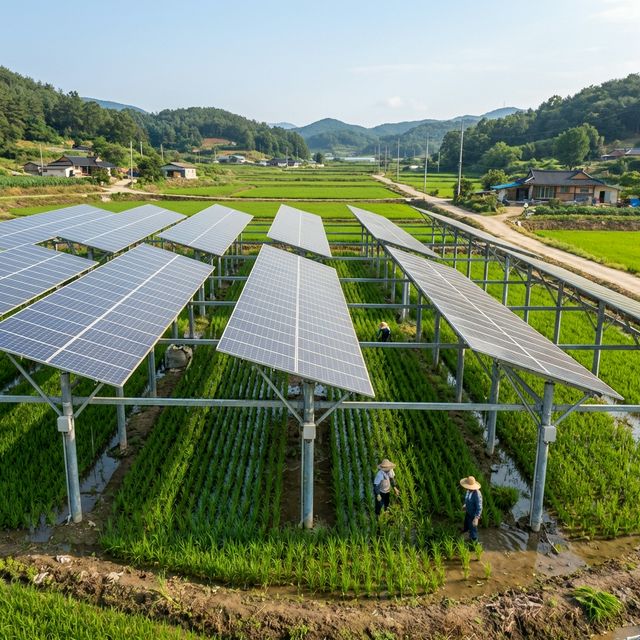
Solar panels on top of a rice paddy. Rice growing underneath. Sounds like a dream — but in 2026, it’s becoming reality.
Agrivoltaics is a system that combines farming and power generation simultaneously.
Field trials have shown revenue up to 8.4 times higher than rice farming alone.
But when you actually try to get started? There’s a lot more to check than you’d think.
There are cases where people lost tens of millions of won by diving in unprepared.
“Locking the barn door after the horse has bolted” — that saying is especially apt in this field.
1. Farmland Act Amendments and Special Legislation: Where Do Things Stand?
The very first thing to check is the law. You can have the money, the land, and the will — but if the law doesn’t allow it, you can’t proceed.
The current Farmland Act limits the temporary use period for agrivoltaics to a maximum of 8 years.
Solar panels last 20-25 years, but you’re told to dismantle after 8 — making investment recovery impossible.
According to the Korea Rural Economic Institute, a minimum of 20 years is needed to generate meaningful returns.
On October 16, 2025, the government signaled major changes at the 2nd Core Regulation Rationalization Strategy Meeting:
- Extending farmland use period from 8 → 23 years
- Allowing generation businesses in Agricultural Promotion Areas when designated as ‘Renewable Energy Zones’
- Permitting village cooperative corporations as business operators
- Legislating setback distances (Renewable Energy Act amendment)
However, as of February 2026, the Ministry of Agriculture officially stated that “the requirements for agrivoltaics businesses have not been finalized.”
This means deliberations are ongoing with the National Assembly and agriculture sector on the Agrivoltaics Special Act.
At least 4 related bills have already been introduced in the National Assembly.
Key takeaway: The law hasn’t been finalized yet.
The target is Farmland Act amendment in the first half of 2026, but it could be delayed by the Assembly’s schedule.
Rather than rushing to install, closely monitor when the legislation passes.
2. Setback Distances — The ‘Invisible Wall’ That Varies by Municipality
How far must solar equipment be placed from homes and roads?
This setback distance regulation is one of the biggest obstacles for agrivoltaics.
The problem is that standards differ by municipality.
Some require as little as 300m, others up to 1km.
Even within the same province, neighboring counties can have different standards.
In some areas, finding “eligible land” is like finding a needle in a haystack.
The government plans to amend the Renewable Energy Act to create nationally unified standards for setback distances.
But the amendment hasn’t been finalized yet.
If you’re pushing ahead now, you must directly verify your local municipality’s ordinances.
Don’t rely on internet information — one phone call to your city/county’s renewable energy department is the most accurate approach.
Experts consistently advocate for setback distance exemptions for agrivoltaics, so keep an eye on the legislative direction as well.
3. Yield Reduction — “20% Is Fine” Is Only Half True
Growing crops under agrivoltaics panels reduces sunlight by about 30%.
This leads to yield reduction.
The commonly cited figure is an average 15-20% reduction.
But don’t be fooled by the average.
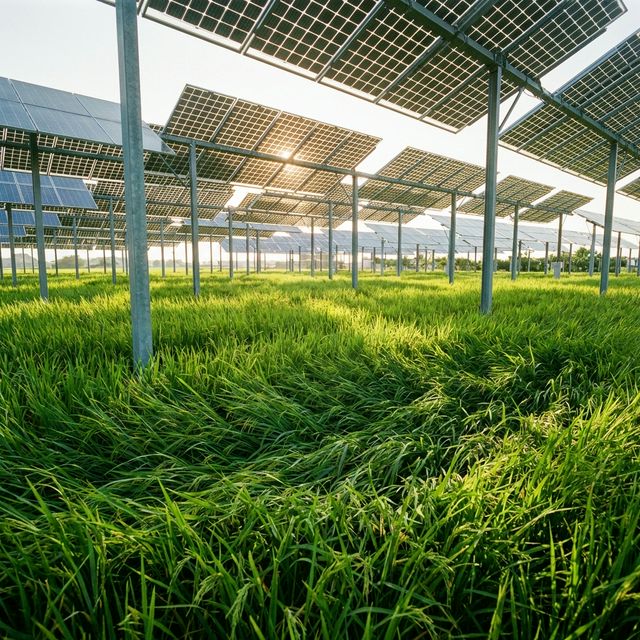
According to data submitted to the National Assembly’s Agriculture Committee in 2025, rice yield reductions of up to 71% were confirmed.
This came from a pilot installation by Korea South-East Power in Geochang-gun, Gyeongnam.
The “average 15.7%” figure masked these extreme cases.
Conversely, crops like green tea, figs, and grapes actually showed improved yields.
Solar panels protect against extreme heat and reduce damage from typhoons and cold snaps.
A comprehensive survey of 66 pilot sites nationwide over 6 years (2016-2021) found that most crops maintained at least 80% productivity.
So what should you do?
- Yield reduction varies completely depending on crop type
- Shade-tolerant crops (wasabi, mushrooms, myoga) actually benefit
- Rice shows high variance by region and equipment — always check data from nearby pilot sites
- Regulations similar to Japan’s (revoking permits when yields drop below 80%) are likely coming
Crop selection isn’t just a farming decision — it’s a business survival decision.
4. Installation Costs and Profitability — Run the Numbers
Use calculation, not intuition.
100kW installation cost: approximately 150-200 million KRW.
That’s about 1.3-1.5x more expensive than standard ground-mount solar.
Structures must be raised above 3m for farm machinery access, and wider module spacing requires about 1.5x more area.
Revenue structure (H2 2025):
| Item | Value |
|---|---|
| SMP (System Marginal Price) | ~111-114 KRW/kWh |
| REC (Renewable Energy Certificate) | ~71,000-72,000 KRW/REC |
| REC weighting (agrivoltaics) | 0.7 (same as standard solar) |
| Annual revenue (100kW) | ~20-26.6 million KRW |
In a pilot case in Yeongam-gun, Jeonnam, a 45kW system on 1,000㎡ (about 300 pyeong) combining rice farming and generation produced total revenue of 9.89 million KRW in one year.
That’s 8.4x higher than rice farming alone (~1.18 million KRW).
However, equipment and installation costs are not included in this figure.
A Yeongam-gun official analyzed that “meaningful income changes appear only after 7 years.”
The industry consensus is that investment recovery takes at least 12 years.
At 8 years, losses are nearly guaranteed. Only at 23 years do you enter profit territory.
These numbers make clear why the legal amendment matters.
Subsidies and long-term low-interest loans can significantly reduce the initial burden.
Group purchasing at the village level can cut per-kW installation costs by 5-12%.
5. Grid Connection (KEPCO Access) — You Can Build a Plant and Still Not Sell Electricity
This is where many people get caught. Installing solar panels isn’t the end.
You must be connected to KEPCO’s grid to sell electricity.
The problem is grid saturation. Areas with concentrated solar like Jeonnam, Jeonbuk, Jeju, and Gyeongbuk have already hit transmission capacity limits.
As of 2025, 437MW of capacity was waiting for grid access.
In Jeonnam, more than 1 in 2 small-scale solar plants experienced grid connection delays.
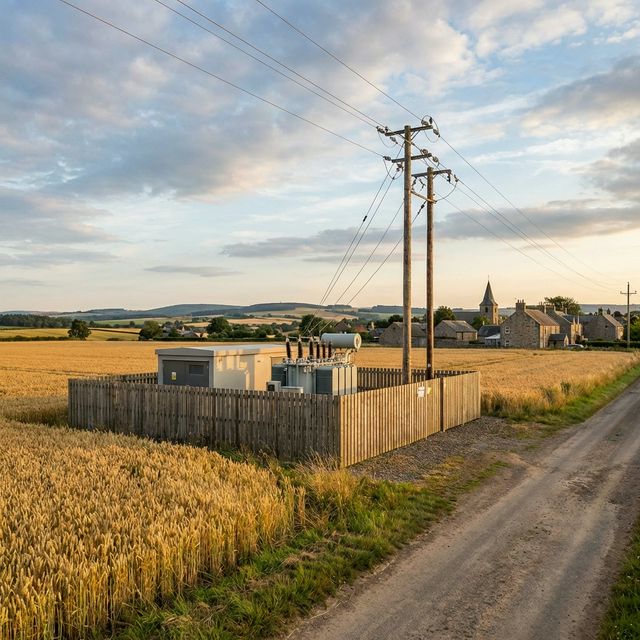
The Ministry of Trade is working to clear the backlog, but building new substations takes 3-6 years depending on location.
Even with government access guarantee policies, “waiting 2-3 years after applying is standard” is a common complaint.
Must-do before installation:
- Contact your KEPCO regional office to verify access availability
- Check if there’s a large backlog in your area
- Include opportunity costs (interest, maintenance) from access delays in your calculations
Building a plant and not being able to sell electricity — that’s truly agonizing.
6. Post-Installation Management and Dismantling — The End Is Just Another Beginning
Agrivoltaics can be more complex to operate and dismantle than to install.
Under current guidelines, dismantling is the farmer’s responsibility and judgment call.
Soil contamination testing is done only about once a year.
There are no government-level post-management standards or guarantee system plans yet.
This means dismantling costs could fall entirely on the farmer.
Japan’s experience shows how serious this issue can become.
Japan has over 5,000 agrivoltaics facilities in operation, but many cases emerged where farming was neglected in favor of generation revenue.
Japan’s government now mandates dismantling orders when yields fall below 80% of the previous year.
Korea is likely heading in a similar direction.
The President has directly stated that “provisions could impose fines larger than generation revenue when farming is not maintained.”
Checklist:
- Get advance estimates for dismantling costs 20 years from now
- Develop an environmental monitoring plan for soil contamination
- Keep meticulous yield records annually (for re-permitting and audits)
- Continuously monitor as post-management regulations may change frequently
7. Tenant Farmer Protection and Village Conflicts — People Problems Are the Hardest
Technology and money can be solved. But conflicts between people are different.
A significant portion of Korean farmers are tenant farmers — people farming on rented land.
As agrivoltaics expands, farmland rents go up.
Generation revenue drives up land values, which drives up rents. The burden falls entirely on tenants.
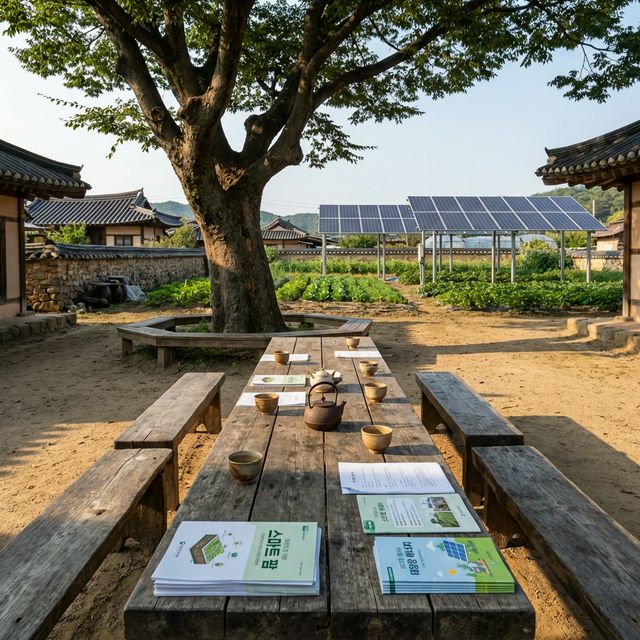
Recognizing this issue, Democratic Party lawmaker Lim Mi-ae introduced legislation to “allow generation facilities only on self-owned farmland.”
The government has also pledged to provide tenant farmers with opportunities to participate in generation businesses and share revenue.
At the village level, conflict factors are significant:
- Complaints that “solar installations next to my field will ruin the landscape”
- Resentment over revenue concentrating among specific farms
- Food security concerns over Agricultural Promotion Area deregulation
The government’s three principles — preventing sprawl, food security, and community benefit sharing — if not upheld, even well-intentioned policy can divide a village.
Village cooperative corporations where all residents participate and share revenue represent the healthiest model.
Before installing, have honest conversations with neighboring farmers. This should come before any technical review.
A Final Word
Agrivoltaics can genuinely be a game-changer for rural areas.
8x rice farming revenue. Carbon neutrality. Energy independence. All sitting on a single panel.
But right now, we’re in a transitional period. Laws are being written, standards are being set.
Rushing in blindly during this period is risky.
Conversely, if you sit idle and only move after laws are finalized, the best locations may already be taken.
The first-half 2026 Farmland Act amendment vote will be the decisive inflection point.
For now: prepare, but don’t rush.
Survey your land, crunch the numbers, meet with people, and watch the legislation.
#Agrivoltaics #FarmlandAct #CarbonNeutrality #SmartFarm #EnergyIndependence #RuralRevenue
This article is based on government announcements, National Assembly bills, and field trial results publicly available as of February 2026. Agrivoltaics policies are changing rapidly — always verify current laws and local ordinances before proceeding with any project.