Farmland Conversion vs Temporary Use Permit (Key Differences)
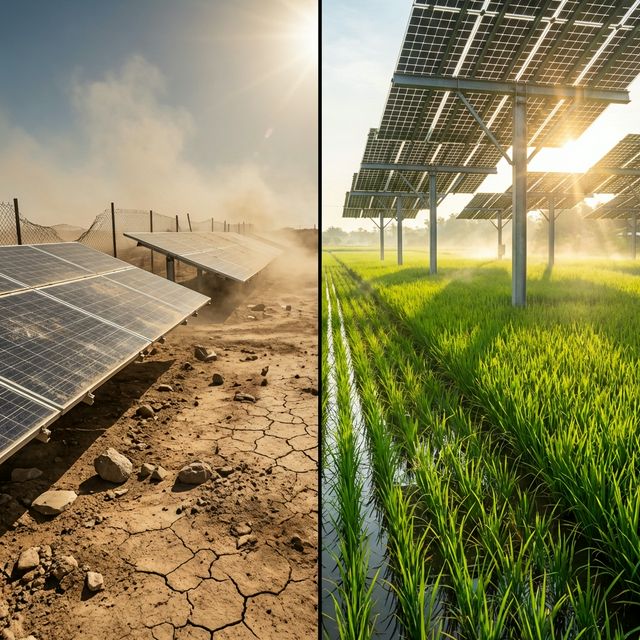
To install solar panels on farmland, there are two paths. One permanently converts the farmland into a power plant. The other keeps the farm running while temporarily borrowing the land for solar. Conversion permit versus temporary use permit. They’re not just different in name. They determine your project’s lifespan and cash flow.
In short, agrivoltaics projects must go with a temporary use permit. A conversion permit means giving up farming. Agrivoltaics means doing both farming and solar. Get this wrong and you’ll face a demolition order in 8 years.
1. The Biggest Difference - The Fate of Your Farmland
A farmland conversion permit permanently changes the land’s designation. The zoning shifts from “paddy field” to “miscellaneous land.” Once solar panels are installed, farming becomes impossible. Panels cover the ground completely, and machinery can’t get through.
A temporary use permit is different. The farmland stays farmland, and you temporarily borrow it for solar. When the period ends, you must restore it to its original state. Remove the panels and return it to cropland. That’s the condition. This is why agrivoltaics chooses this path. You must keep farming to receive REC weight bonuses and special law benefits.
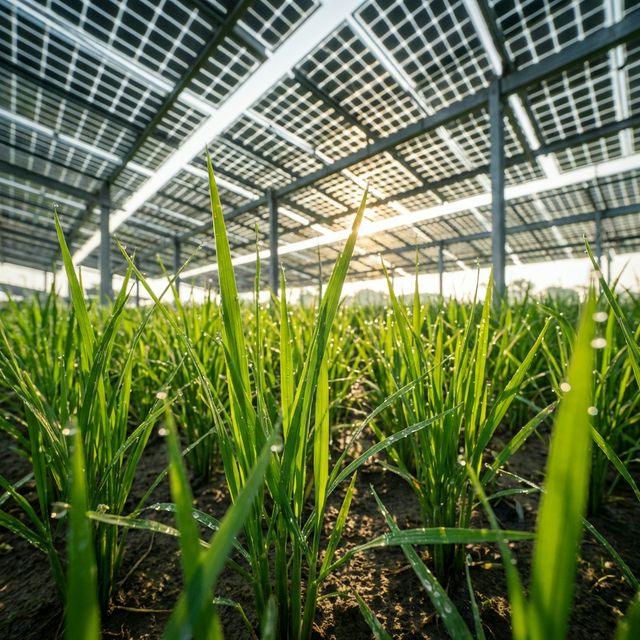
Real cases make it clear. Land with a conversion permit remains “miscellaneous” even 20 years later, allowing other business uses. A temporary use permit means mandatory demolition after 8 years (extension to 23 years under discussion). The choice depends on your business model.
2. Permit Duration - 8 Years vs Permanent
This is the most critical difference.
A farmland conversion permit has no time limit. It outlasts the 25-year lifespan of solar panels. Investment recovery is smooth. The IRR (Internal Rate of Return) calculates to 8-12%.
A temporary use permit currently maxes at 8 years. Recovering a $115,000 installation cost for 100kW within 8 years is nearly impossible. The government recently proposed extending it to 23 years, but as of February 2026, the legislation hasn’t passed yet. Even with the extension, demolition and restoration costs fall on the project owner.
Real example: Farmer A got a conversion permit and built a 500kW power plant. He’s been earning stable income for 15 years. Farmer B started with a temporary use permit and received a demolition notice in year 7. He lost $150,000 and spent an additional $23,000 on land restoration. Same land, different choices, vastly different outcomes.
3. Cost Burden - Heavy Tax vs Full Exemption
Money matters too.
A conversion permit requires paying a farmland preservation fee. National average is $23-$38/m². For 3,300m² (about 1 acre), that’s over $76,000. The fee is calculated based on official land value and conversion area. You also need farmland acquisition certification.

A temporary use permit gets full fee exemption. Agrivoltaics projects also skip development activity urban planning reviews. Initial costs are 30-50% lower. However, you must submit a restoration plan and prove actual restoration when the period expires.
The numbers tell the story. For a 100kW agrivoltaics project at $115,000 base:
- Conversion route: Preservation fee $38,000 + legal fees $3,800 = Total ~$152,000
- Temporary use route: Preservation fee $0 + legal fees $2,300 = Total ~$117,000
Initial difference of $35,000. Cash flow changes everything.
4. Application Process - Complexity Differs
The conversion permit process is long. Farmland qualification → Conversion application → Farmland Management Committee review → Development permit → Zoning change. Each step takes 1-2 months. Total: 6+ months.
The temporary use permit is simple. Submit application + business plan + restoration plan to your local office. No committee review, done in 1-2 months. Including a crop cultivation plan in your agrivoltaics business plan makes it even smoother.
The conversion permit requires passing the Farmland Management Committee, where a single neighbor’s objection can kill the project. The temporary use permit involves less conflict. The village atmosphere stays calmer.
5. Why Temporary Use Permits Are the Answer for Agrivoltaics
The core of agrivoltaics is simultaneous farming and power generation. A conversion permit abandons farming. No REC weight bonus (1.0-1.5x), no special law benefits.
The temporary use permit fits perfectly.
- Farm under the panels → crop revenue + power generation revenue
- No preservation fee → lower initial capital burden
- Farmland zoning maintained → easier to pivot to other businesses later
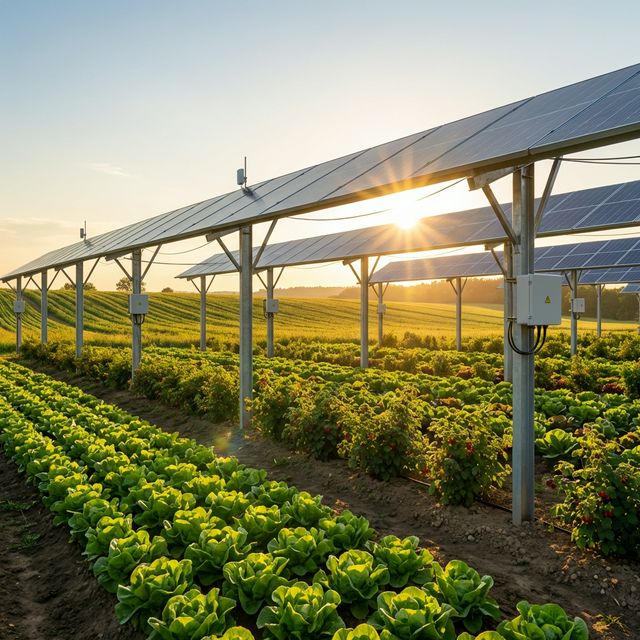
The government is moving this direction too. Amendment to extend temporary use permits to 23 years is in progress. The Agrivoltaics Special Act contains support measures built entirely around temporary use permits.
Real data confirms it: all 66 agrivoltaics demonstration sites nationwide operate under temporary use permits. Sites with conversion permits are just conventional ground-mounted solar plants.
6. Side-by-Side Comparison
| Factor | Conversion Permit | Temporary Use Permit |
|---|---|---|
| Land fate | Permanently changed to miscellaneous | Stays farmland (restored after period) |
| Duration | Unlimited | Max 8 years (23yr extension under discussion) |
| Initial cost | Preservation fee required ($23-38/m²) | Fee exempted |
| Process difficulty | Committee review + development permit | Simple application (1-2 months) |
| Farming possible | No (farming abandoned) | Yes (farming required) |
| REC weight | Standard 1.0x | Agrivoltaics 1.5x possible |
| Best for | Standard solar power plant | Agrivoltaics |
7. What Happens When You Choose Wrong
The most common mistake is trying to do agrivoltaics with a conversion permit. Once the land zoning changes, you can’t get the agrivoltaics REC weight bonus. Revenue drops 30%, and the community labels you as “the one who gave up farming.”
The reverse mistake also happens - trying to build a standard solar plant under a temporary use permit. After 8 years: demolition costs $38,000, restoration costs $23,000. Total loss: $61,000. The business fails.
The right choice depends on your business model. Farming + solar = temporary use permit. Power plant only = conversion permit. If it’s unclear, rewrite your business plan first.
Conclusion - For Agrivoltaics, Go Straight to Temporary Use
If you’re an agrivoltaics operator, the answer is clear. Farmland temporary use permit. That’s the right path. No preservation fee, farming continues, and government policy aligns with it.
Consider a conversion permit only if you’re fully prepared to abandon farming. Most people regret it. When the 23-year extension is confirmed, the temporary use permit becomes even more attractive. Write “temporary use permit” clearly in your business plan starting now.
One document can save your business. Choose wisely.
This article is based on South Korea’s Agricultural Land Act Articles 34 (conversion) and 36 (temporary use), related enforcement decrees, and agrivoltaics demonstration cases as of February 2026. Regulations change frequently - confirm the latest requirements with your local agricultural office before applying.
#Agrivoltaics #SolarFarming #FarmlandPermit #RenewableEnergy #SolarEnergy #SmartFarm #AgriTech #SustainableAgriculture