Solar Panels on Absolute Farmland? Regulations and 2026 Outlook
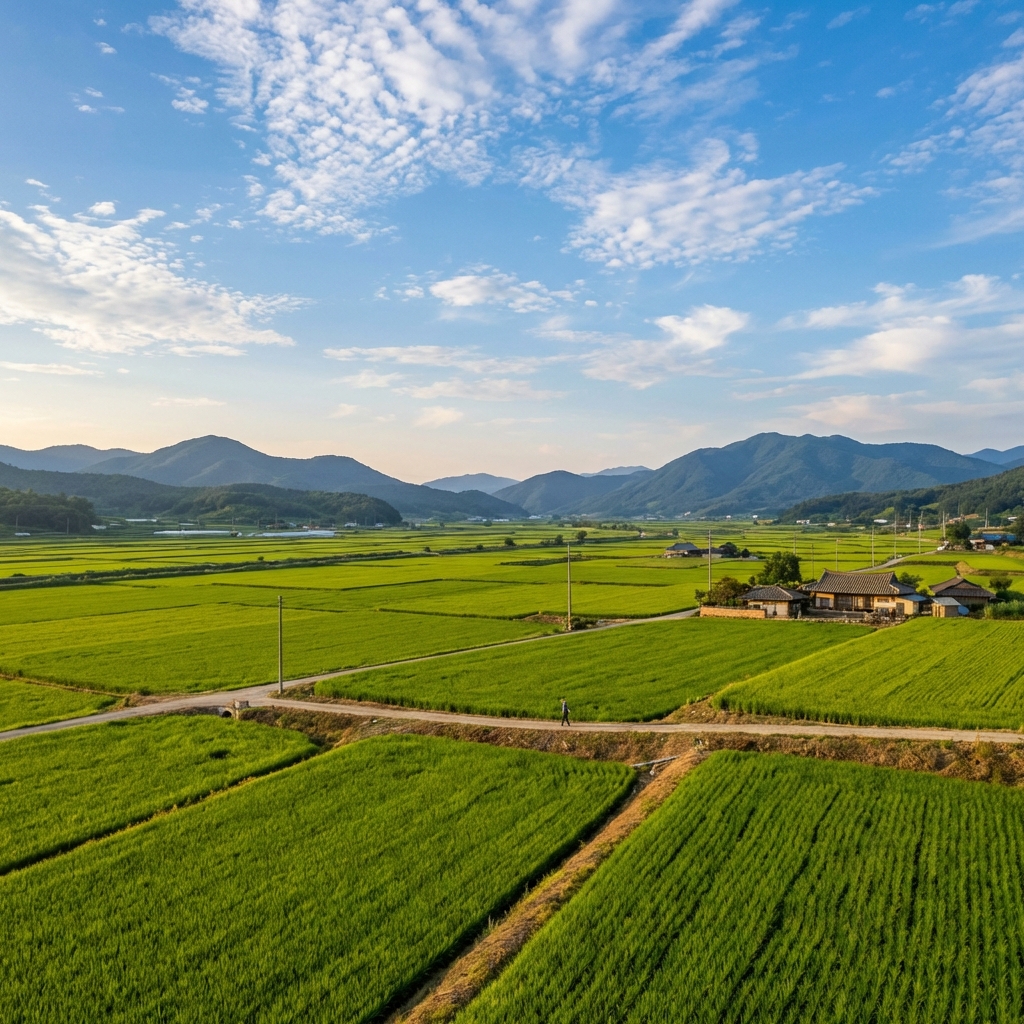
In a previous post, we looked at the cost and projected annual income of installing a solar power plant on roughly 1,400 pyeong of farmland. Agrivoltaics turned out to be less profitable than standard solar — and here’s the critical point: our land is absolute farmland.
Absolute farmland. When farmers hear those words, many sigh. Because they think it means the land can only be used for farming.
Can You Really Not Install Solar on Absolute Farmland?
The law is actually more complicated than you’d think. Agricultural Promotion Areas — what people call “absolute farmland” — are divided into two types: Agricultural Promotion Zones and Agricultural Protection Zones. If farmland is clustered over 10 hectares in flatland, 7 hectares in intermediate areas, or 3 hectares in mountainous areas, it gets designated as an Agricultural Promotion Zone.
As of 2026, standard solar installations are not permitted on absolute farmland. That’s what the law says.
But the government is moving. In October 2025, the government announced it would pursue amendments to the Farmland Act. The key point: if an area is designated as a Renewable Energy Zone, agrivoltaics installations would be permitted even within Agricultural Promotion Areas. The temporary-use period would also be extended from 8 years to 23 years.
However, the amendment hasn’t been finalized yet. While the target is completion by the first half of 2026, for now we have to wait.
So Are There No Options Right Now?
It’s not completely blocked. There are a few exceptions.
First, rooftops of existing buildings are allowed. If a building was completed before December 31, 2015, solar panels can be installed on its roof. This includes livestock barn or warehouse roofs. However, you must be a registered farmer and the building owner.
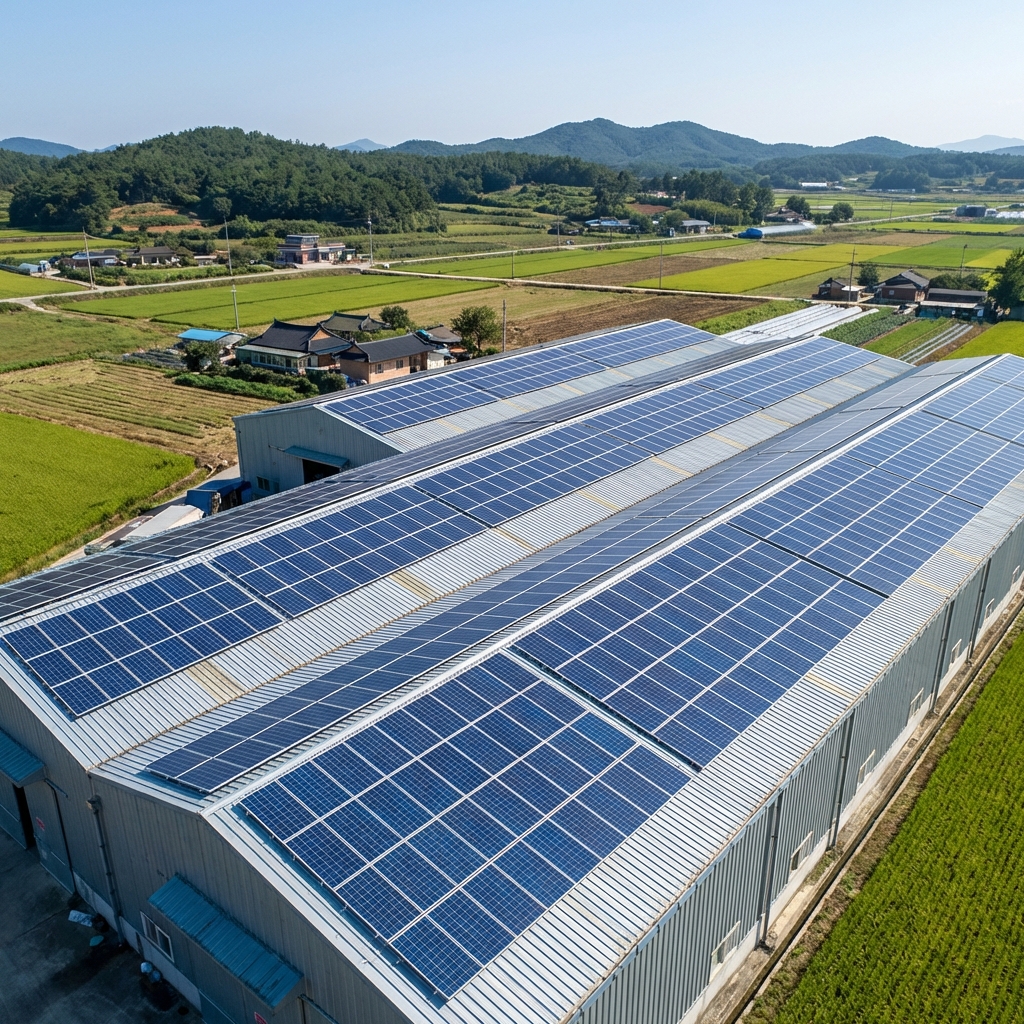
Second, there’s a reclaimed land exception. Solar installation is allowed for up to 20 years on reclaimed farmland with soil salinity of 5.5 dS/m or higher.
Third? Wait. Once the law is amended, you’ll need to apply for Renewable Energy Zone designation.
What About Non-Promotion Area Farmland?
This is the realistic option. If your land isn’t absolute farmland — just regular farmland — solar installation is already possible.
But you need farmland conversion approval. That’s permission to convert agricultural land into a solar site. This is where the farmland conservation fee comes in: you pay 30% of the official land value. If the official price is 100,000 KRW per pyeong, that works out to about 15 million KRW for 500 pyeong.
Until 2019, farming households got a 50% reduction. That benefit has expired, but it could return depending on government policy.
Farmland conversion permits cover up to 30,000 square meters (about 9,000 pyeong). It used to be 10,000 square meters but was expanded in 2018.
What Exactly Is Agrivoltaics?
It’s a system where you farm and generate electricity simultaneously. Steel pillars are erected to 3 meters high, and solar panels are installed at an angle on top. Gaps between panels allow sunlight to reach the crops below.
In Boseong, a local agricultural cooperative director installed a 99.7kW agrivoltaics system on 870 pyeong of rice paddy. The panels cover 75% of the total area, but the shading rate is only 30%. Rice yield dropped by about 15.7%, but electricity sales revenue more than compensates.
At 100kW scale, annual returns are around 13 million KRW — 3 to 5 times farming income alone.
Who’s Eligible for Agrivoltaics?
The requirements are strict. Not just anyone can do this.
You must own the farmland. Leased land doesn’t qualify. You must be a registered farmer — legally, that means cultivating at least 1,000㎡, selling at least 1.2 million KRW in agricultural products annually, or working in agriculture at least 90 days per year.
There’s a residency requirement too. You must have been registered as a resident in the municipality (si/gun/gu) where the plant will be installed for at least one year. Adjacent municipalities count, and within 5km is also accepted.
There’s a capacity limit: under 500kW per person. If you form a cooperative, up to 1.5MW is possible.
What’s the Application Process?
Let’s go step by step.
Step 1: Feasibility Assessment
Check your land orientation — south-facing is best. Is there sufficient sunlight? Is a 3-phase power line nearby? Is grid interconnection possible? Check these first.
Contact a specialized installer and they’ll conduct an on-site survey. Most do it for free.
Step 2: Power Generation Business License Application
Apply at your local city/county office. Under 3,000kW is handled by local government; above that, it’s the Ministry of Trade, Industry, and Energy.
You’ll need a stack of documents: electric utility license application, business plan, land register, land use plan confirmation, cadastral map, registration certificate, family relations certificate, background check consent, and proof of funding.
The business plan must include: plant overview, annual supply plan, required funds and procurement method, generation equipment overview, construction cost estimate, and installation schedule. Drawings are required too: module layout, floor plan, side view, single-line diagram, and transmission system diagram.
Review takes 60 days. Once approved, you pay registration and license tax, then receive your generation business license.
Step 3: Farmland Temporary Use Permit
Agrivoltaics doesn’t eliminate the farmland — so instead of a conversion permit, you get a temporary use permit.
Currently limited to 8 years. If the law is amended, this extends to 23 years.
Attach a business plan to the application showing the usage period and method. You’ll also need proof of land ownership.
Here’s the important part: no farmland conservation fee is owed. Because the farmland continues to be used for farming. No development activity permit needed either. Agrivoltaics gets this exemption.
Step 4: Development Activity Permit (For Standard Solar)
If you’re installing standard solar on regular farmland, this step is required.
Apply at the city/county office. You’re altering the land’s physical characteristics.
The review is thorough: Does it harmonize with the surrounding environment? Is the landscape acceptable? Is it safe? Are there drainage issues?
Many municipalities have setback regulations — requiring 100m or more from residences, 100m from roads. It varies by region. Some require 1km.
Fortunately, the government is taking action. In November 2025, the Climate and Energy Ministry agreed to reexamine setback regulations and create nationally unified standards.
Step 5: KEPCO PPA Application
This is the contract to sell your generated electricity. You sign a power supply agreement with KEPCO.
Take your generation business license to the local KEPCO branch. Get a grid interconnection review and sign the contract.
Step 6: Construction Plan Notification
The step before actual construction begins. Notify your local city/county office.
Required documents: construction plan notification, copy of generation business license, construction plan, design drawings, key equipment technical specifications, location and site photos, solar module certification, inverter test report.
Include a supervisory engineer deployment confirmation. Supervision is mandatory above certain scales.
Step 7: Groundbreaking and Construction
Now construction begins. Choose your contractor carefully.
Agrivoltaics requires special care. Poor foundation work can damage the farmland. The law prohibits using materials that damage agricultural land.
Construction typically takes 2-3 months depending on scale.
Step 8: Pre-Use Inspection
After construction, get an inspection. Apply to the Korea Electrical Safety Corporation.
They verify that electrical equipment meets standards and is safe. Pass, and you receive a pre-use inspection certificate.
Step 9: Business Commencement Notification
Notify the city/county office. Submit: business commencement notification, pre-use inspection certificate, KEPCO supply contract, electrical safety manager appointment certificate, and photo documentation.
Your power plant is now officially operational.
Step 10: RPS Facility Confirmation
Apply to the Korea Energy Agency. Must be done within one month of the pre-use inspection.
This is the process for receiving RECs (Renewable Energy Certificates). RECs are issued proportional to generation output and can be traded on the power exchange.
Once facility confirmation is complete, you receive RECs within 30 days.
What Is the REC Weighting System?
Even producing the same amount of electricity, you receive different numbers of RECs. That’s the weighting system.
Standard site (farmland, forest land) under 100kW: weight 1.2 Standard site 100kW and above: weight 1.0 Standard site over 3,000kW: weight 0.8
Building rooftop 3,000kW and below: weight 1.5 Building rooftop over 3,000kW: weight 1.0
Forest land: weight 0.5
Agrivoltaics? No separate weighting yet — it follows standard site rates. But the government has announced plans to create an agrivoltaics-specific weighting. Implementation timing is undetermined.
Agrivoltaics Obligations
Installation isn’t the end. Ongoing management is required.
Farming Obligation
You must maintain farming above a certain threshold. The target under discussion is 80%. For example, if you originally harvested 500kg of rice, you need to produce at least 400kg.
Fail to meet this? Approval revoked. Plus, recovery of up to 3x your revenue. No joke.
Post-Installation Management
Regular inspections occur. Municipal officials visit to verify you’re actually farming.
You must submit farming performance reports. Farm management ledgers, crop insurance enrollment certificates, and other documents are required.
How Much Does It Cost?
Let’s look at the 100kW benchmark.
Installation: approximately 150 million KRW. Agrivoltaics is 20-30% more expensive than standard solar because of the raised pillars and elevated installation.
Financing support exists. The Korea Energy Agency operates a renewable energy financial support program. You can borrow up to 90% at 1-2% annual interest rates.
Annual program announcements come out — typically accepting applications from October of the previous year. Apply online, go through evaluation, receive a recommendation letter, then use that to get a bank loan.
What About Returns?
100kW generates approximately 130,000 kWh annually.
SMP (System Marginal Price) revenue: at 100 KRW/kWh, that’s 13 million KRW. REC revenue: at 1.2 weighting, approximately 5-8 million KRW.
Combined annual revenue: 18-21 million KRW. After maintenance, insurance, and taxes, net profit is around 15 million KRW.
Add farming income? Even with a 15% drop in rice yield, solar revenue far outweighs the loss.
Cautions and Tips
Check Local Municipal Ordinances
Regulations vary by city and county. Some outright prohibit solar installations. Always verify before applying.
Choose Your Installer Carefully
Going cheap can cause problems later. After-sales service matters. You’ll be running this for 20+ years — what happens if the company goes under?
Check references. Visiting actual installation sites is the best approach.
Communicate with Village Residents
Whether agrivoltaics or standard solar, installations easily generate complaints. Light reflection, landscape degradation, property value concerns.
Hold community briefings in advance. Be transparent and listen to feedback. If conflicts arise later, the entire project could be halted.
Monitor Legal Changes
Farmland Act amendments are expected in the first half of 2026. If passed, agrivoltaics becomes possible even on absolute farmland — with Renewable Energy Zone designation.
Setback regulations are also likely to be relaxed, with nationally unified standards under revised renewable energy law.
Summary
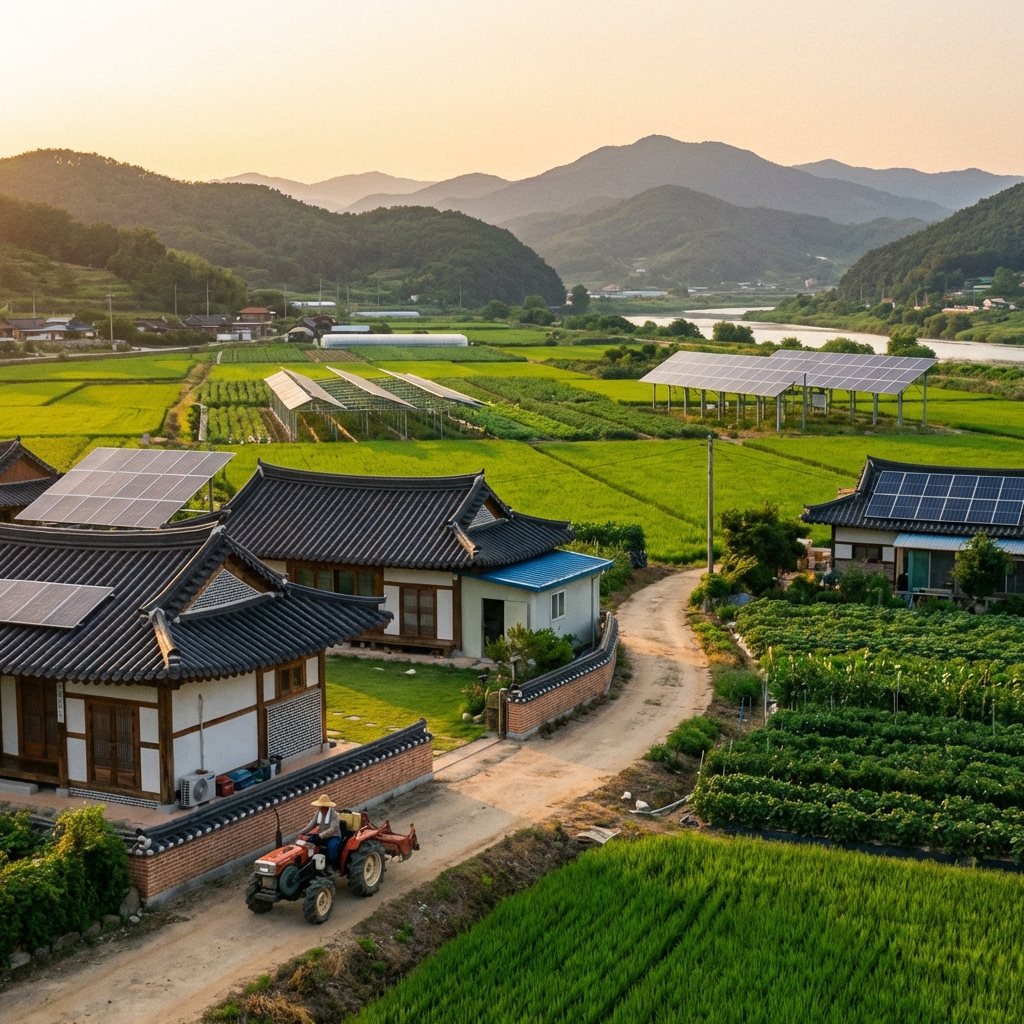
Installing solar on absolute farmland (Agricultural Promotion Areas) is currently restricted. Except for building rooftops and reclaimed land, it’s not possible.
But the law is changing. If the first-half 2026 Farmland Act amendment passes, agrivoltaics will be allowed in Agricultural Promotion Areas designated as Renewable Energy Zones. The temporary-use period extends to 23 years.
Non-absolute farmland? Already possible. Get farmland conversion or temporary-use permits. Choose agrivoltaics and you skip the conservation fee and development permit.
The process is complex but manageable step by step: generation business license, farmland permit, PPA application, construction plan notification, construction, pre-use inspection, business commencement notification, RPS facility confirmation.
100kW installation costs around 150 million KRW, but government financing covers up to 90%. Annual net profit is around 15 million KRW, and combined with farming income, it can significantly boost farm household earnings.
The critical requirement: you must fulfill farming obligations. Neglect farming and your approval gets revoked, with revenue reclamation on top.
A farmer named Kim in Yesan, Chungnam said: “I was scared at first. Having to farm and manage a power plant at the same time. But three years in, it’s manageable. Even when rice prices drop, the solar income gives me peace of mind.”
Park, a farmer in Jeongeup, Jeonbuk, sees it differently: “I don’t think the timing is right yet. The laws keep changing. I’ll wait until things settle down.”
The choice is yours. If you have land and meet the conditions, it’s worth considering. But don’t rush in — consult experts and prepare thoroughly.
Solar is a 20+ year business. Take your time and approach it carefully.
#AbsoluteFarmland #AgriculturalPromotionArea #Agrivoltaics #SolarRegulations #2026FarmlandAct #SolarRevenueAnalysis #FarmIncome #RenewableEnergy #FarmlandConversion #SolarProcess